
Alcúdia Cleans Up: Thousands of Counterfeits Reveal a Deeper Problem
A major raid in Alcúdia uncovered 7,705 allegedly counterfeit goods. Between the harbor promenade and beach shops, the find reveals larger issues: consumer protection, unfair competition and the question of causes — and solutions.
Why are so many counterfeits appearing in Alcúdia?
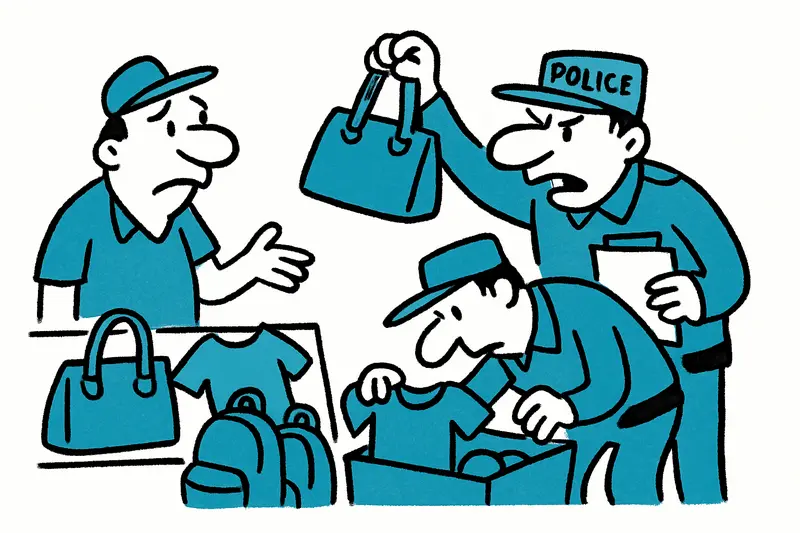
The smell of sea salt and fresh espresso was still in the air when the patrol cars drove through the lanes by the harbor on early Tuesday morning. Around 9:00 a.m. the promenade was noticeably busier than usual — not only because of tourists, but because of the police. Local officers, two members of the Guardia Civil and three experts searched shops and market stalls. In the end, there were 7,705 seized items on the record: jerseys, bags, backpacks — many with brand logos that appear not to be genuine. A comparable operation was reported nearby in Playa de Palma; see Raid at Playa de Palma: Nearly 6,000 Counterfeits — What’s Really Behind It. In a recent traffic stop in Palma, officers also found a van full of counterfeit bags and accessories — details are in Packages Full of Counterfeits: Van with Over 700 Fakes Stopped in Palma.
The tally — more than a blow against souvenirs
The numbers are impressive, but they raise a simple question: are these isolated cases of questionable sellers or a symptom of a systemic problem? Counterfeit goods are not only theft of intellectual property. They can endanger consumers, disadvantage honest shopkeepers and in the long run damage the image of Alcúdia and the entire island. Someone who buys a cheap T-shirt bargain on the beach and is later disappointed will tell others — in the worst case digitally.
The raid predictably targeted shops that mainly cater to holidaymakers. Between ice cream parlors, postcard stands and beach shops the temptation is great. But the checks also show: demand creates supply. As long as tourists are willing to take brand goods at rock-bottom prices, the business model remains lucrative.
What is often left out of the public debate
Authorities usually speak about trademark protection and the EUIPO Observatory on counterfeiting — which is important, but incomplete. Three aspects are often underexposed: 1) The supply chains: many counterfeits do not come from small local workshops but are brought into tourist hotspots via complex, Big Blow Against Product Counterfeiting: What Mallorca's Role Really Reveals cross-border networks. 2) The role of organized groups: often there is more behind it than retail; distribution structures operate professionally. 3) The impact on jobs: in the short term stalls earn money, but in the long term the competition harms legitimate traders who rely on quality and legality.
Resources also play a role. Checks like the recent one are personnel- and time-intensive. They show what is possible when authorities coordinate — but how lasting is that? In high summer, a few operations are not enough to solve the problem sustainably.
Concrete opportunities and proposed solutions
A ticket alone is not enough. If Alcúdia seriously wants to become cleaner, it needs a bundle of prevention, enforcement and incentives:
Transparent vendor regulations: A visible certificate for licensed beach and promenade sellers could quickly guide tourists.
Better control of supply chains: Cooperation with ports and logistics firms to check large shipments and interrupt suspicious flows of goods in a targeted way.
Multilingual awareness campaigns: Information campaigns at the airport, in hotels and at hotspots — short and to the point: how to recognize fakes and what risks they pose.
Cooperation among municipalities: Uniform fines and regulations across Mallorca instead of a patchwork; that way vendors cannot simply move to another municipality.
Support for honest souvenir producers: Making small producers and designers from Mallorca more visible — a quality seal and pointers to sustainable, local products can create real alternatives.
What buyers can do concretely
The advice is simple and practical: ask for the price, a receipt and proof of origin. Check seams, zippers and labels. If a branded item is considerably cheaper than usual, be cautious. Those who want to be sure buy from official retailers or shops with a good reputation — that is more expensive, but it saves nerves and often money in the long run.
The seizure of almost 8,000 items in Alcúdia is a clear signal: authorities are taking action, but the challenge remains. Between the clink of iced coffee cups and the lapping of boats we should ask ourselves how we — as a community and as visitors — can protect the island economically and culturally. Alcúdia can become cleaner, fairer and more sustainable if enforcement, education and local solutions work together.
Frequently asked questions
Why are counterfeit goods so common in Alcúdia?
How can I tell if a branded souvenir in Mallorca is fake?
What did the police seize in the Alcúdia counterfeit raid?
Is it illegal to buy counterfeit goods in Mallorca?
What can tourists do to avoid buying fakes in Alcúdia?
Why do counterfeit goods hurt local shops in Mallorca?
What is being done to stop fake goods in Mallorca?
Where in Mallorca are counterfeit goods most likely to be sold?
Similar News
When Housing Becomes a Matter of Survival: Mallorca Between Rental Frenzy and Everyday Life
The case of 87-year-old Maricarmen showed that on Mallorca many people's lives are poised between affordable and uninhab...
Autumn in Mallorca: When Melancholy Gets a Window
Why autumn quietly tightens here — and how to make use of the mood: walks, culture, candles and the light from Palma to ...

Near-miss on Lanzarote: Landing Ryanair Jet and Iberia Takeoff — what really went wrong
On Lanzarote there was a dangerous incident: A Ryanair flight (FR5910) from Dublin landed on runway 03 while an Iberia E...

Eurowings introduces new Premium Business seats on Mallorca routes
From December 1, selected Eurowings flights to Palma and other destinations will feature eight particularly generous sea...

Car on MA-13 near Inca in flames – a safety check for the island
A vehicle caught fire on the MA-13 towards Alcúdia on Tuesday afternoon. The driver was uninjured, the car was destroyed...
More to explore
Discover more interesting content

Can Cap de Bou

Townhouse Lleo 72
