
Big Blow Against Product Counterfeiting: What Mallorca's Role Really Reveals
The Guardia Civil has dismantled the largest counterfeiting network to date in the Balearic Islands: 23,800 items worth €11.5 million seized. A case that reveals more than just copies — and raises questions about prevention and responsibility.
Major Bust, Major Questions: Why is Mallorca Becoming a Hub?
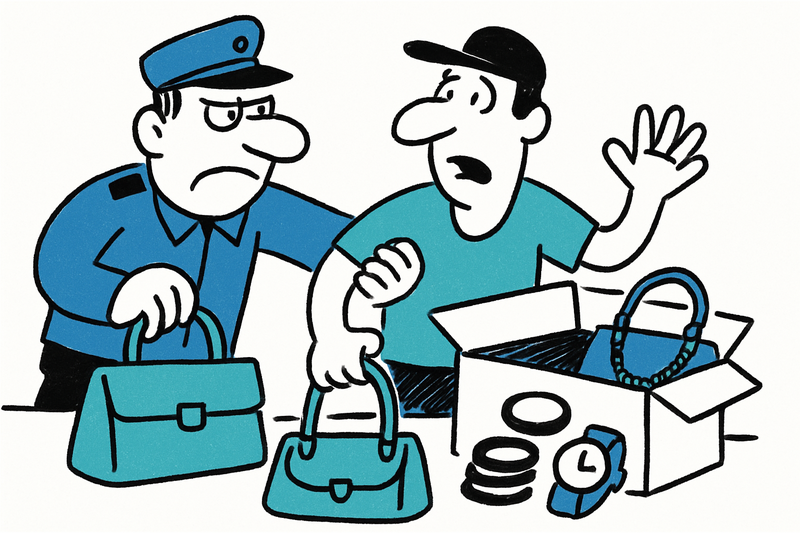
The images from Palma and Palmanova — boxes, bags, stacks of fake handbags and jewelry — stay in the mind. Earlier incidents, such as Packages Full of Counterfeits: Van with Over 700 Fakes Stopped in Palma, show it's not isolated. 23,800 goods were seized during Operación Bubu, the estimated value: €11.5 million. Also found were dangerous toys and prohibited laser pointers. The Guardia Civil scored a hit. The central question, however, is: How could such a network establish itself on the island?
Between Tourism, Trade and Logistics
Mallorca is more than beaches and sangría — it is an island of logistics and consumption. Containers arrive, suitcases are transshipped, markets and street corners trade their wares. In Palma you can hear the traffic on the Ronda in the morning, the beeping of delivery vans, the clatter of cartons at the Mercado de l’Olivar. These everyday sounds are also the noises of a supply chain that can be exploited: cheap flight connections, tourists as end customers, short-lived sales points in holiday resorts. Hidden compartments in shops have been exposed in other operations, for example Hidden Compartments and Fake Sneakers: Major Raid in Can Picafort Raises Questions, which underlines how the trade adapts its methods.
The Downside Often Remains Invisible
Often only the surface is seen — the pretty imitation of a designer bag on the beach. Less visible are the risks: poor-quality materials, missing safety tests, illegal chemicals. Particularly alarming is that among the seized items were toys that could be intended for children. A broken toy is an annoyance; a poisonous or poorly made toy can cause health damage.
What is Lacking in Public Debate
There are aspects that are rarely discussed. First: the environmental costs. Counterfeit goods are often disposed of quickly — masses of plastic that end up in landfills or are burned illegally. This pattern is reflected in major seizures such as Alcúdia Cleans Up: Thousands of Counterfeits Reveal a Deeper Problem. Second: the link to other crimes. Networks that distribute counterfeit products often have connections to tax evasion, undeclared work or organized gangs. Third: the pressure on legitimate small retailers. Many local shops struggle to offer fair prices while cheap imitations on the roadside lure away customers.
Concrete Opportunities and Approaches
A bust like this is important but not enough. It requires a mix of prevention, control and education. Possible measures:
Targeted inspections at ports, airports and weekly markets — not just sporadically, but as a permanent strategy. Data exchange between police, customs and chambers of commerce across Europe to penetrate supply chains more quickly. Cooperation with online platforms so that listings can be blocked promptly. Permanent inspections are needed, as shown by operations like Raid at Playa de Palma: Nearly 6,000 Counterfeits — What’s Really Behind It.
Additionally: a local information campaign for tourists and residents. A leaflet in several languages at tourist information points, restaurants or hotels: why "too good to be true" is often dangerous. And practically: more training for market supervisors so that sellers and buyers can better distinguish between legal and illegal offers.
What the Island Can Do — and What It Cannot
Mallorca can strengthen inspections, set up zones with increased market supervision and support local retailers. What the island cannot do on its own is control international production chains. Here European agreements, joint investigative teams and technical solutions such as authenticity markings are required.
Outlook
The seizure of 23,800 items and the investigations into more than 80 suspects are a clear sign: authorities are working, the island is fighting back. At the same time, the case highlights the limits of local measures in a globalized world. The challenge for Mallorca will be to protect everyday life — the hum of delivery vans, the murmur of voices in Palma, the relaxed bustle at the beach — without falling into security paranoia.
There remains the opportunity to learn from the incident: better inspections, clearer information for visitors and locals, and stronger networking between authorities. If this succeeds, Mallorca will be perceived not only as a holiday paradise but also as a responsible trading platform — and that would be a gain for everyone.
Frequently asked questions
Why has Mallorca become a target for counterfeit goods networks?
Are fake handbags and jewellery in Mallorca just a tourist problem?
What are the risks of buying counterfeit products in Mallorca?
Why are counterfeit toys in Mallorca especially concerning?
What did police find in the Palma counterfeit goods operation?
What happened in Palmanova during the counterfeit goods crackdown?
How can Mallorca reduce the sale of fake goods in markets and resorts?
Can Mallorca stop counterfeit goods on its own?
Similar News

Release after bloody attack in Palma: Why the court's decision raises questions
An 18-year-old who allegedly inflicted a serious neck injury on a man at Plaza Gomila using a wristwatch wrapped around ...
Kidnappings in Inca: Three young men forced into car trunks and abused in the forest – a reality check
In Inca, three 18-year-old men were forced into car trunks by masked assailants at the Plaça des Bestiar, taken to a for...
Spreading Massification: The Brake That Still Has Much Work to Do
Marga Prohens announces limits on volume tourism. The measures sound harsh — but are they enough to save everyday life, ...

Through the Keyhole onto the Party Yacht: How Daniela Katzenberger Is Planning Her 40th on Mallorca
Daniela Katzenberger turns 40 and wants to celebrate it on the island — likely with a boat, cake and her mother. A relax...
By Boat Instead of the Road: Palma's Water Bus — a Reality Check
The 'Bus Nàutic' launches in two stages — but questions remain over interim operations, fares and environmental requirem...
More to explore
Discover more interesting content

Can Cap de Bou

Townhouse Lleo 72
