
Three Dead in Crossing: A Tragedy That Leaves Questions Unanswered
Three Dead in Crossing: A Tragedy That Leaves Questions Unanswered
A migrant boat was intercepted 60 nautical miles south of Mallorca. Of the original 26 people on board, 23 survived; three people died during the multi-day crossing and, according to the rescued, were not brought ashore. The cases raise new questions about maritime rescue, smuggler practices and our reception capacities.
Three Dead in Crossing: A Tragedy That Leaves Questions Unanswered
When lives end 60 nautical miles south of Mallorca
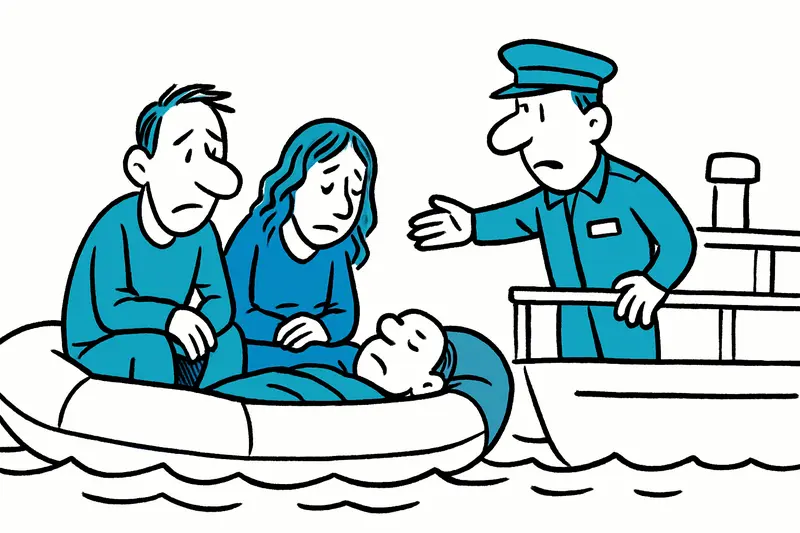
Late on Wednesday evening, search and rescue units discovered an overloaded boat about 60 nautical miles south of the island. Twenty-three people on board were rescued. According to the survivors, there were originally 26 people on board; three of them died during the crossing. The other migrants report that the deceased were subsequently not brought ashore, a situation echoed in 18 People Missing off Mallorca — A Call to Politics and Society.
Just a few hours earlier, a leisure sailboat and its skipper with his father had found another, apparently abandoned, inflatable boat off the south coast. The roughly six-meter craft was drifting empty; clothing, backpacks and petrol cans were found on board. The engine would not start. The discovery made clear how close such fates now pass by Mallorcan shores.
Central question: How can it be that people die on such a short sea crossing and their bodies are not recovered, even though the island has state rescue units? That is the question that remains when one looks at the bare numbers: 23 rescued, three dead, one boat later found empty.
Critical analysis: These events reveal several problems at once. First: the danger of the crossings—defective boats, inadequate supplies, long stays at sea. Second: the role of smuggling networks that cram people into often decrepit pateras. Third: the challenge of rescue capacity in the western Mediterranean, where operations cover long distances and changing weather conditions, and where similar questions arose after incidents like Patera Capsizes Near Portopetro — One Dead, Three Missing and Many Unanswered Questions.
Cooperation between Salvamento Marítimo and the Guardia Civil apparently worked in this case: the boat was discovered and people were rescued. Yet the survivors' reports of three deaths on board raise questions about surveillance intervals, onboard medical first aid and criminal investigations into the smugglers.
What is often missing in public debate: a differentiated view of causes and short-term countermeasures. Merely presenting numbers does not help, as argued in More Boats, More Questions: Mallorca Under Pressure from Rising Boat Arrivals. There is a lack of clear procedures for care, faster legal and identity clarification after rescue and transparent investigations when lives are lost. And there is a lack of honest discussion about legal access routes that could prevent people from risking their lives on thin rubber, a debate reflected in Boat tragedy off Mallorca: Between grief, legal battles and the question of a Plan B.
Everyday scene from Palma: On the Paseo Marítimo in the early morning, when delivery vans honk and bakeries throw early loaves into the streets, fishermen and dockworkers talk about the nightly sightings. "You see the boats more often now," says one of them, while seagulls circle over the waves and excursion boat engines roar in the harbor. This proximity makes the events tangible for many—and painful.
Concrete solutions, realistic and locally feasible: 1) More regular maritime patrols on known routes, combined with improved sensors and drones to detect crossings earlier. 2) Faster medical first aid on board and clearer protocols for recovering bodies, so the dead are not left in limbo. 3) Expansion of reception capacities in the Balearic Islands for quick registration and humane accommodation. 4) Strengthened investigations against smuggling networks with international cooperation, because the routes do not end at our coasts. 5) Prevention work: information offers in regions of origin and safe, legal routes to Europe—where politically possible—reduce the risk of deadly crossings.
These proposals may not sound spectacular, but they address the concrete situation described: boats at sea, people in danger, authorities that must act. It is important to strike a balance between rescue capability at sea and long-term policies addressing the root causes of migration.
Punchy conclusion: Three dead on a crossing that quickly disappears in the numbers as "one case among many"—that must not happen. Mallorca is close enough to see the suffering; we are also obliged to use that visibility to create pressure for action: better rescue technology, faster medical protocols and a serious debate about safe alternatives for people fleeing.
Frequently asked questions
What happened off Mallorca involving a migrant boat, and what concerns did it raise about safety?
Why do deaths occur on short sea crossings near Mallorca?
What improvements are proposed to improve migrant rescue operations near the Balearic Islands?
How does Mallorca handle reception and care for rescued migrants?
What role do technology and patrols play in detecting crossings near Mallorca?
Are smugglers investigated in these cases, and how does Mallorca participate?
Are there safer, legal routes or information available for people at risk of dangerous crossings near Mallorca?
What can residents or visitors in Mallorca do to engage with these issues?
Similar News
Released with Conditions: The Plus Ultra Suspicion and a Mallorcan Finca as Residence
A Dutch entrepreneur, sought in connection with the Plus Ultra case, was extradited to Spain after his arrest in Germany...

Haute Nuit in Puerto Portals: Fashion, Art and Indulgence by the Water
On October 2 the Lobster Club in Puerto Portals will be transformed into a stage for curated fashion, art and culinary e...
Magaluf: Watchtower Alarm – Lifeguards Pull Unconscious Beachgoer from the Water
After a drama in the late afternoon, two lifeguards at Magaluf beach rescued an unconscious 44-year-old man. He was stab...
Turquoise in the City: How dangerous is the color play of the Sa Riera?
The Sa Riera in Palma suddenly turned turquoise — a pretty motif, but behind the effect lies a discharge of saline waste...

Jeckliner at Sunnesching: Cologne spirit sets sail from Palma
In September 2027 the Mein Schiff 2 briefly becomes a floating carnival stage: four days with Cologne bands, comedy and ...
More to explore
Discover more interesting content

Can Cap de Bou

Townhouse Lleo 72
