
Only three shopping-open holidays in December: Who really benefits?
Only three shopping-open holidays in December: Who really benefits?
The Balearic Islands allow shops to open on only three December holidays (6th, 21st and 28th). Retailers in Palma are calling for more — but the debate is incomplete.
Only three shopping-open holidays in December: Who really benefits?
Main question: Does the rule protect local shops — or strengthen online competition?
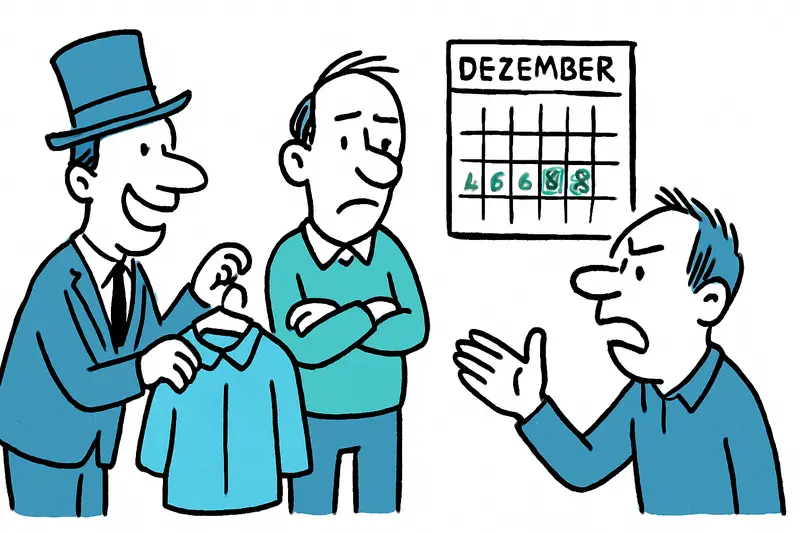
The Balearic Islands allow shops to open on only three holidays in December: on 6th, 21st and 28th December; for example, some shopping centres were open on December 6. That is a stark number that carries a lot of weight during the Christmas season. Representatives of large retail chains in Palma are calling for more opening days, hoping to attract customers into the city centre. At the same time, it is argued that the existing restriction plays into the hands of online platforms that can sell around the clock.
My central question is: who is being left out of the public discourse? What about small shop owners, their employees and customers who live away from the main shopping streets? In the debates you often hear the voices of the big chains; coverage such as Immaculate Conception in Mallorca: A Quiet Holiday — and Where You Can Still Shop illustrates this. The others remain quiet.
Critical analysis: the bare figure — three days — is only half the story. Regional comparisons show that Andalusia, Catalonia and the Canary Islands allow five opening days, and Murcia even six. That suggests there is political leeway. But leeway for whom? Larger chains have logistics capacity, staffing reserves and marketing power to make short special openings profitable. Small businesses, by contrast, must pay staff extra, often without any guaranteed increase in customers.
The regulation impacts several levels: economic, social and urban. Economically, brick-and-mortar retail loses market share to online retailers, especially when consumers prefer to do their Christmas shopping conveniently from home; if they do decide to buy in person they can consult where you can still shop in the coming days. Socially, the debate places a burden on employees: holiday work, irregular schedules and sometimes no adequate compensation. Urban-wise: Palma has narrow shopping streets — Portal de l'Angel, Passeig del Born — that already strain under delivery traffic and Christmas lighting on normal days. More shopping-open days without accompanying measures could clog the city centre rather than enliven it.
What is missing in the public discourse? First: concrete data about smaller retailers — how many actually open on special public holidays, and how many opt out for cost reasons. Second: the voices of employees, whether they even want more holiday work. Third: an assessment of the tourism effect — do additional opening days really bring international visitors into the shops, or merely shift the timing of purchases?
A quotidian scene from Palma: it is a rainy afternoon at Portal de l'Angel, the Christmas lights are blinking, someone is selling roasted chestnuts in front of the electronics store, and an older woman stands before a shop window holding a shopping bag with a single gift card visible inside. Next door the owner of a small clothing shop wipes the display; she looks tired. She says nothing aloud, but it is obvious: an additional holiday without any guarantee of customers is primarily a risk for her.
Concrete, less ideological solutions:
1) Tiered model for municipalities: Permit additional shopping-open days at municipal level, linked to one condition — a protection package for employees (compensatory days off, holiday pay, voluntariness). This keeps decision-making local while respecting workers' rights.
2) Pilot trial in Palma: A limited test phase with two extra opening days, accompanied by counts (pedestrian flows, sales data) and surveys of shop owners and employees. Data instead of gut feeling.
3) Support for smaller retailers: Grants for extended opening hours, joint city marketing campaigns (discounted parking, streetlight advertising), digital training so small shops can maintain an online presence without losing their identity.
4) Coordination with tourism stakeholders: Hotels, organisers and markets should be involved in planning so opening days correspond with tourism demand — and not just create more available shopping days.
And yes: there is the simple political answer “open more days, more revenue”, but reality is more complicated. More shopping-open days can increase sales in the short term — for some. For others they mean only higher costs and more stress. The balance must be: economic relief without selling out working conditions and without favouring large chains one-sidedly.
Pithy conclusion: Those calling for change must offer more than demands for extra opening days. A conceptual debate is needed with reliable figures, clear rules for employees and targeted support for small shop owners. Otherwise a simple liberalisation will only exacerbate inequalities — and in the end the small shop owner stands, like on that rainy afternoon, in front of the decorated shop window, tired and with no guarantee that anyone will actually buy on the next holiday.
Frequently asked questions
Which shopping holidays are shops allowed to open on in Mallorca in December?
Why do some people in Mallorca want more shopping-open holidays in December?
Do extra holiday shopping days in Mallorca really help small shops?
Are employees in Mallorca affected by holiday shop openings in December?
Is online shopping making December shop holidays less useful in Mallorca?
What is the shopping situation like in Palma during December holidays?
Where can you still shop in Mallorca on a public holiday in December?
What would be a fairer approach to December shopping openings in Mallorca?
Similar News

Who Bears the Burden? Mallorca Between Tenant Protection and Landlord Fears
Madrid's new housing decrees strengthen tenant rights — but on Mallorca concern is growing: will the law drive small lan...
On the Edge: What Mallorca's Airport Loses If a Major Low-Cost Carrier Falters
The company that operates numerous connections from Palma to France and domestically is negotiating with creditors to re...
Ballermann star Frenzy wins 'Villa of Temptation' and donates prize money to Mallorca animal rescue
Ballermann singer Frenzy won the German reality show and donated the remaining prize money — around €14,080 — to an anim...
70 Trees Removed on Avenida Jaume I: What's Happening in Santa Ponça?
On October 1 the final redevelopment phase on Avenida Jaume I in Santa Ponça begins: 70 trees and old streetlights are t...

When a Boundary Is Crossed: The Case of Isi Glück and the Responsibility of Venue Operators
The singer from Mallorca reports an assault backstage in Halle. A clear guiding question, analysis of missing protective...
More to explore
Discover more interesting content

Can Cap de Bou

Townhouse Lleo 72
