
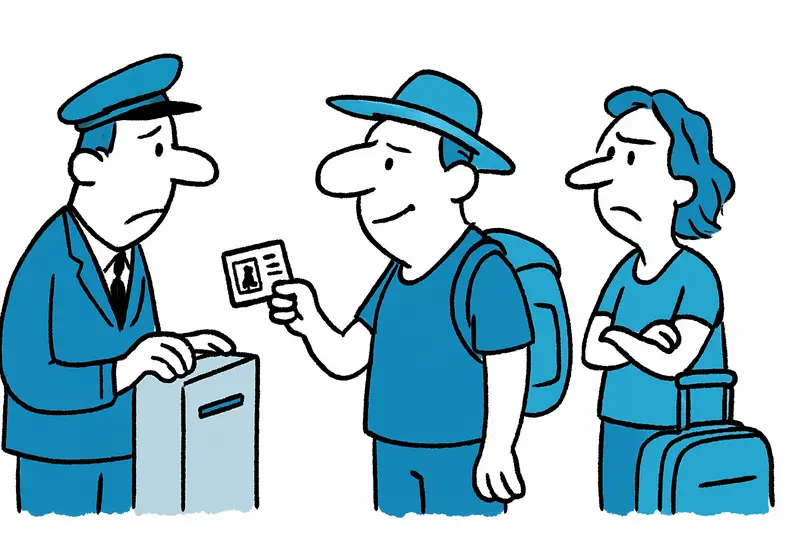
Tourists with Resident Cards: Who Pays the Price for the Loophole in the TIB Network?
Tourists with Resident Cards: Who Pays the Price for the Loophole in the TIB Network?
Resident tickets are apparently being used by tourists on TIB intercity buses. Why are checks so weak, and who bears the cost?
Tourists with Resident Cards: Who Pays the Price for the Loophole in the TIB Network?
A key question
How can it be that on the island's heavily used intercity network guests systematically travel using resident tickets without the system effectively acting against it?
Quick status update
Drivers report that on several important lines — including to Sóller, Peguera, Magaluf and Pollença — resident cards are frequently used by people who obviously are not the rightful holders. Bus drivers are not allowed to check the cards. The Ministry of Transport has announced it will crack down on misuse; a pilot project last year resulted in a total of 45 checks between April and December.
Critical analysis: Why the problem is bigger than it sounds
Forty-five checks in nine months sound like a drop in the ocean. The technology behind the resident cards is convenient — contactless and fast — but that is exactly what makes it vulnerable: anyone who has a card in their wallet or is handed one by another person can board without obstacle. At the same time, timetables and customer pressure play a role, as discussed in When Breaks Shape Timetables: TIB Changes and What They Mean for Mallorca. At stops like the Estació Intermodal in Palma or the roundabout in Peguera there are often only minutes for boarding and alighting. Drivers who want to avoid angry tourists or further delays do not resort to personal checks, also because they formally do not have that right.
What is missing in the public debate
The debate remains technology-focused: “more checks” and “tougher penalties” are the common demands. Three points are missing: first, an honest cost-benefit calculation — how high are the revenue losses really and who bears them? Second, the question of data protection and legal certainty: why are drivers not allowed to verify identity, and would an ID check be legally tenable? Third, the users' perspective: many tourists probably do not even realize they are using a resident fare when cards are passed around easily.
Everyday scene from the island
An early morning at Plaça d’Espanya: a TIB bus rumbles off, the air conditioning kicks in, and nearby a group of British holidaymakers wait with a bundle of cards in a supermarket plastic bag. The driver, a man in his fifties, casts a quick look at the crowd, takes a deep puff on his pipe, lets the doors close and drives away. At the wheel he has no time for discussions, and three more stops lie ahead beyond the MA-11. Gaps like this develop quickly into habits.
Concrete solutions — pragmatic and feasible
1) Technical upgrades: the card readers could include a simple check that indicates whether a card is being used by one person for longer than usual (for example, multiple validations at different locations within a short time). This is not biometrics, but pattern recognition that provides leads and helps target controls.
2) Expand random checks: instead of sporadic campaigns, a permanently mixed team of inspectors visible at kiosks and on buses would make sense. 45 spot checks in nine months are too few; we need regular, unannounced inspections that reduce the rate of misuse.
3) Legal framework for drivers: clearly defined rules could allow drivers to request identity verification in cases of obvious misuse — but only following a standardized procedure and in the presence of an inspector to avoid escalation.
4) Clear sanctions & communication: small fines and the ability to recover the fare, combined with an information campaign at airports, ferry terminals and holiday accommodations, would raise awareness.
5) Simplify the fare system: a day- or week-based short-term ticket for tourists (see One Ticket for Everything: Can Mallorca's New Fare Really Simplify Everyday Life?), easy to buy at machines or via an app, would reduce the temptation to make use of resident fares.
What is still missing
A transparent publication of figures: how many cases were detected in the 45 checks? How are the checks distributed geographically and temporally? And who systematically analyzes the data to adjust measures? Without such insights every announcement remains vague.
Conclusion — concise
The problem is not a trivial matter: it affects the public transport system, the staff and, in the long run, the residents who subsidize public services. Those who turn a blind eye to the causes — convenient technology, patchy controls, unclear legal situation — only postpone the bill. Pragmatism is required: better use of data, more and regular checks, clear procedural rules for staff and a product that truly appeals to tourists. Otherwise the bus driver will be left with his pipe, the doors will close, and the gap will remain open.
Frequently asked questions
What is the weather like in Mallorca in spring?
Can you swim in Mallorca outside the summer season?
What should I pack for a trip to Mallorca in the shoulder season?
Is Mallorca good for outdoor activities in cooler months?
What is the best time of year to visit Mallorca if you want warm weather but fewer crowds?
What is Palma de Mallorca like outside the main tourist season?
Is Sóller a good place to visit in spring?
What should I know about Mallorca weather before planning a beach day?
Similar News

More water than last year: Mallorca's reservoirs breathe easier
September rain refilled the Tramuntana's reserves: overall fill around 35 percent, Cúber at 40.42 percent, Gorg Blau at ...
Three Luxury Hotels in Banyalbufar: Lots of Money, Many Questions
A Danish investor plans three exclusive accommodations in Banyalbufar — including the historic Son Valentí. The announce...
2.1 tonnes of cocaine on sailing yacht off Spain's coast – a reality check for the coastguard
A 14-metre yacht was seized with 2.1 tonnes of cocaine. Who monitors the ports, how does the international hunt succeed ...

Heat Bonus in Mallorca: 100 Euros Extra for Outdoor Staff at MarSenses
MarSenses pays employees who worked outdoors in August an extra €100 as recognition. Lighter uniforms, reduced hours for...
Renovating in Mallorca: What You Really Can Do Without Neighbour Consent
Many think they can do whatever they want in their apartment. That's partly true — but only as long as structural elemen...
More to explore
Discover more interesting content

Can Cap de Bou

Townhouse Lleo 72
