
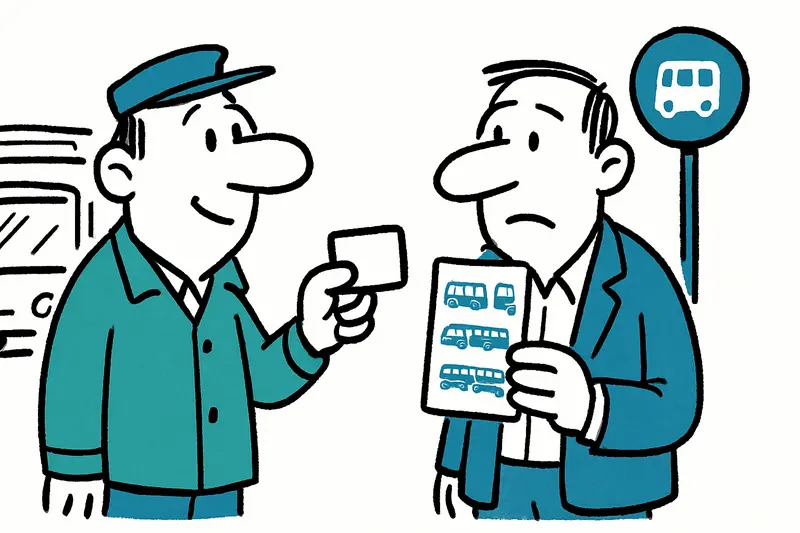
One Ticket for Everything: Can Mallorca's New Fare Really Simplify Everyday Life?
From October, passengers in Mallorca will be able to apply for the new unified fare card. A good idea — but the key question remains: Will the system truly make daily life easier, or will new hurdles arise, especially for seniors and tourists?
One ticket, many expectations: the guiding question
From October, a unified ticket for EMT city buses, TIB intercity buses and trains is to be issued on Mallorca One card for all of Mallorca: From October less paper clutter in your wallet. The central question, which is often only discussed at the margins, is: Can this card really simplify everyday life — or will it create new barriers when technical failures, bureaucratic confusion and tourist flows come together?
What sounds good at first glance
Fewer cards in the wallet, faster transfers and uniform tariff rules — these are clear advantages, as discussed in Tarjeta Única in Mallorca: Relief with Pitfalls. On the Plaça Major you can hear the Tramuntana in the distance on a windy morning and commuters whisper: "Finally no more switching between three cards!" Especially commuters who take the bus at the Estació Intermodal in the morning and later transfer to the EMT in Palma are likely to benefit from less stress.
The less noticed risks
But appearances can be deceptive: public debate often lacks details on data protection, technical robustness and the practical distribution process. What if validators are offline and the system relies on handy plastic cards as well as a smartphone wallet? Then older people or occasional users may find themselves at stops while the usual sounds of a hectic morning — opening suitcases, the siren of an ambulance, irritated announcements — are accompanied by added uncertainty.
The grey citizen card from Palma will also be discontinued at the end of March 2026. For many of these users the changeover is not just a bureaucratic act but a question of accessibility: How easy will the replacement be? Are there mobile services for people who cannot come to a customer center? Will information be distributed in multiple languages so seasonal workers and tourists do not despair at check-in, as noted in Targeta única: One card — many questions. What commuters and tourists need to know now?
Technology, staff, peak tourism: everyday business or crisis mode?
The first weeks after a changeover are prone to problems: crowded counters, long queues at the bus station, confused tourists, calls to customer service — familiar scenes. Little discussed is how those responsible plan to absorb peak loads. Are extended opening hours and additional counters enough? Or are temporary pop-up points needed at tourist hotspots like the Passeig Marítim or at weekly markets?
And then there is the question of costs: Who will cover the expenses for replacement machines, staff training and support? Small municipalities often have tight budgets; a unified card is politically attractive but brings additional administrative work that must be distributed.
Data protection and transparency — two underestimated points
The planned smartphone solution knocks on the door of digital convenience. But that raises questions: Which movement data will be stored? For how long? Can third parties gain access? Transparent answers and simple opt-out options are necessary so the card is not only convenient but also trustworthy.
Concrete opportunities and pragmatic solutions
There are many realistic opportunities: a phased rollout that first covers commuter routes and main lines would reduce stress. Mobile advice centers in larger towns, extended opening hours at Plaça de Cort and the bus station in Palma during the first weeks, and printed and digital guides in Spanish, Catalan, English and German would be simple, effective measures.
Technically, an offline fallback is important: cards should store locally valid balances so buses can continue to operate without a connection. Clear rules for exchanging the grey citizen card and a small starter credit on the new card (e.g. €5) would reduce waiting times during initial top-ups. And: a hotline with multilingual staff that is expanded in the first months.
How commuters and residents should act now
Those who already have a TIB card can breathe a sigh of relief — it remains valid, as explained in Tarjeta Única in Mallorca: A Step in the Right Direction — But Is It Enough?. Those who only use the grey Palma card should keep an eye on deadlines and book an appointment early. Practical tip: counters are often quieter in the morning, and the customer center at the bus station is often faster than Plaça de Cort, where tourists and official appointments tend to pile up.
And for everyone: if you plan to use the smartphone solution, check your password and app settings — a sunny morning at the beach is the wrong time for experiments if you need to be on time for work.
In short: Applications possible from October; TIB cards remain valid; Palma's grey citizen card ends in late March 2026; the smartphone option arrives next year. The idea is good — but success depends on technology, transparency and practical transition measures.
Frequently asked questions
Will Mallorca's new unified transport card really make buses and trains easier to use?
When does the new Mallorca fare card start working?
What happens to the grey citizen card in Palma?
Will my existing TIB card still be valid in Mallorca?
Where can I get help with the new transport card in Palma?
What should I do if the new Mallorca transport card system is offline?
Is the smartphone version of Mallorca's new fare card safe to use?
How should commuters in Mallorca prepare for the fare card change?
Similar News
First Day, First Consequences: What Palma's Rent Freeze Really Means
A new decree stops a planned eviction in Palma — but what really changes for tenants and landlords? A reality check with...
When Housing Becomes a Matter of Survival: Mallorca Between Rental Frenzy and Everyday Life
The case of 87-year-old Maricarmen showed that on Mallorca many people's lives are poised between affordable and uninhab...
Autumn in Mallorca: When Melancholy Gets a Window
Why autumn quietly tightens here — and how to make use of the mood: walks, culture, candles and the light from Palma to ...
Near-miss on Lanzarote: Landing Ryanair Jet and Iberia Takeoff — what really went wrong
On Lanzarote there was a dangerous incident: A Ryanair flight (FR5910) from Dublin landed on runway 03 while an Iberia E...
Eurowings introduces new Premium Business seats on Mallorca routes
From December 1, selected Eurowings flights to Palma and other destinations will feature eight particularly generous sea...
More to explore
Discover more interesting content

Can Cap de Bou

Townhouse Lleo 72
