
Tarjeta Única in Mallorca: Relief with Pitfalls
The new Tarjeta Única promises fewer cards in wallets and a unified public transport system. In practice, mandatory appointments, 30-day waits and document hurdles become stumbling blocks. What works — and what needs to be improved now.
Relief or a bureaucracy trap? The decisive question
The key question is simple: does the new Tarjeta Única en Mallorca: comienza la transición — ¿alivio o nuevos obstáculos? really make everyday life easier for residents of Mallorca — or does it mainly create new obstacles? The answer cannot be reduced to a clear yes or no. On Plaça d'Espanya, when the sun shines through the glass front of the Estació Intermodal and the hum of electric scooters over the paving mixes with the clicking of bicycle bells, you immediately notice: boarding has become noticeably simpler. But getting the card requires planning, paperwork and often patience.
How is the issuance handled — and where are the problems?
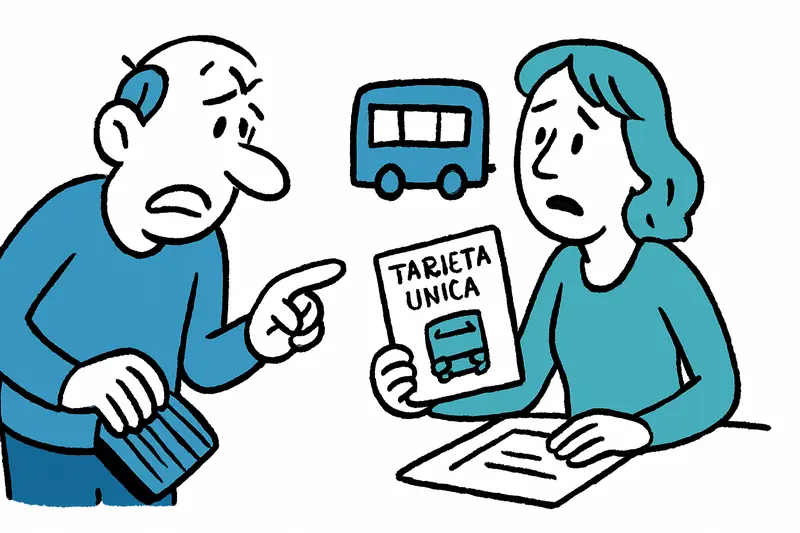
The card is issued at central locations: Estació Intermodal Palma, TIB offices in Alcúdia, Inca and Manacor, as well as selected municipal offices and EMT customer centers, as outlined in Tarjeta Única unificada empieza en Mallorca: lo que deben saber los residentes. The fact that the first card is free is practical — a real plus for commuters between Palma, Inca or Alcúdia according to Tarjeta Única en Mallorca: alivio con obstáculos. But: appointments are mandatory. No appointment — no plastic card. Those who come by spontaneously often find the door closed or are sent away to a later appointment.
The digital application on the TIB official website sounds convenient but has a catch: up to 30 days waiting time for issuance. That is more than a bureaucratic annoyance; it is problematic for people with acute mobility needs or short-term job requirements. At the station I saw people waiting with bicycle panniers who visibly breathed a sigh of relief when everything could be done immediately — others had to leave again.
The documents — small but effective
The required documents are not spectacular: original and copy of the ID, proof of registration (if the residence is not noted on the ID), power of attorney for representation, family book for children under 14. For many this sounds routine. For newcomers, older people or residents without internet access, however, this becomes an obstacle course. If a certificate is missing, the mission often ends at the next municipal office — with extra travel time and frustration.
Fees, top-ups and technical outlook
The first card is free; after that a replacement costs €8. Authorities recommend a starter credit of €5; top-ups can be made at machines, online or with the bus driver (best in even five-euro notes). Technically, improvements are in sight: from Q1/2026 EMT buses should accept card payments, and a digital version is planned for the first half of 2026. Credit from old citizen cards can be reclaimed from April 1, 2026 — sensible, but a long wait for users.
What is missing in the public debate
The rollout shows typical island realpolitik: a good idea, pragmatic implementation — and points that are rarely debated loudly. Three underestimated problems stand out:
• Waiting times and online deadlines: commuters, shift workers or people with short-term appointments need faster solutions.
• Digital divide: not everyone has internet access or the digital skills for an online application.
• Lack of multilingual information: in places with high in-migration, clear guidance in German or English is often missing.
Concrete proposals — practical and local
The Tarjeta Única can be more than a new plastic card — if the administration now makes adjustments. Proposals that would help in practice:
• Mobile issuance dates in small towns: a bus or stand that visits Campos, Santanyí or Llucmajor twice a month.
• Temporary QR emergency code: those who apply online receive an immediate, time-limited QR code for 14 days as a transitional solution.
• Accelerated issuance for commuter workers: express appointments or bulk issuances with proof of employment contract.
• More top-up points and an introductory hotline: especially in outer districts, machines or retail partners; hotline available in German and English during the first 12 months.
• Prioritize contactless payment on buses: if buses accept card payments earlier, queues at machines will be reduced.
Conclusion: an opportunity with homework
The Tarjeta Única is a step in the right direction — fewer cards in the wallet, less confusion at stops, and the prospect of digitized processes. But without targeted transitional measures it remains just another hurdle for some residents. Those applying for the card now should schedule appointments, have their documents ready and not forget the starter credit. The administration, meanwhile, must deliver: mobile services, shorter issuance times and multilingual information would make the initiative truly practical for everyday life. Then soon at the Estació you will hear only the happy ringing of bicycle bells — and no more paperwork rustling in backpacks.
Frequently asked questions
Is the Tarjeta Única in Mallorca actually easier to use for daily travel?
Where can I apply for the Tarjeta Única in Mallorca?
Do I need an appointment to get the Tarjeta Única in Mallorca?
What documents do I need for the Tarjeta Única in Mallorca?
Is the first Tarjeta Única in Mallorca free?
How long does it take to get the Tarjeta Única in Mallorca if I apply online?
Can I top up the Tarjeta Única on buses in Mallorca?
What does the Tarjeta Única rollout mean for people in places like Alcúdia, Inca or Manacor?
Similar News
Masked Images, Real Panic: When Social Media Aesthetics Alarm Neighbors
Five German content creators filmed on a recently vacated detention site using deceptively realistic props. The result: ...
Why the Striped Breams in Cala Pí Should Be a Wake-up Call
Once again bathers in Cala Pí were surrounded while swimming by small, nippy fish — some wounds bled. Time for clear rul...
Daily from New York: How Palma's Air Traffic Is Growing — and What Must Change
United will increase the Newark–Palma service to daily flights in 2027 (Boeing, 231 seats). Strong tourist numbers clash...
When Love Ends in Shards: Destruction in Son Vida and the Questions That Remain
In Son Vida a relationship dispute escalated: a woman destroyed furniture in a luxury villa, later pressed a panic butto...
Who Bears the Burden? Mallorca Between Tenant Protection and Landlord Fears
Madrid's new housing decrees strengthen tenant rights — but on Mallorca concern is growing: will the law drive small lan...
More to explore
Discover more interesting content

Can Cap de Bou

Townhouse Lleo 72
