
After TV Feature: Why the Unsolved Bierkönig Case in Mallorca Raises Questions Again
After TV Feature: Why the Unsolved Bierkönig Case in Mallorca Raises Questions Again
The murders of Manfred Meisel, his son Patrick and an employee remain an open case. A nationwide TV program has brought the case back into public memory. We ask: What is missing to solve the puzzle — and what could be done differently locally?
After TV Feature: Why the Unsolved Bierkönig Case in Mallorca Raises Questions Again
Almost 30 years later: Who will tie up the loose ends?
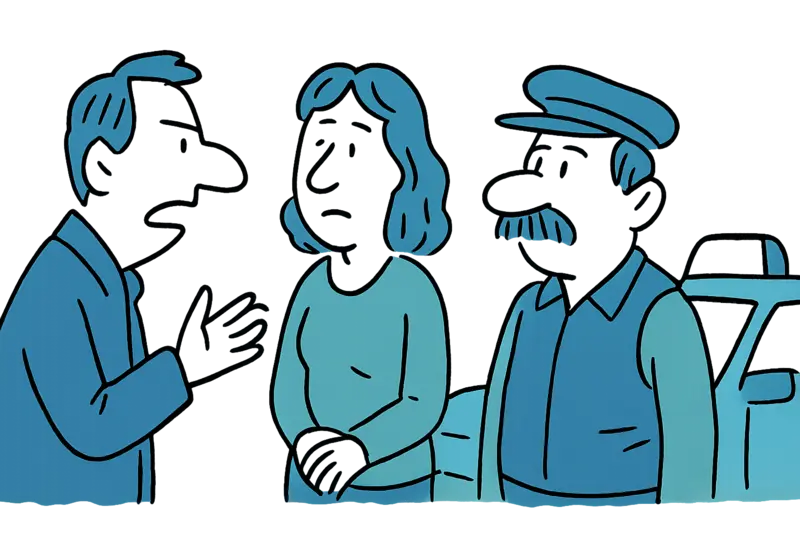
A nationally broadcast program has brought the old case back into discussion and you can sense it on Mallorca's streets: conversations at the bakery, taxi drivers on the Avinguda d'Argentina muttering about it, and tourists' voices mixing with those of the locals. The case, in which three people died on a finca near Playa de Palma in 1997, remains a rupture in the island's history — as do other long-running files such as In the Island's Memory: The Murder of Gisela von Stein and Its Traces in Canyamel.
Critical analysis: Several factors contribute to the stalled progress. First, the natural erosion of traces: files, memories and physical evidence age, appointments for interviews move into private settings, witnesses move away or keep silent. Second, the complexity of cross-border investigations. In Spain, the prosecution of the case is governed by different national legal rules than in Germany; this complicates cooperation. Third: public interest comes in waves — for example, recent renewed attention in New leads in the Malén Ortiz case: Why answers in Mallorca are taking so long — when the wave subsides, investigators' work often remains behind closed files.
What is missing from the public discourse is a sober inventory: Which pieces of evidence still exist physically? Who holds the original files? Were evidentiary items stored correctly so that today's DNA technology can still analyze them? These practical questions rarely appear in headlines; instead, speculations about motives and sensational aspects dominate. Those headlines can echo coverage of other historic unsolved incidents, such as Unsolved discovery off Cala d’Or: The brutal death of a young German tourist in 1988.
Added to this is the human dimension, which is too often shortchanged in reporting: behind the facts are relatives who have had to live with uncertainty for decades. The then 43‑year‑old widow said years ago in an exclusive interview that the memory of the victims shapes everyday life. Such voices deserve spaces where they are not used merely as sources for stories, but are protected and supported as those affected.
Concrete approaches: First: create transparency. An independent inventory of the investigation files — ideally with representatives from both countries — would clarify which documents still exist and which traces can be technically re-examined. Modern forensic methods (new DNA sequencing, re-analysis of ballistics, digital restoration of old photos and audio recordings) should be systematically considered. That requires access to the original evidence and a documented chain of custody.
Practically on Mallorca: a temporary information office at a central point in Palma — for example within walking distance of Passeig Mallorca — could serve as a contact point for old witnesses. Many people are more likely to speak when offered confidentiality and personal attention: a quiet room, a conversation with someone who knows the island, perhaps an offer in several languages. An anonymous tip platform should also be set up; fear of reprisals is a realistic barrier.
Police and judiciary need clear communication rules. The public does not demand constant sensational updates, but it does expect indications that files are not disappearing into drawers. A factual overview of which steps are possible — and which legal hurdles exist, for example due to national statutes of limitations — would curb speculation and strengthen trust.
What I observe at the Santa Catalina market is instructive: people remember places, faces and conversations — not always to reveal information immediately, but often to pass it on at some point. That must not be lost. Memories are fragmentary; with the right methodology fragments can be linked.
Punchy conclusion: Anyone who does not want a case like this to rest permanently must act practically — a clear inventory, modern forensics, cross-border alliances and, above all, sensitive handling of those affected. More emotion in discussions helps with remembrance, but not with securing evidence. To revive an old case, work is needed precisely in these areas — on the ground and between the authorities.
Frequently asked questions
When is the best time to visit Mallorca for warm weather and quieter crowds?
What should I pack for a trip to Mallorca?
Are there good swimming beaches in Mallorca for safe swimming?
How can I get around Mallorca without a car?
What are good hiking routes in Mallorca?
Where can I taste authentic Mallorcan food?
Is Mallorca a good destination for families?
What should I know about weather and water safety on Mallorca's coast?
Similar News
Uninvited Guest in Santanyí: 20-Year-Old Climbs Over Terrace into Stranger's Hotel Room
In Santanyí an intoxicated 20-year-old German gained access to an occupied hotel room through the sliding door, jumped o...

Superyacht "Nord" off Andratx: What does it mean for Mallorca?
The 142-metre superyacht "Nord" recently anchored off Port d'Andratx. Why does a single vessel trigger debates about own...

New Hope in an Old Case: What the Search for Meisel's Murderer Can Achieve Now
Nearly three decades after the murder of Manfred Meisel at a finca near S'Aranjassa, a TV manhunt is once again focusing...

Fake Emails and €320,000: How Trust in the Fruit Trade Was Abused
Three men posed as a Mallorcan fruit supplier and induced a German company to transfer €320,000. A court hearing shows h...
Bar Marítimo: Who will get Palma's cult pub back? A reality check
Two companies, two very different offers — and many unanswered questions. A critical look at the tender procedure for th...
More to explore
Discover more interesting content

Can Cap de Bou

Townhouse Lleo 72
