
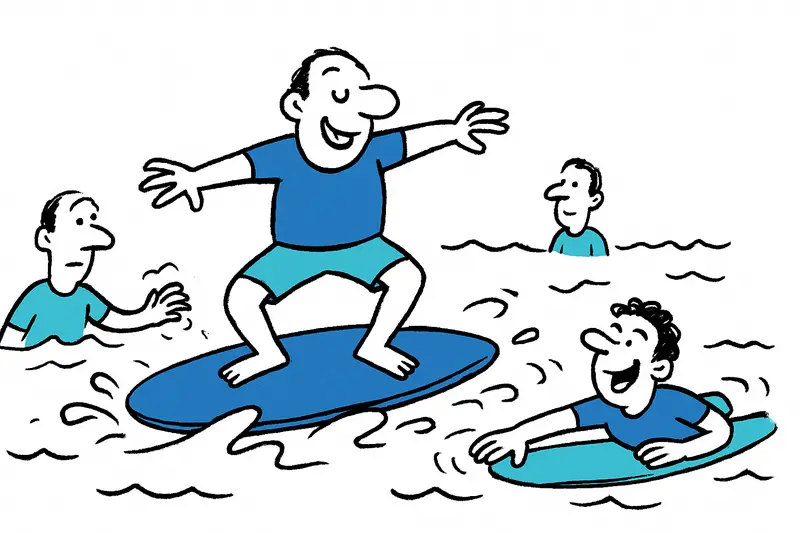
On the Board, Not on the Towel: Learn to Surf in Palma Bay
When autumn swells roll into Can Pastilla, the bay becomes a place to practise. Beginners quickly discover that surfing is less about posing and more about paddling, timing and plenty of laughs in the water.
Your first wave rarely belongs to you
From the beach, surfing often looks like one smooth movement: pop up, stand over the water for a moment, then glide casually towards shore. In Can Pastilla, reality usually begins earlier—with sand on your feet, a board under your arm and the question of how to position yourself on it without immediately sliding off again.
When conditions are right in Palma Bay, beginners head into the water too. There are surf lessons around Can Pastilla, for example at BonaOna Surf School. A lesson doesn’t start with an impressive ride, but with the basics on the beach: warming up, practising the movement on the board and learning when to paddle and when it’s better to wait. The sequence sounds simple. Your body may take a little longer to agree.
Paddling is the less glamorous part
Once you’re in the water, it quickly becomes clear that surfing isn’t a passive ride. You lie on the board, paddle out and try to catch the right wave. Then it’s time to point the board towards the beach and stand up at just the right moment. Sometimes there are only a few seconds between “now” and “too late”—and the first attempts usually come with a small, salty shower.
If you briefly manage to bring your feet underneath you on the board, you’ve already achieved something. Whether that turns into a few metres of riding depends on balance, strength and timing. Your arms are working, your legs are searching for a foothold, and you shouldn’t focus only on the tip of your board. Coordinating all of that is much easier on land. At least the ground stays still there.
Beginners also learn that not every wave is equally suitable. Some look promising but don’t carry you the way you hoped. It takes experience and an eye for the water to tell the difference. In a group, it’s not a competition: a successful attempt at standing up can be enough to earn an encouraging shout from the beach or a fellow surfer. The smile that small success brings is often bigger than the distance travelled.
The bay is not a swimming pool
Surfing is a sport in the open sea. Wind, currents, wave height and the number of other people in the water all make a difference. A day that looks appealing to experienced surfers isn’t necessarily a good day for beginners. If you’re new to surfing, follow your instructors’ advice, don’t judge conditions by a beach photo alone, and stay on shore when the wind is strong or conditions are difficult to read.
There’s more to the equipment than just a board. Lessons usually cover how to handle the leash and board and what to watch out for in the water. A wetsuit can help prevent chafing and provide warmth, depending on the season. But it can’t replace skill or a sensible assessment of the conditions. When booking a lesson, it’s worth asking a few simple questions: What’s included, what do I need to bring myself, and will the lesson go ahead in this weather?
You don’t need to be dreaming of a big surfing career to give it a try. A little flexibility helps, as does patience. If your arms are tired after two hours, you haven’t failed; paddling is more demanding than it looks from the beach. And the sea will reliably take care of any worries about a perfect hairstyle.
A different view of Can Pastilla
Many people know the area mainly as a stretch of coast near Palma, with walkers, cyclists, café tables and waves rolling regularly onto the shore. On the right day, another rhythm joins in. Boards are carried into the water, someone waits for the right moment, and someone else comes back laughing because the wave knocked them off sooner than expected. It’s not a grand spectacle. That’s exactly why it fits so well into the everyday life of the bay.
Surfing brings people into direct contact with the sea. You feel the wind and water temperature not just in passing, but with your whole body. It’s a lovely addition to the usual beach hours in Mallorca: an outdoor activity that lets you experience the coast rather than simply look at it. At the same time, it depends on nature and conditions—the calendar can set a lesson date, but it can’t make the waves appear.
If you want to give it a try, you don’t have to stand up to take something away from the experience. Simply reading a wave correctly or controlling the board for a moment is enough to get started. The next attempt usually comes naturally. And afterwards, when you look out from Can Pastilla beach at the people who seem to glide effortlessly over the water, you may see them differently: they probably practised on the sand once, too.
Frequently asked questions
Can beginners learn to surf in Mallorca?
What happens in a first surf lesson in Can Pastilla?
Is Palma Bay suitable for beginner surfers?
What should I ask before booking a surf lesson in Mallorca?
What conditions make surfing difficult for beginners in Mallorca?
How tiring is surfing for a beginner in Mallorca?
Do I need to stand up to enjoy a surf lesson in Mallorca?
Does a wetsuit help when surfing in Mallorca?
Similar News

Formentor: Wildfire Remains Active—What the Hectare Count Doesn’t Tell Us
Fire crews are still battling a blaze on the Formentor peninsula that has affected at least 280 hectares, according to t...
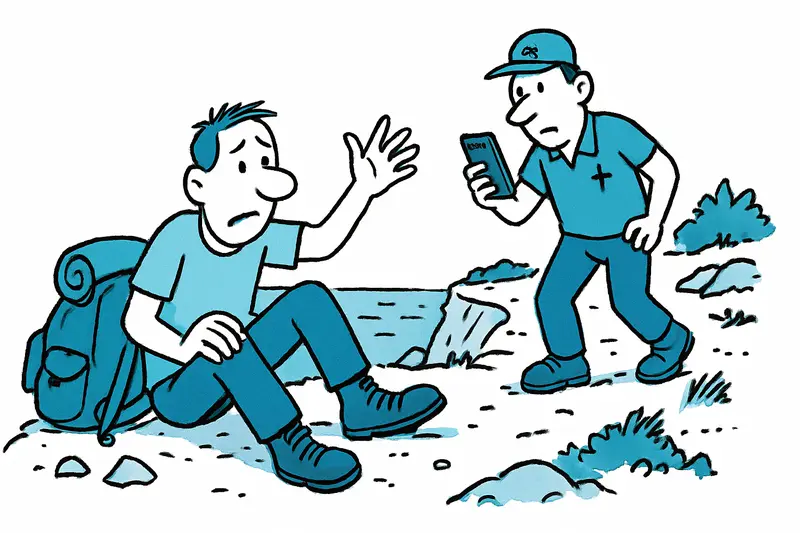
Fall on the Llucmajor Coast: When a Hiking Trail Becomes a Rescue Zone
A German hiker falls on the rocky coast of Llucmajor and is unable to walk. The rescue highlights why knowing your locat...

Five Months After the Pool Accident: What Max’s Return to Mallorca Shows
A dive into a very shallow hotel pool left a young holidaymaker with a severe cervical spine injury. His progress is enc...

Addiction in Mallorca: When a Habit Becomes a Serious Problem
Not every evening with alcohol or every long stretch of screen time means addiction. What matters is whether control, he...

Palma: A Couple Lived in a High-Voltage Substation – What the Case Reveals
Police found two people in a substation on Gabriel Alzamora Street. The dangerous location is one problem; the question ...
More to explore
Discover more interesting content

Can Cap de Bou

Townhouse Lleo 72
