
Palma: A Couple Lived in a High-Voltage Substation – What the Case Reveals
Police found two people in a substation on Gabriel Alzamora Street. The dangerous location is one problem; the question of safe accommodation is another.
A home behind a locked door – in a facility that cannot be a home
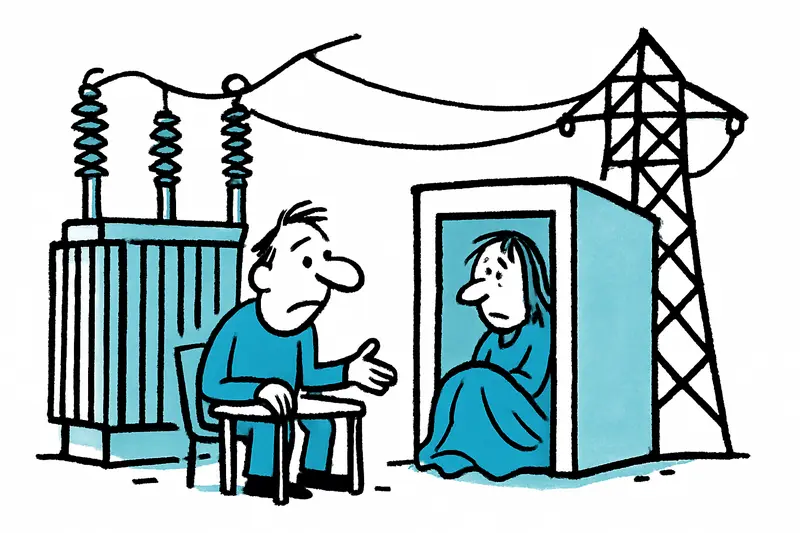
A television, mattresses, blankets, clothes and food: two people had made a home for themselves in a substation on Palma’s Gabriel Alzamora Street. Not just for one night. According to the 34-year-old man and 31-year-old woman, they had been living there for around six weeks. Then, at about 2:30 a.m., local police noticed a light inside the building and heard voices and a television.
The pair left voluntarily. They told officers they had somewhere else to stay that night. Technicians from the electricity provider then secured the entrance. The facility operates at 30,000 volts. This is not a backdrop for a sensational headline, but an immediate danger: unauthorized access to such areas can be fatal.
The central question goes beyond the police operation
What leads people to choose a place where one wrong step or a technical fault could have catastrophic consequences? The operation shows, first of all, that the danger was addressed and access secured again. But it does not explain why the couple lived there – or whether they had reliable accommodation after that night.
This distinction matters. The pair told officers they had found an unlocked entrance and put a padlock on it themselves to keep others out. This does not tell us everything about their circumstances, nor does it support a simplistic story about blame and order. What is clear is that a technical operations room became a refuge for weeks. That was dangerous for the people living there and could also have affected the electricity supply and access for technicians.
What can easily get lost in the debate
In cases like this, attention quickly turns to the dramatic setting: high voltage, flashing blue lights, a locked gate. Less visible is the practical question of what happens immediately after people leave. Is there a safe place for the coming night? Who checks the next day whether a temporary bed is enough or longer-term support is needed? The information that the couple had somewhere to stay for the night is reassuring – but on its own, it says nothing about the days that followed.
The housing shortage cannot be measured from a single incident either. It would be irresponsible to draw a statistic or a definitive conclusion about its causes from this case alone. But the incident makes a stark boundary visible: when a couple stores their belongings in suitcases and bags in a place that is explicitly not meant to be lived in, the need for safe housing is no longer abstract. We do not know the couple’s specific circumstances. That is precisely why we should not fill in the gaps with assumptions about their income, background or life story.
Palma at night – and what comes after?
Anyone out late in Palma knows how the sounds change: less traffic, a delivery van on a side street, a television still playing somewhere behind a closed door. For most people, the next morning brings the familiar journey to work or the market. For people without stable accommodation, even the question of where to leave their belongings for the evening can shape the whole day. This is not a claim about this particular couple, but about the everyday reality that incidents like this touch on in a city where living conditions visibly differ.
A police team can identify an immediate danger and escort people out of a life-threatening area. Technicians can secure the facility. These are necessary tasks, but they are not housing or social policy. If different agencies only come into contact after someone notices a light behind a locked gate, support is left to chance.
What could help in practice
After an incident like this, there should be a direct referral to social services, with an accessible contact point that can help clarify not just where someone will sleep that night, but what happens next. This could include assessing immediate accommodation needs, providing advice about available support and assigning a contact person to follow up. Such support can be offered without being paternalistic or automatically turning a police encounter into a long-term administrative case.
A clear procedure between the police, social services and the facility operator would also make sense: close off the dangerous area, inform the people involved about available support and – with their consent – refer them to the appropriate service. Owners and operators remain responsible for promptly securing unlocked entrances. This will not prevent every emergency, but it can stop a dangerous space from appearing to be an available shelter.
The key message, then, is not only that two people left a high-voltage substation. It is that a place built for electricity and technical operations served as their home for weeks. It is good that access has now been secured. But a locked door does not solve the housing problem. The city needs both: protection from immediate danger and a route to accommodation that is not itself dangerous.
Frequently asked questions
Is it safe to enter an electrical substation in Mallorca?
Can an electrical substation be used as a temporary shelter?
What happened at the substation on Gabriel Alzamora Street in Palma?
Why were two people living in a substation in Palma?
What support should people receive after being removed from an unsafe shelter in Mallorca?
Where did the couple go after leaving the Palma substation?
Does the Palma substation case prove there is a housing crisis in Mallorca?
How can operators stop people entering electrical substations in Mallorca?
Similar News
Serious Crash Between Santa Maria and Muro: What Matters on Mallorca’s Country Roads
Three 19-year-olds were injured when a car hit a wall, two of them seriously. The crash raises a bigger question: How sa...
Ses Païsses: What the Beetle Infestation Reveals About Oak Care in Mallorca
Holm oaks around the Talayotic site of Ses Païsses are infested with the Banyarriquer beetle. Tree felling and traps are...

Fitness with a DJ in Son Castelló: Does Music Really Improve Your Workout?
A fitness class with a DJ brings a club atmosphere to your workout. But in Palma, the beat isn’t everything: accessibili...
Batteries in the Countryside: Mallorca’s Energy Transition Needs Clear Limits
Battery storage can make solar power available long after the sun has set. But farmland is scarce in Mallorca. The debat...

Gospel Evening in El Arenal Combines Music with Support for Older People
The Palma Gospel Singers will give a benefit concert at the Porciúncula Church on November 28. Proceeds will go to herzt...
More to explore
Discover more interesting content

Can Cap de Bou

Townhouse Lleo 72
