
Serious Crash Between Santa Maria and Muro: What Matters on Mallorca’s Country Roads
Three 19-year-olds were injured when a car hit a wall, two of them seriously. The crash raises a bigger question: How safe do young drivers really feel on Mallorca’s country roads?
Three young people injured: A crash that shows more than a wall
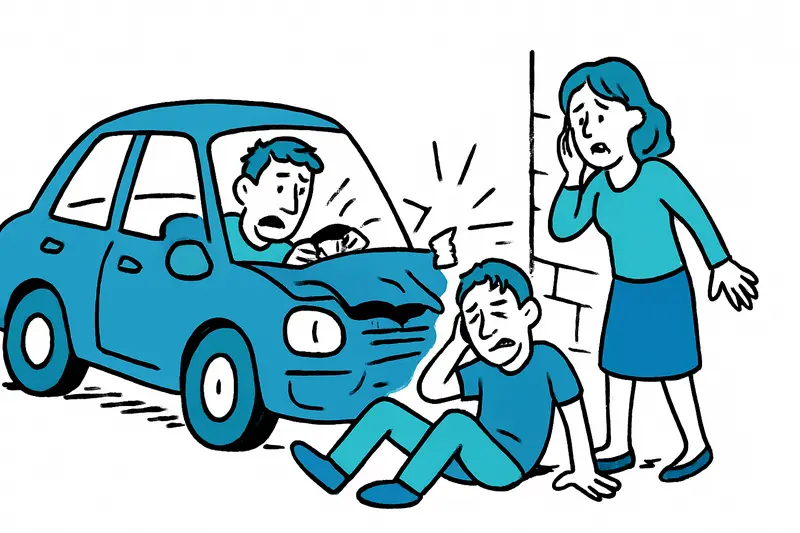
It is just after five in the morning, and the island is still dark. On the road between Santa Maria and Muro, a car leaves the roadway and crashes into a wall. Three 19-year-olds are in the car. Two are seriously injured, and the third sustains minor injuries. Two passengers have to be freed by firefighters. The seriously injured are then taken to Son Espases, while the third is taken to Juaneda Hospital.
The crash happened on Sunday at around 5:20 a.m., near the second kilometer of the route. The reason the car hit the wall is not yet known. That gap in the information matters: without confirmed findings, it is not possible to draw conclusions about speed, distraction, fatigue, or driver error. Anyone who turns a single accident into a ready-made explanation is getting ahead of the facts.
The question behind the crash
The obvious question is not only: How did this collision happen? It is also: What makes a nighttime drive on a Mallorcan country road so demanding for young and inexperienced drivers? The three occupants were 19; according to the information available, they had not held their driving licences for long. That alone does not explain the crash. But it is a reminder that driving experience does not suddenly appear when someone passes their test.
On the island, built-up areas, open stretches, and tighter bends often follow one another in quick succession. In some places, walls and barriers stand close to the road. At night, there is also less light and less traffic to provide visual cues. This is not unique to this particular route, nor is it evidence of a road-design flaw. It is simply an environment where there may be little room to recover from a small misjudgment.
What is often missing from public discussion
After a serious crash, attention usually focuses on the moment of impact. Less visible are the questions that follow: How clear are the road signs? Where are bends and narrow sections difficult to see in the dark? Are there places without a safe area to pull over? And are young drivers prepared for how different a country road feels at night compared with the familiar route to driving school in the afternoon?
These are questions, not claims about the crash near Santa Maria. The cause has not been established. That is precisely why the discussion should not end with a hasty call to find someone to blame. A thorough investigation would first need to establish whether speed, visibility, road conditions, the vehicle, or something else played a role. Without that assessment, any specific attribution is speculation.
A familiar scene, at a different time of day
Anyone who travels between the villages during the day knows the rhythm: a tractor ahead, a delivery van at the roadside, then an open stretch again. At five in the morning, there is little of that. The roads are quiet, and headlights illuminate only a narrow strip of darkness. You may be driving home after a long night or setting out early. That is an everyday scenario, not a claim about what the three young people were doing that morning. But it shows how little a road at one time of day may resemble the same road at noon.
What can be done
For drivers, the rule is simple: at night, choose a speed that allows you to stop within the distance you can see. If you are tired, do not assume the last few kilometres will be fine; taking a break or finding another way home is the wiser choice. New drivers should get to know challenging routes in daylight and avoid setting out under time pressure. These are not foolproof solutions, but they are decisions drivers can control.
The relevant authorities can also learn systematically from serious crashes. This includes examining the crash site once the facts have been established, checking road markings and lighting, and considering whether additional warning signs or infrastructure measures would be useful at particularly narrow points. Not every wall can be moved, and more lighting is not automatically the right answer everywhere. But a transparent assessment should be possible, and its findings should be made clear to the public wherever the privacy of those affected allows.
Driving schools and families, meanwhile, can discuss something that can remain too abstract in lessons: How does darkness change what we perceive? When are we too tired to drive? And how can someone in a group say, “Let’s stop,” without turning it into a test of courage? With young people, it is not only the driver who matters. Passengers can also help ease the pressure.
No place for easy answers
Three people injured, two of them seriously. There is little more that can be said about the consequences of this crash without exaggerating—and saying less would be inadequate. The cause must be established before the incident becomes a story about blame or a particular hazardous location. At the same time, it would be irresponsible to put off the bigger question: How can Mallorca make its country roads easier to understand and more forgiving of mistakes, especially in the dark?
A wall can stand beside a road without explaining a crash. But it is a reminder of how little space there can sometimes be between the roadway and an obstacle. The response should be neither panic nor a shrug: investigate carefully, address specific weaknesses, and properly prepare young drivers for the conditions they will actually encounter on the island.
Frequently asked questions
What happened in the crash between Santa Maria and Muro?
Is driving on Mallorca’s country roads difficult at night?
How fast should I drive on Mallorca’s country roads at night?
Should new drivers avoid Mallorca’s country roads at night?
What should I do if I feel tired while driving in Mallorca?
Why can the same road in Mallorca feel different at night?
What caused the crash between Santa Maria and Muro?
How can authorities make Mallorca’s country roads safer?
Similar News
Ses Païsses: What the Beetle Infestation Reveals About Oak Care in Mallorca
Holm oaks around the Talayotic site of Ses Païsses are infested with the Banyarriquer beetle. Tree felling and traps are...

Fitness with a DJ in Son Castelló: Does Music Really Improve Your Workout?
A fitness class with a DJ brings a club atmosphere to your workout. But in Palma, the beat isn’t everything: accessibili...
Batteries in the Countryside: Mallorca’s Energy Transition Needs Clear Limits
Battery storage can make solar power available long after the sun has set. But farmland is scarce in Mallorca. The debat...
Gospel Evening in El Arenal Combines Music with Support for Older People
The Palma Gospel Singers will give a benefit concert at the Porciúncula Church on November 28. Proceeds will go to herzt...
Magaluf’s Quiet Wetland: Nature Needs More Than a Pretty Picture
A wetland beside a well-known holiday resort is an asset—but not proof of effective conservation. What matters is ongoin...
More to explore
Discover more interesting content

Can Cap de Bou

Townhouse Lleo 72
