
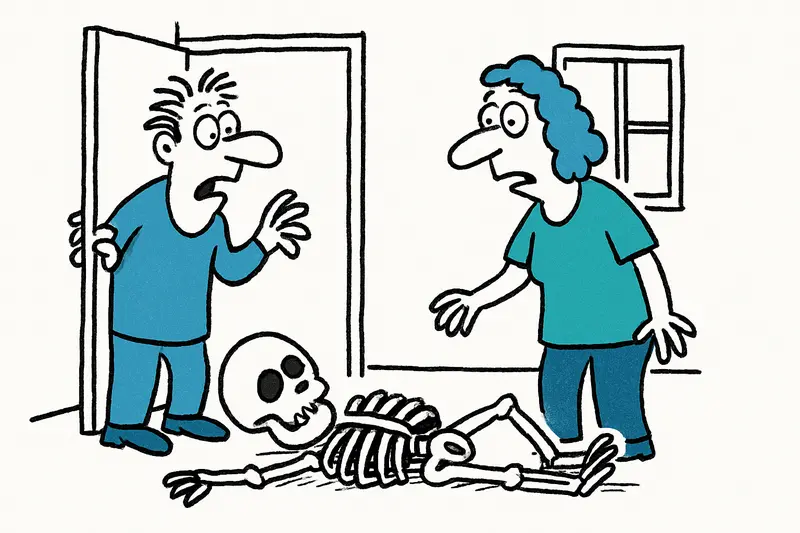
Valencia find: When a person remains unnoticed for 15 years — Lessons for Mallorca
After heavy rains a skeleton was discovered in Valencia — apparently the man had lain dead in his apartment for around 15 years. How can bureaucracy outlast people without neighbors noticing? What should Mallorca learn from this?
Discovery in Valencia causes a stir: How can a person remain undiscovered for 15 years?
The macabre discovery after heavy rains in Valencia — a skeleton that fell from a roof terrace into apartments — sounds like something from a crime novel. But the report is real: investigators believe the man had already been dead in his flat for about 15 years. The first reaction for many here on Mallorca is quiet shock and the question: How can this happen? And what would be different in Palma, Alcúdia or the villages of the Tramuntana?
Key question: Has proximity failed — or bureaucracy?
The central question is bitterly simple: Could no one notice the death, or did no one want to notice? In Valencia two factors apparently coincided: automated money flows (pensions, automatic rent payments) — see Spanish Social Security direct deposit information — and social distance. Bills continued to be paid, account garnishments proceeded. Think of the early morning hours in Santa Catalina when the garbage trucks roll and the smell of espresso fills the streets — often a quick look from the stairwell is enough to see whether someone has moved the shutters, as shown in Body in Santa Catalina: Why the death went unnoticed for weeks. But in multi-unit buildings, anonymous apartment blocks or tourist-heavy neighborhoods such things go unnoticed more easily.
Aspects that are rarely discussed
First: Automation does not protect against social disappearance. Standing orders and electronic pension payments give a deceptive signal of normality. Second: administrative practices and data protection can prevent authorities or banks from reacting early. Third: we have a growing number of people without regular contacts — whether due to estranged families, relatives living abroad, or people who live intentionally isolated.
On Mallorca this problem is intensified by seasonal mobility. Many apartments stand empty when owners spend the winter on the mainland or abroad. In rural fincas you then hear only the Tramuntana wind, the rattle of old shutters and perhaps a dog barking until even it falls silent. That creates ideal conditions for similar tragedies, and similar local cases have raised questions about municipal response, such as Santa Catalina: Man reportedly lived for a month with his dead mother – questions for the city.
Concrete practical problems
The Valencia case reveals typical failures: no regular checks by property managers, lack of communication between banks, landlords and social services, and a neighborhood culture that often sees asking questions as an intrusion. Added to this are legal hurdles: data protection prevents banks from simply informing relatives, as outlined by Agencia Española de Protección de Datos, and tenancy procedures can take months.
Solutions — What Mallorca could do now
There are pragmatic steps that promise little theatre but considerable effect:
1. Municipal welfare lists: Municipalities could set up voluntary lists for people living alone. Social workers or volunteers would make regular calls or visits — not as snoops, but as a safety net.
2. Mandatory checks by managers: Property management companies should be obliged to offer apartment checks when tenants are absent for a long time and report irregularities.
3. Bank and utility alerts: Payment flows can continue, but unusual patterns (no account activity for months, a stack of mail at the address) could be flagged internally under strict data protection rules.
4. Neighborhood programmes: Small initiatives — checks by neighbours, local WhatsApp groups or elder companionship schemes run by associations. On Mallorca many things work through personal relationships — that is an advantage we should use, as local reporting shows in cases like Body Found in Santa Catalina: When an Entire Neighborhood Didn't Notice.
5. Awareness and simplifying bureaucracy: Information campaigns in municipalities, for property managers and banks, supplemented by clear reporting channels for suspected cases.
Why this is possible — and what it costs
Much of this mainly costs organization and some personnel. On an island like Mallorca coordinated measures would be relatively easy to implement: short distances between town halls, social services and police stations, local NGOs that mediate volunteers. Yes, money is needed — but less than the cost of a death hidden for years, which ultimately scratches at humanity and trust.
Thoughtful conclusion
The case in Valencia is not just a police file but a warning. It shows how bureaucracy and routine can replace human proximity. On Mallorca we hear the bells of Lluc in the morning, the voices at the Mercat de l'Olivar, the rustle of boats in the harbour — these are small signals that tell us if someone is missing. Maybe now is the time to pay attention to those signals more often and to design institutions so they protect lonely people instead of letting them become invisible.
A sad discovery that reminds us: proximity is something that must be maintained — even in a digital, disconnected world.
Frequently asked questions
Why can someone go unnoticed for years in Mallorca?
What signs might suggest that a neighbour in Mallorca needs a welfare check?
Are empty apartments in Mallorca a risk for unnoticed emergencies?
What should property managers in Mallorca do if a tenant disappears from contact?
How can Mallorca prevent lonely people from being overlooked?
Is data protection in Spain a reason banks may not act quickly in welfare cases?
What lessons does the Valencia case hold for Palma?
What can neighbours in Mallorca do if they think someone may be missing?
Similar News
Holiday in Mallorca: Where you can still shop on Monday, October 12
The Spanish National Day on Monday, October 12: many shops remain closed, but some supermarket branches and outlet store...
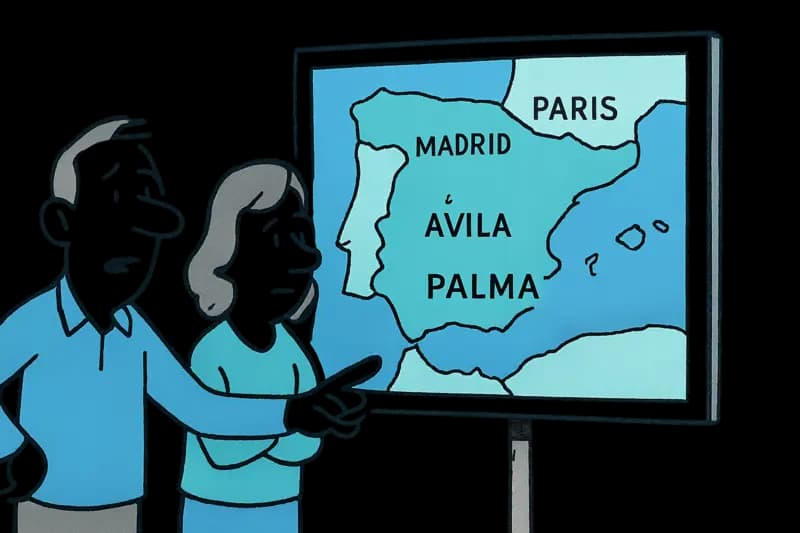
Advertising poster relocates Palma to the mainland - what the mistake says about us
An advertising poster for flights from Andorra shows Palma on the Spanish mainland. Why such an error occurs, what is mi...
Who Protects Valldemossa's Charterhouse? A Construction Site That Leaves More Questions Than It Opens
Two new entrances in the Claustre de les Murteres have pitted the administration against the opposition. Who authorized ...
Between Runway and Keel: How Boatbuilding Lives in Son Bonet, Mallorca
In the small Son Bonet airport, craftsmen preserve the island's boatbuilding tradition: restoration work, woodworking gu...
Debris by the Pool, Fear in the Streets: What to Do About the Squatted Hotel in s'Arenal?
For weeks people have been living in a vacant hotel on Rua Girona in s'Arenal. Trash, noise and insecurity plague reside...
More to explore
Discover more interesting content

Can Cap de Bou

Townhouse Lleo 72
