
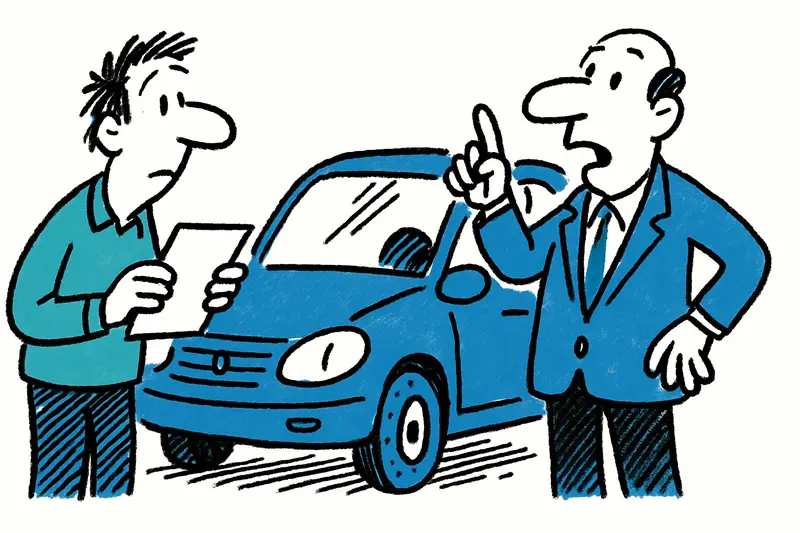
Before Buying a Used Car: the VIN Is Important - but Not All-Knowing
Before Buying a Used Car: the VIN Is Important - but Not All-Knowing
The 17-character vehicle identification number provides clues to a car's history. But a VIN check has its limits. A critical guide for buyers in Mallorca with practical steps and everyday tips.
Before Buying a Used Car: the VIN Is Important - but Not All-Knowing
Key question: Is the 17-character VIN enough to guarantee a safe purchase?
At the harbor of Palma, when the fishing boats rock in the early morning and vans rattle along the Paseo Marítimo, buyers and sellers encounter the same ritual every day: a photo of the car, a brief chat, then the question about the VIN. The vehicle identification number is a useful tool, not a magic weapon. It helps check details — but it doesn't replace common sense or a physical inspection.
Critical analysis: what the VIN reveals and what it doesn't. The 17 characters of the VIN provide clues about the manufacturer, model family and certain production details. Online reports often contain entries about past mileage, reported accidents or workshop invoices. This data is useful but not complete. Not every workshop visit is recorded centrally. Privately repaired damage, unofficial odometer corrections or repairs carried out abroad do not appear in many reports. Experienced dealers know how to present the most attractive entries — and how to fill gaps that are meant to avoid questions.
What's missing in public discourse. The VIN is usually described as a definitive check. In practice, two factors are too rarely emphasized: the danger of VIN cloning and the differences between paid report services. A stolen car can carry someone else's VIN, and private repairs leave no digital trace. In addition, many VIN services are commercial; they aggregate data from various sources that can be incomplete or outdated. For buyers in Mallorca, there is the added issue that vehicles with foreign histories (Germany, UK, North Africa) can have a fragmented record because registration systems are not connected.
A day-to-day scene from Mallorca. Imagine: you meet the seller in the parking lot of the Porto Pi shopping center. Next to you a scooter rider starts speaking loudly on the phone; two tourists ask for directions. You receive the VIN and a printed photo of the service booklet. Everything looks legitimate. But on closer inspection the body strip is glued where the VIN plate should be — a small damp spot indicates a replacement. Such details are only visible in peace, with a flashlight or with a mechanic at your side.
Concrete approaches for buyers. 1) Compare all VIN entries: on the vehicle registration document, in the seller's listing and on the plates on the car (B-pillar, dashboard, engine bay). 2) Use multiple sources: a single VIN report can provide hints, two different reports increase confidence. 3) Check documents: service booklet, invoices, ITV stamps (Spanish MOT certificate) and the seller's identity (DNI/NIE). 4) Bring a mechanic: on Mallorca many independent garages have a good eye for sloppy repairs, as illustrated by Used Car Trap in Llucmajor: When Trusting a Garage Becomes Expensive. A short on-site check often brings clarity. 5) Test drive with focus: unusual noises, vague steering, irregular gear changes are warning signs. 6) Be suspicious of a price that's too good to be true: extremely cheap offers are a classic sign of tampered odometers or concealed damage.
Practical tips for checking mileage. A VIN report often shows recorded mileage from workshops. Look for a consistent pattern: regular service intervals with increasing mileage seem plausible. Suddenly reduced values or irregular jumps indicate manipulation. Supplement the digital check with receipts: invoices for tires, brakes or oil changes often list mileage — these can be cross-checked.
What to do if inconsistencies appear. Ask the seller directly and demand proof. When there are clear indications of theft or fraud, going to the Guardia Civil is an option; they carry out vehicle checks. Don't hesitate to cancel the purchase. Better to miss a deal than to end up in a legal mess.
Short-term and long-term recommendations for Mallorca. Short term: always photograph the VIN on the car on site, copy all documents and arrange a mechanic's appointment. Long term: promote more transparency in local sales processes, for example by mandatory disclosure of ITV data at sale or regional information offerings in multiple languages so buyers and sellers have equal clarity.
Punchy conclusion: The VIN is a sharp tool, but only as good as the data someone puts into it. In Mallorca, between the promenade and mountain villages, a combination of digital research, hands-on inspection and healthy skepticism determines a good purchase; for a sense of how a car changes mobility on the island see Discover Mallorca by Rental Car: Why a Car Makes the Day. Go to the car with the VIN in your pocket — and with open eyes on the test drive.
Frequently asked questions
Is a VIN check enough when buying a used car in Mallorca?
What can a VIN tell you about a used car?
Can a used car in Mallorca have a fake or cloned VIN?
How do I check a used car’s mileage in Mallorca?
What documents should I ask for when buying a used car in Mallorca?
Should I bring a mechanic to inspect a used car in Mallorca?
What should I look for during a used car test drive in Mallorca?
Where can buyers in Mallorca check a used car more carefully?
Similar News
Parking dispute in Els Hostalets: When a gap leads to violence
A parking dispute on Calle Aragón escalated into a mass brawl at night. Why do trivial conflicts here turn bloody so qui...
Bodycams in Palma: More clarity needed so surveillance doesn't become the norm
Palma's local police equip UII officers with Axon Body 4 cameras. Useful for evidence collection — but specific rules on...
When the Bread Door Closes: Why Maria de la Salut Lost Its Last Bakery
The only bakery in Maria de la Salut, a sales outlet of Forn de ca'n Joan Terès from Palma, has permanently closed. What...
Ancient Piece Brought to Light: Guardia Civil Recovers Roman Anchor Fragment off North Coast of Mallorca
Divers from the Guardia Civil recovered a massive iron piece from Roman times off Mallorca's north coast. The roughly 35...

Who Benefits from the Half‑Hourly Flight on the Edge? Aena, Investments and the Island's Interests
Almost one billion euros is flowing into Son Sant Joan. The figures show the scale of investment and expected beneficiar...
More to explore
Discover more interesting content

Can Cap de Bou

Townhouse Lleo 72
