
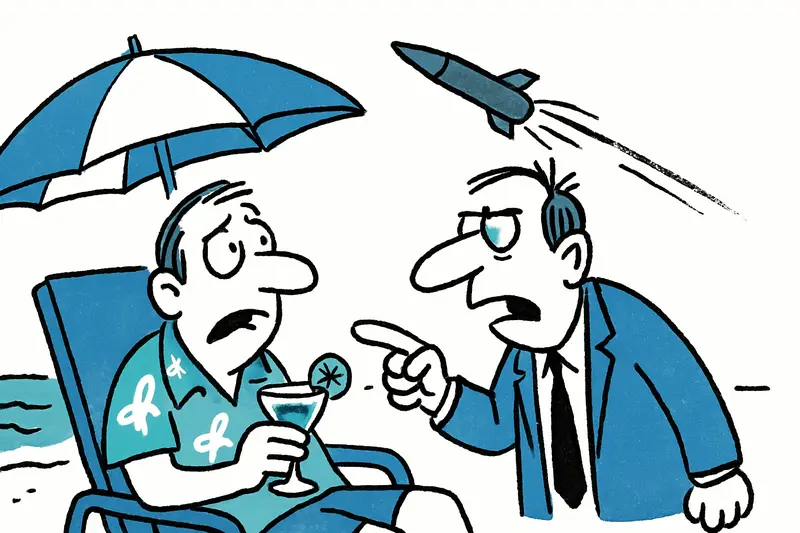
When War Threats Reach a Vacation: A Reality Check for Mallorca
When War Threats Reach a Vacation: A Reality Check for Mallorca
Iran's military rhetoric is reportedly directed at US and Israeli citizens — and tourist sites are also being mentioned. What does this mean for Mallorca? A sober look at risk, everyday life and what should be done here.
When War Threats Reach a Vacation: A Reality Check for Mallorca
Between headlines and Passeig Mallorca: What the new rhetoric from Tehran really means here
Guiding question: How great is the danger for travellers and the island when international statements for the first time explicitly name 'recreation areas' and 'tourist destinations'?
Critical analysis: In recent days, representatives of the Iranian military have told state bodies that leisure and holiday locations could also come into focus in the future. No specific types of operations, timeframes or concrete targets were named. That broadens the threat narrative but also makes it diffuse: threat language alone does not automatically change the risk structure into a real and immediate danger for Mallorca. The island is geopolitically far from the Middle East, has no military facilities that would be primary targets at this stage of escalation, reports about aircraft carriers in the bay and plans for secured storage near Son Sant Joan notwithstanding, and US and Israeli citizens are only part of the visitor mix here.
Nevertheless, the announcement has two practical consequences that cannot be ignored: first, uncertainty increases among travellers and tour operators — this shows up in last-minute bookings and rebookings. Reports of heightened demand for European destinations instead of long-haul trips fit this observation, as discussed in recent coverage about a short breather in August. Second, the rhetoric creates room for imitation or for radicalised actors who might choose symbolically effective, highly visible targets. Public calm and uninterrupted sea sounds do not automatically protect against lone actors or transnational willingness to use violence.
What is missing in the public debate: The discussion often focuses on blanket statements — who threatens whom, who will be hit — and less on practical preparedness. Clear information is lacking about how authorities assess risks, which protective measures tourism businesses or event venues should implement, and how travellers can be reliably informed. There is also insufficient discussion about local capacities: police, port and airport coordination, private security services and hotels' crisis communication.
A daily scene from Palma: On a cool morning on the Passeig Mallorca, guests sit in thick jackets next to the trees; taxis drive by, the sea roaring in the distance. No one is shouting, no panic; conversations revolve around Easter preparations and the season. This calm is real — and precisely for that reason sober preparation is important: it's not about suffocating life, but about maintaining good order.
Concrete solutions: 1) Transparent risk assessment: The island administration and the interior ministry should publish an easily accessible appraisal that clearly separates possible scenarios and their likelihood. 2) Strengthen information chains: Hotels, port operators, travel agencies and airports need standardized checklists for crises and a clear reporting structure to the police. 3) Preventive visibility instead of panic: More uniformed presence in busy areas is de-escalating and increases the feeling of security without creating alarm. 4) Inform travellers, don't frighten them: Provide advice on behaviour, emergency numbers and safe contact points in several languages. 5) Regional cooperation: Balearic-wide coordinated exercises between police, Guardia Civil and airport staff reduce response times.
For hotels and event organisers this means concretely: review evacuation plans, test communication channels with guests, train staff, provide emergency contacts. For private individuals: stay calm, follow official channels, do not spread rumours.
Economic perspective: Short-term shifts in booking behaviour — away from long-haul trips towards European destinations — can even benefit Mallorca in the short term. In the long run, however, uncertainty arises if headlines shape a season. Therefore the industry should work on building trust: reliable information, flexible rebooking rules and visible security measures are worth more than loud marketing promises, a theme examined in coverage on what Mallorca's tourism radar really needs to see.
Concise conclusion: Threatening words from Tehran should be taken seriously, but atmosphere is not the same as immediate danger. Everyday life on Mallorca still sets the tone; the response must be sober, visible and pragmatic: inform, prepare, stay calm. Those who create good structures now protect not only overseas tourists but the entire island and its rhythm of life — the cafés on the Passeig, the fishermen at Porto Pi and the bus drivers who ferry the first guests through Palma in the morning; local dynamics and visitor attitudes are explored in reporting on Germans in Mallorca.
Frequently asked questions
Is Mallorca safe for tourists when international tensions rise?
Can travel warnings or war rhetoric affect Mallorca holidays?
What should travellers in Mallorca do if they feel worried about security?
Are hotels and holiday resorts in Mallorca preparing for possible disruptions?
What does increased security in Palma usually look like?
Should I cancel my Mallorca trip because of global conflict headlines?
Why does Mallorca sometimes benefit when long-haul travel feels uncertain?
What should travellers in Mallorca look for in reliable safety updates?
Similar News
More water than last year: Mallorca's reservoirs breathe easier
September rain refilled the Tramuntana's reserves: overall fill around 35 percent, Cúber at 40.42 percent, Gorg Blau at ...
Three Luxury Hotels in Banyalbufar: Lots of Money, Many Questions
A Danish investor plans three exclusive accommodations in Banyalbufar — including the historic Son Valentí. The announce...
2.1 tonnes of cocaine on sailing yacht off Spain's coast – a reality check for the coastguard
A 14-metre yacht was seized with 2.1 tonnes of cocaine. Who monitors the ports, how does the international hunt succeed ...
Heat Bonus in Mallorca: 100 Euros Extra for Outdoor Staff at MarSenses
MarSenses pays employees who worked outdoors in August an extra €100 as recognition. Lighter uniforms, reduced hours for...
Renovating in Mallorca: What You Really Can Do Without Neighbour Consent
Many think they can do whatever they want in their apartment. That's partly true — but only as long as structural elemen...
More to explore
Discover more interesting content

Can Cap de Bou

Townhouse Lleo 72
