
Warning at viewpoints: Car thieves arrested in the Tramuntana – what visitors should know
Warning at viewpoints: Car thieves arrested in the Tramuntana – what visitors should know
During checks at the s'Entreforc viewpoint and the Cúber reservoir the Guardia Civil arrested three men. A reality check: how safe are parking areas in the Tramuntana, what is missing from the debate and which simple steps reduce the risk?
Warning at viewpoints: Car thieves arrested in the Tramuntana – what visitors should know
Key question: How safe are the popular parking spots in the Serra de Tramuntana and what can tourists and authorities concretely do to prevent outings from ending in loss?
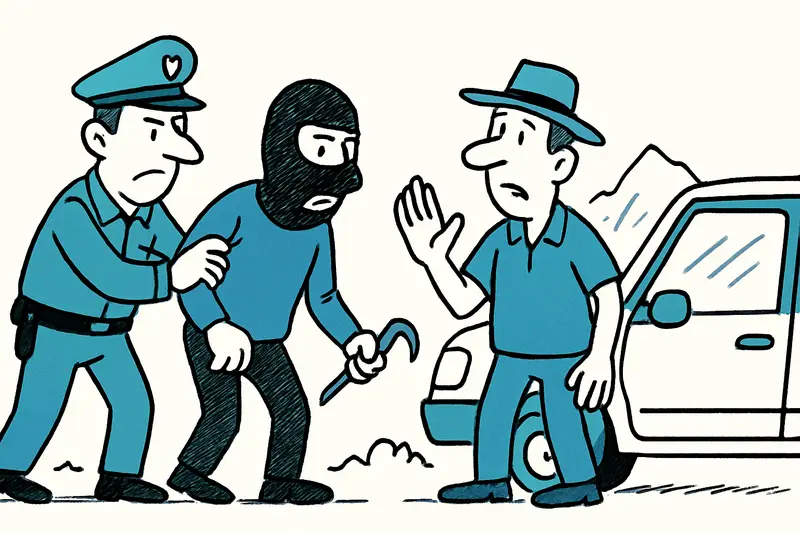
A few days ago the Guardia Civil stopped an attempt at one of the island's most famous panoramic points that can ruin a Sunday trip: three men, aged 54, 37 and 27, were arrested after they tried to break into a parked car at the s'Entreforc viewpoint. At the same time a check took place in the car park at the Cúber reservoir – both locations where officers had recently observed a rise in thefts from vehicles.
The officers watched the men handling a metal band and a door spreader on vehicle locks. When they entered the car they found two minors inside. The suspects attempted to flee but were stopped after about a hundred metres; the tools used were seized.
Sounds like a crime cliché, but it's everyday life in Mallorca: you park at the viewpoint, get out, walk a few steps to the cliff edge, take a photo of the coast – and return to a scratched door or empty glove compartments. At the s'Entreforc viewpoint, under the blazing heat and the chirping of cicadas, such scenes are no longer uncommon.
Critical analysis: the arrest is important, but it is not enough to solve the problem sustainably. The authorities rely on visible patrols and catch perpetrators in specific instances. That works – as long as patrols are present. As soon as officers are needed elsewhere, gaps appear. The offenders exploit short time windows, use tools that do not make much noise and take advantage of tourists' inattention.
What is missing in the public debate: so far the discussion too often focuses on advice to individual travelers (for example, not to leave valuables in the car). That is correct but incomplete. Systemic measures are lacking: better signage in multiple languages, visible and permanent lighting in parking areas, secure parking zones near restaurants or information points, and video surveillance where legally permitted. Mallorca's Curves without a Racing Heart: Staying Safe on the Tramuntana & Co. discusses related rental-car briefings and checks, and rental car companies could also provide more transparent information and leave standardized notices in vehicles.
An everyday scene from Mallorca: on a July morning a German family parks their rental at the Mirador d'es Colomer: Three Arrests — How Safe Are Mallorca's Viewpoints Really? parking bay, puts on sun hats and the children head for the balustrade. An older man with a camera stays near the car because he wants to "just quickly" get something. In those seconds offenders strike – a door is opened, the glove compartment searched. Not dramatically loud, no smashed windows, just a handful of items gone. The family only notices when they return.
Concrete, immediately implementable solutions:
1) Visible notices in multiple languages: Signs at parking areas that not only warn but briefly explain how best to store valuables (for example, lock the trunk, keep nothing visible).
2) Coordinated patrols: Preventive patrols on particularly vulnerable days (weekends, holidays) at varying times, not only morning presence.
3) Secure parking islands: Small, lit areas near facilities (kiosk, information point) with regular checks – this deters offenders.
4) Mandatory rental-car information: Rental companies should include brief, binding notes in the handover paperwork pointing out risk spots and recommending simple countermeasures.
5) Community alert chains: Local neighbourhoods, hiking clubs and tourist offices could use a rapid reporting channel so unusual observations quickly reach the Guardia Civil.
What travellers should do: never leave visible valuables inside the passenger compartment, not even on the back seat. Put bags, cameras, wallets and travel documents in the trunk or take them with you. Use viewpoint parking areas in groups where possible – offenders avoid witnesses. If possible, choose parking areas with staff or cameras.
A final note on language: the security problem is sometimes presented too much as an individual fault – "you should have been more careful." Such reminders are important but must not obscure that structural measures are missing. Both are needed: alert visitors and intelligent, lasting prevention.
Pointed conclusion: the arrest at s'Entreforc is a success for the Guardia Civil, but it is no reason for all-clear. For visitors the rule still applies: visible valuables are an invitation. For those responsible: presence alone is not enough; better site design, multilingual information and simple organisational measures would significantly reduce the risk. If you are heading to the Tramuntana soon, lock up twice – the car and the question of whether the smartphone really has to be left behind for the photo.
Frequently asked questions
When is the best time to visit Mallorca for good weather and swimming?
What should I pack for a Mallorca trip across seasons?
Are the beaches in Mallorca suitable for families with kids?
What are the must-see places for a first-time visitor to Mallorca?
How does the weather on Mallorca vary by season, and what should I expect?
How can I get around Mallorca—car, bus, or bike—and what’s practical for visitors?
Is Mallorca safe for travelers, and are there any local tips I should know?
Are there easy day trips from Mallorca to nearby places?
Similar News
Fear in the Sa Teulera Forest: Youth Groups Harass Cruising Zone in Palma
In the wooded area of Sa Teulera, those affected report verbal attacks, property damage and intimidation. How safe is th...
Axa opens first health center in Palma: €3 million, 650 m² and more local access for La Vileta
In the heart of La Vileta, Axa has opened its first own health center in Mallorca. On around 650 square meters and with ...
30 Years of Nit de l'Art: What Palma's Art Night Really Shows — and Conceals
Nit de l'Art celebrated its thirtieth anniversary: full galleries, young visitors — and the quiet tensions between the a...
Hunt for Older Holidaymakers: Arrests after Suspected Pickpocketing in Port d'Andratx and Bellver
Five suspects were arrested after investigators accuse them of targeted pickpocketing of elderly tourists in Port d'Andr...
Knife stabbing in Magaluf: Why it must not remain an isolated incident
A 21-year-old tourist was stabbed in the chest in Magaluf and is in life-threatening condition. A reality check: what's ...
More to explore
Discover more interesting content

Can Cap de Bou

Townhouse Lleo 72
