
Mallorca in the spotlight: ZDF broadcasts the total solar eclipse live on August 12
Mallorca in the spotlight: ZDF broadcasts the total solar eclipse live on August 12
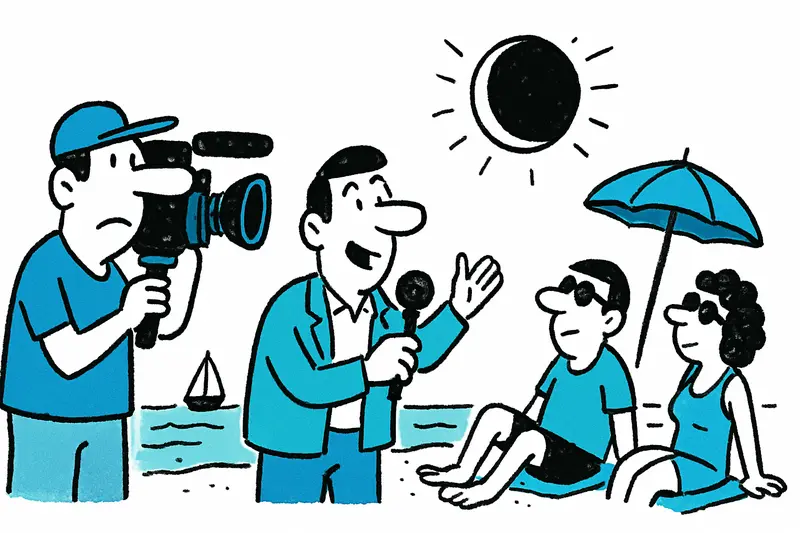
On the evening of August 12, Mallorca will draw worldwide attention: broadcaster ZDF will air the rare event live from the island — with experts, a guest astronaut, and transmissions from the water and the beaches.
Mallorca in the spotlight: ZDF broadcasts the total solar eclipse live on August 12
Science, beach atmosphere and a touch of island magic in an evening broadcast
On Wednesday, August 12, 2026, the island will briefly present an unusual sky scene on its west coast: around 20:31 the Moon will fully cover the Sun over Mallorca — see Total Solar Eclipse 2026: Opportunities, Risks and How Mallorca Should Prepare.
The broadcaster plans a broad live presence: a stream starts at 20:00, and in the linear TV schedule the roughly ten-minute live window is planned for about 20:25 to 20:35, provided the weather cooperates. In parallel there will be features on other broadcaster platforms and video portals, special online content, live streams and even a 360-degree camera that will provide footage from the water and from land. If viewers still have questions afterwards, they can join a live Q&A on a video platform from about 21:00, where experts will address the audience.
Work will not only be done behind the cameras on the island: reporters want to tell stories from the beaches and document from a boat how light and the sea change when the Sun disappears. In Palma's harbour basin and along the Paseo Marítimo, bars and passersby are preparing for an unusual evening. Already now you can see people in the cafés on the harbour promenade studying timetables and fishermen slowly checking their nets — the island breathes differently on such evenings.
Why is this good for Mallorca? Such an event briefly puts the island in the spotlight: scientific explanations are conveyed live to a large audience, visitors experience a moment that goes beyond postcard panoramas, and many locals meet at places like Portixol, Cala Major or Playa de Palma to observe something rare together. For small businesses along the coast, a lively evening can bring extra visitors; for local clubs it's an opportunity to organize guided tours or meetings.
In practical terms, the usual advice for solar eclipses applies: anyone who wants to look directly should use certified eclipse glasses or optical methods like a pinhole projector — for evening observing suggestions see Total Lunar Eclipse: Evening Tips for Observers on Mallorca. A sunset picture with a partial eclipse may look appealing, but without eye protection the risk to the eyes is real.
For those who prefer to stay comfortable: the combination of images, commentary and background knowledge makes the broadcast a little island show. The live-linked sequences from the beach and from boats promise impressive perspectives — a moment in which Mallorca is not just a backdrop, but an active part of a scientific experience.
Some residents have already made plans: towels for the beach, iced tea in the fridge, spots on the wall at the Passeig marítim reserved. It's the kind of evening when the city seems to slow down once more, bicycle bells ring less often and children play excitedly by the water. When the Sun briefly disappears, many faces will show a stunned silence.
A brief outlook: such broadcasts can sharpen attention for science and spark interest in learning more about celestial mechanics. Local observatories, amateur astronomers and clubs could use the attention to attract more people to observations and events outside the high season. And who knows — maybe new habits will remain after August 12: a night walk toward the sea, a small group that regularly meets to watch the stars.
In short: Mallorca will host a rare natural spectacle that evening — amid the voices of fishermen, the lapping of boats and the smell of fried fish from the beach restaurants. Those who can watch on site; those who can't can make themselves comfortable at home and tune in. Either way: it will be an evening the island won't forget soon.
Frequently asked questions
When will the total solar eclipse be visible in Mallorca on August 12, 2026, and how can I watch it?
Where are the best places to watch the eclipse in Mallorca?
What safety tips should I follow when viewing a solar eclipse in Mallorca?
Will the eclipse be shown live on TV and online?
Could this eclipse bring more visitors or boost local businesses in Mallorca?
What should I bring or prepare if I observe from Mallorca?
Are there local groups or observatories likely to host eclipse events in Mallorca?
What makes this eclipse special for Mallorca?
Similar News

Heat and Power: Why the Balearic Islands Are Sweating Now — a Reality Check
Weeks of heat waves, rising cooling demand and suddenly flickering lights: Mallorca, Ibiza and Formentera have seen an i...

When the Water Taps Run Dry: Why Tankers Are Not the Solution
In villages like Deià, Valldemossa or on Menorca, municipalities are limiting water use because of drought. Who decides,...

Ryanair Flight Diverted to Barcelona: An In-Flight Emergency and the Questions That Follow
A Ryanair jet from Pisa to Málaga landed in Barcelona after a passenger became acutely ill. Why these cases need more at...

Alarm in Port de Pollença: What now for the polluted bay?
Hundreds of people protested on the beach of Port de Pollença. The environmental organization Arrels Marines demands a p...

Micaela Schäfer: Between Playa de Palma and a Berlin Law Firm — New Calm, an Old Tomcat and Solid Finances
The party artist from the Ballermann scene appears surprisingly down-to-earth: a new relationship with a Berlin lawyer, ...
More to explore
Discover more interesting content

Boat Tour with BBQ along Es Trenc Beach

Private transfer from Mallorca Airport (PMI) to Pollensa
