
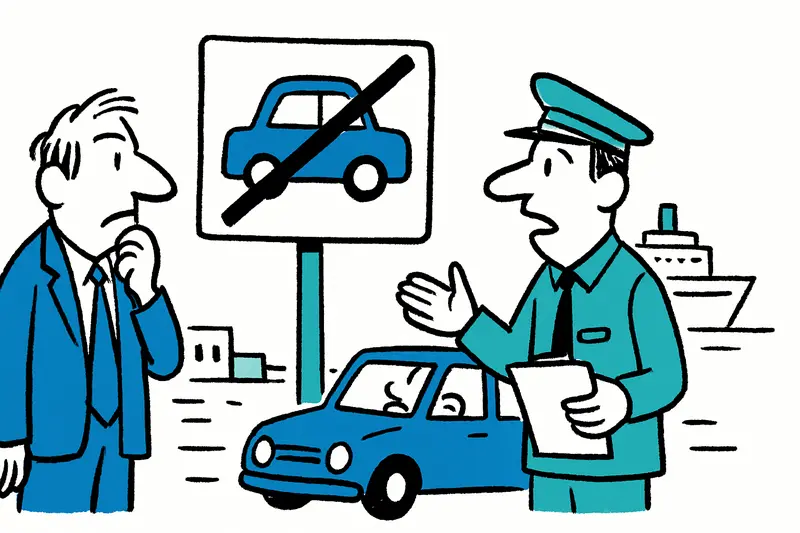
Car limit in Mallorca: Key questions, risks and concrete proposals
Car limit in Mallorca: Key questions, risks and concrete proposals
The island council is planning a fee for cars not registered in Mallorca. We ask: How will it work in practice, who will really pay, and what side effects are likely?
Car limit in Mallorca: Key questions, risks and concrete proposals
Who pays the new access fee — and what happens before Parliament agrees?
Key question: How can traffic on the island actually be reduced without administrative costs and side effects eating up the expected benefits?
The island council is currently working on setting a levy for vehicles that are not registered in Mallorca, as discussed in Rental Car Cap: Between Traffic Calming and Holiday Stress – What Mallorca Must Consider Now. It is clear: residents with primary residence should be exempt, ferry companies should collect the fee, and the administration includes staff, cameras and the processing of permits and fines in the calculation. The goal is less traffic, fewer summer jams — especially on routes like the Passeig Marítim or Avinguda Gabriel Roca around Palma's port, where in recent years waves of cars arrive and back up. This pressure is described in Mallorca at the Limit: Will This Weekend Break the Visitor Maximum?.
Critical analysis: The idea is understandable, but the implementation remains unclear. If the fee is really only allowed to cover administrative expenses, this means: the more expensive the control system, the higher the charge. That creates a paradox: more controls drive the fee up, which in turn is controversial. If payments are collected via ferry companies, additional interfaces arise — billing questions, liability for booking errors and problems with day-trippers who arrive by plane. This interacts with market changes noted in Why Rental Cars in Mallorca Have Become Noticeably More Expensive — and What You Should Know.
Legal and practical stumbling blocks are often missing from the public debate. Will the check of national vehicle documents take place in the harbor or is an electronic pre-registration procedure sufficient? How long may vehicles remain temporarily on the island without re-registration? And how will second-home owners, professional rental companies and short-term visitors be distinguished? The answer to these questions decides whether the system becomes practical or turns into a bureaucratic monster.
Another blind spot: data and consumer protection when the fee is collected by private ferry companies. Who has access to vehicle data, how long will information be stored, and how will errors be corrected? Without clear transparency rules, waves of objections and reputational damage threaten a measure that is actually intended to provide relief. For related background on vehicle conditions on the islands see Too Many Old Cars in Mallorca: Why the Problem Runs Deeper Than the Exhaust.
Everyday observation from Palma: On a hot morning at the quay, suitcases lie half open next to parked cars, the smell of diesel mixes with sea air, and queues form at the ticket counters as guests watch their holiday cars roll off the ferry deck. People here feel traffic jams not as an abstract statistic but as lost hours stuck before the supermarket, as parents picking up children later from school, as deliveries that are delayed. This practical perspective should shape the law — not just rows of numbers in budget plans.
What is missing from the public discourse
1. A graduated model for short stays versus long-term visitors: Day-trippers who stay only a few hours burden infrastructure differently than second-home owners who stay for weeks. A one-day ticket could be less bureaucratic than a general daily flat rate.
2. Rules for rental car companies: Many rental firms do not register vehicles on the island. Are there transition periods, reporting obligations or financial incentives to register vehicles locally? Without clear rules, legal disputes are likely.
3. Emergency and exception rules: Craftspeople, medical service vehicles and agricultural transports must continue to operate. Such exemptions need simple, quickly implementable mechanisms.
Concrete approaches
1. Pilot phase in selected ports: Test how a charge collected via ferry tickets works before rolling the measure out across the island. This can reduce teething problems such as faulty billing or long processing times.
2. Digital pre-registration system with day rates: Visitors could book a short-term pass online in advance; checks at access points would then only have to be carried out randomly. That reduces staffing needs and makes operations easier for ferry companies.
3. Cap on administrative costs and independent auditing: The fee must not become a revenue source. An external audit after one year could demonstrate the balance between effort and income.
4. Transparent exception rules and simple appeal procedures: Clear guidelines for service providers, emergencies and residents avoid hardship cases and protests.
5. Cooperation with the rental car industry and municipalities: Incentives for local registration, information campaigns at the airport and ferry terminals so tourists know early on what to expect.
Pointed conclusion
A car limit can be the right response to overloaded roads in Mallorca. What matters is the design: if the administration mainly builds staff and technology to enforce a fee, bureaucratic effort could undermine the goal. A better sequence would be: small, tested steps, digital solutions to simplify processes, clearly regulated exceptions and external checks on actual costs. Only then will a necessary idea not become an unnecessary burden for residents, businesses and visitors.
The next political stage is approval by the Balearic Parliament after the summer recess. Until then, it is important not only to shuffle numbers between secretariats but to include everyday situations at the port and in residential neighborhoods in the planning — otherwise the car limit will remain a nice sign on paper that is overrun by reality in traffic jams.
Frequently asked questions
What is Mallorca’s proposed car access fee and what problem is it trying to solve?
Who would pay the Mallorca car access fee and how is it collected?
What are the main administrative concerns with the proposed fee?
Could a pilot phase help test Mallorca’s car access plan before full rollout?
What exemptions should be considered for the car access plan?
How would rental cars and tourists be affected by the car access plan?
What congestion in Palma is motivating the car limit idea?
When would the new rules move forward in the political process?
Similar News

Micaela Schäfer: Between Playa de Palma and a Berlin Law Firm — New Calm, an Old Tomcat and Solid Finances
The party artist from the Ballermann scene appears surprisingly down-to-earth: a new relationship with a Berlin lawyer, ...
At Playa de Palma: Fire in Residential Building – six people rescued on the roof, what is missing in prevention?
In the evening a fire broke out on the first floor of a five‑storey building on Calle Trasimé. Six residents fled to the...
New License Requirement for Mini-Boats in Mallorca: Protection Measure or Tourism Brake?
From October 1 renters of small recreational boats in the Balearics must present a boating license. Critical questions r...

After the Storm: Mallorca Breathes Easy — Warm Weekend with Short Showers
The thunderstorm left its mark, but calm returns for the weekend: sun, summer temperatures around 32 °C, isolated shower...
No More 'Just Hop on a Boat': Mallorca, Mandatory Boating License and the Open Questions
From October 1, the Balearic Islands will require a boating license for small rental boats under five meters/15 hp. A tr...
More to explore
Discover more interesting content

Boat Tour with BBQ along Es Trenc Beach

Private transfer from Mallorca Airport (PMI) to Pollensa
