
Raids on Palma's Beaches: What Remains of Order and Everyday Life?
Raids on Palma's Beaches: What Remains of Order and Everyday Life?
After two large-scale operations at popular bathing beaches around Palma, illegal stalls, shell game operators and drug incidents are in focus. A reality check: figures, everyday scenes and clear proposals for fairer regulation of city and beach.
Raids on Palma's Beaches: What Remains of Order and Everyday Life?
Figures, scenes and solution approaches after the operations on June 29 and 30
Key question: Are occasional controls enough to resolve the ongoing conflict between traders, tourists and public space on Palma's beaches?
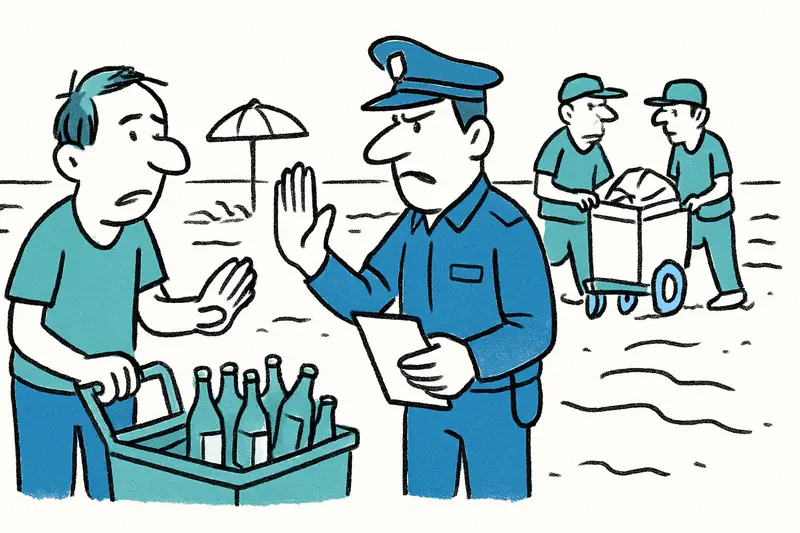
At the end of June the local police stepped up in force: over two days controls were carried out at Playa de Palma (Inspections at Playa de Palma targeted vendors), in Can Pere Antoni and in Cala Major. Officers recorded several dozen violations and confiscated goods and drinks. Concrete numbers: during the evening operation at Playa de Palma around 700 non-food items were seized, there were about ten charges in that area as well as several charges for selling alcoholic beverages and hundreds of confiscated bottles and cans. The following day further checks took place in Can Pere Antoni and Cala Major with additional charges and dozens of confiscated coolers, a handcart and nearly 300 drinks. In a later operation section at the Arenal the forces reported additional charges, including allegations of public drug offenses and shell game activity (Raid on Mallorca: network of drug trafficking and money laundering).
So much for the numbers. But what does the scene actually look like when you walk along the Passeig in the morning? The flood of footsteps, rolling handcarts and voices mixes with the salty smell of the sea. Vendors shout offers, tourists pause, some buy, others shake their heads. Then the police: blue lights, short conversations, papers. Some guests seem relieved, others bewildered by the suddenly empty corners of the beach. This is Mallorca in high summer: a mix of chatter, commerce and a constant search for space.
Critical analysis: targeted raids have an effect — short term. They lead to seized goods and criminal charges. But they do not prevent new vendors with empty boxes from appearing the next day. The reasons are complex: a lucrative informal market, unclear control density, seasonal demand and people who rely on self-employment as their source of income. The problem also often just shifts location: if one beach is cleared, vendors appear on another.
What is often missing from public debate is the perspective of the people affected and an honest dataset on how many permits are actually issued, what sanctioning practice the city pursues and how repeat offenders are treated (Night raid assessment: questions and what's missing). Also rarely examined is the role of intermediaries and supply chains — who supplies the vendors with goods, how do coolers and drinks regularly reach the beach?
Concrete proposals derived from everyday practice: first, a graduated approach instead of pure prosecution. More prevention work in several languages directly in hotels and at beach access points can reduce demand. Second, clearly marked and time-limited sales zones with license control could offer legal, registered vendors a perspective while enabling oversight. Third, a visible, regular presence of regulatory services during the day would be more useful than large-scale nighttime operations, because trade and conflicts mainly occur during daytime. Fourth, the city should work with social services to examine which alternative income opportunities can be created for people in the informal sector — training, micro-permits or seasonal jobs.
On liability: since a new regulation in May 2025 buyers also face fines up to the mid three-digit range, which further complicates the market. These rules are often communicated too late or not enough. Transparent information is needed here: hotels, travel agencies and beach signage must inform about what is allowed and what risks a purchase entails.
A practical step would be the introduction of a small, mobile information patrol during peak times. Not an arrest brigade, but a team that provides information, names contacts and points people to the responsible authorities if needed. At the same time, better data collection is required: which penalties are imposed, how many repeat offenders are there, and how is trade distributed in time and space?
Conclusion: raids bring order, but not a lasting solution. They are the short-term valve, not the operation. Anyone who wants to change things permanently must understand the beach as a multifunctional space: tourism, commerce and recreation compete for the same meters of sand. Regulatory policy alone is not enough; it requires a combination of education, targeted legalization, social integration and reliable, continuous monitoring. Then, perhaps, there will be enough space for everyone — for the handcarts, for the beach umbrellas and for a relaxed morning walk along the Passeig without a shell game disturbing the peace.
Immediate concrete measures: information campaigns in multiple languages, time-limited sales zones with registration, stronger daytime presence of regulatory services and municipal monitoring of sanctions and repeat offenders.
Frequently asked questions
What’s happening with raids on Palma’s beaches and what are authorities trying to solve?
Do raids solve the problem of informal beach vendors in Mallorca?
What practical measures could help manage beach commerce in Palma more effectively?
What happened at Playa de Palma during the raids?
What happened at Can Pere Antoni and Cala Major during the operations?
Were any other areas affected, like Cala Major or Arenal?
What changes in rules or fines affect buyers after the May 2025 regulation?
What practical steps could improve information and enforcement during peak beach times?
Similar News

Missing 24-year-old from Bavaria found on Mallorca
The 24-year-old woman from the Augsburg area who had been missing since August 3 was found on Mallorca. Family members, ...

Heat and Power: Why the Balearic Islands Are Sweating Now — a Reality Check
Weeks of heat waves, rising cooling demand and suddenly flickering lights: Mallorca, Ibiza and Formentera have seen an i...

When the Water Taps Run Dry: Why Tankers Are Not the Solution
In villages like Deià, Valldemossa or on Menorca, municipalities are limiting water use because of drought. Who decides,...

Ryanair Flight Diverted to Barcelona: An In-Flight Emergency and the Questions That Follow
A Ryanair jet from Pisa to Málaga landed in Barcelona after a passenger became acutely ill. Why these cases need more at...
Alarm in Port de Pollença: What now for the polluted bay?
Hundreds of people protested on the beach of Port de Pollença. The environmental organization Arrels Marines demands a p...
More to explore
Discover more interesting content

Boat Tour with BBQ along Es Trenc Beach

Private transfer from Mallorca Airport (PMI) to Pollensa
