
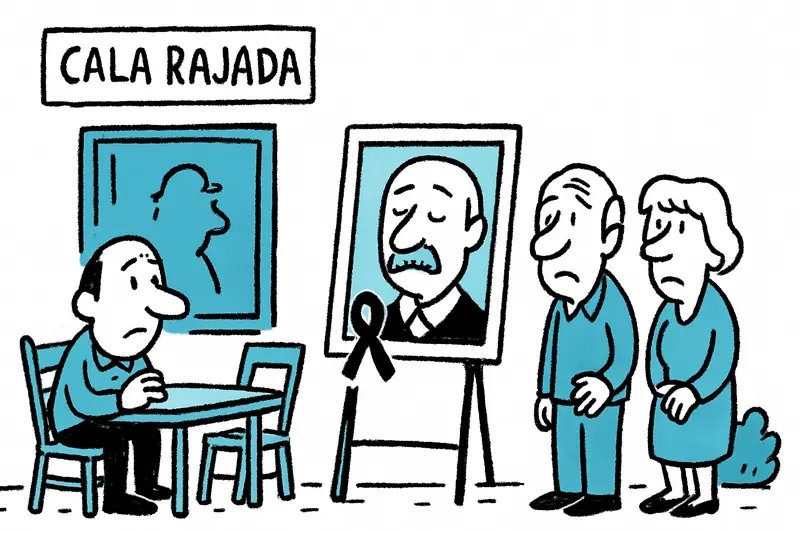
Sudden End at the Koniggarten: Why Klaus' Death in Cala Rajada Is More Than Just a Story of Mourning
Sudden End at the Koniggarten: Why Klaus' Death in Cala Rajada Is More Than Just a Story of Mourning
The sudden death of 63-year-old DJ Klaus at the Koniggarten has shaken Cala Rajada. What we know, what remains unclear, and which measures restaurateurs and the town should now tackle together.
Sudden End at the Koniggarten: Why Klaus' Death in Cala Rajada Is More Than Just a Story of Mourning
Guiding question: What happens when familiar voices in a small holiday town abruptly fall silent — and how can places like the Koniggarten better secure such moments?
On Monday noon last week the usual sounds still filled Cala‑Agulla Street: tourist footsteps, clattering plates and the distant rush of the sea. Later that day the news of the death of 63‑year‑old German DJ Klaus hit the town. He had worked for years at the Koniggarten, a beer garden that serves as a meeting place for many familiar faces in Cala Rajada.
What is certain by now: Klaus collapsed during his shift. Emergency services were alerted but could no longer do anything for him. Further details — such as an official cause of death or the date for a farewell gathering — have not been made public. The personal details, the small anecdotes and the photos people share paint the picture of a man who accompanied generations of German guests through the evenings.
The visitors' reaction was immediate and vocal: messages of disbelief, sympathy and memories filled the venue's digital pages. Anyone passing the street last night saw chairs stacked, lights dimmed and a piece of normality that no longer quite fit.
My critical analysis starts with the information situation. In cases like this, more often remains open than clarified: was it a sudden cardiac event, an accident, or another cause? Comparable situations, like the death of a 63-year-old at Balneario 2 in Arenal, have similarly prompted questions. Relatives and the business have a right to privacy — and the community has a need for transparency so that comparable situations can be handled better in the future. One right should not automatically exclude the other, but a corridor of facts helps everyone.
It is also noticeable that safety and health issues at hospitality venues usually only become visible when something goes wrong. Is there a publicly visible defibrillator at the Koniggarten? Are staff regularly trained in resuscitation? How quickly does the emergency number 112 reach this corner of Cala Rajada during peak times? Such questions rarely come to the fore until a familiar person collapses, as with the collapse on the Paseo Mallorca.
What is missing in the public discourse right now: concrete first‑hand information about the procedures on site and a sober discussion about prevention. People are grieving — and rightly so. At the same time, operators, neighbours and the municipality should use the situation to specify measures, not only for the sake of statistics but out of respect for the people who work here every day.
Everyday scene: the next morning the street lies slightly dusty in the heat, cicadas chirp, a delivery van stops briefly at the bakery, an elderly couple sits on the low wall and speaks quietly about past summer evenings. As ordinary as the scene is, the contrast with the news from the day before is sharp. That makes the grief palpable: people live closely here, they know one another.
Concrete practical approaches that make sense now:
1. Visible first aid equipment: Every popular meeting place — beer garden, beach bar, market square — should have a publicly accessible AED (automated external defibrillator) and mark it clearly; incidents such as the death of 79-year-old Professor Eugeni Aguiló in Cala Blava underline the urgency.
2. Regular emergency training: Owners of venues and their teams should receive at least annual refreshers in cardiopulmonary resuscitation. It costs time but not much money and saves lives.
3. Emergency plans and accessibility: A short, clearly visible emergency protocol for guests and staff, as well as knowledge of how long emergency services take to reach the site, would help reduce uncertainty.
4. Health protection for older employees: Employers could offer voluntary, anonymous health checks for their older staff or provide information on prevention — without coercion, with respect.
5. Local coordination: The town and businesses could create and distribute a simple guide for emergency preparedness at tourist hotspots.
These suggestions are not a comprehensive blueprint but pragmatic steps. They respect both the grief and the need for practical precaution.
One point remains: the Koniggarten itself is part of Cala Rajada's social fabric. On one hand the memory of legendary strawberry cake, on the other the live evenings into the early morning with well‑known guests like singer Alex Engel. A place that has existed for around four decades now faces the question of how to deal with loss while strengthening the safety of guests and staff.
Conclusion, succinct: Klaus' death is first and foremost a human loss. It is also a wake‑up call for places where people work and celebrate. Someone who has helped shape the last decades here deserved respect and a few practical precautions. Cala Rajada mourns — and it can emerge from mourning more concrete, without losing the warmth that makes such places worth living in.
Frequently asked questions
What safety measures should I look for at busy bars in Mallorca during summer?
How quickly can emergency services reach popular tourist areas in Mallorca like Cala Rajada?
What should I do if someone collapses at a beach bar in Mallorca?
Are defibrillators common in Mallorca's tourist towns?
What practical steps can Cala Rajada hospitality venues take to improve safety without losing its atmosphere?
What should visitors know about health and safety when holidays in Mallorca?
How should a community respond when a local death affects a popular tourist town like Cala Rajada?
Why are places like Koniggarten important to Cala Rajada, and how can they balance memory with safety?
Similar News
Ryanair Flight Diverted to Barcelona: An In-Flight Emergency and the Questions That Follow
A Ryanair jet from Pisa to Málaga landed in Barcelona after a passenger became acutely ill. Why these cases need more at...
Alarm in Port de Pollença: What now for the polluted bay?
Hundreds of people protested on the beach of Port de Pollença. The environmental organization Arrels Marines demands a p...

Micaela Schäfer: Between Playa de Palma and a Berlin Law Firm — New Calm, an Old Tomcat and Solid Finances
The party artist from the Ballermann scene appears surprisingly down-to-earth: a new relationship with a Berlin lawyer, ...
At Playa de Palma: Fire in Residential Building – six people rescued on the roof, what is missing in prevention?
In the evening a fire broke out on the first floor of a five‑storey building on Calle Trasimé. Six residents fled to the...
New License Requirement for Mini-Boats in Mallorca: Protection Measure or Tourism Brake?
From October 1 renters of small recreational boats in the Balearics must present a boating license. Critical questions r...
More to explore
Discover more interesting content

Boat Tour with BBQ along Es Trenc Beach

Private transfer from Mallorca Airport (PMI) to Pollensa
