
Cala Blava: A Day at the Beach Ends in Death — Who Must Act?
The death of 79-year-old Professor Eugeni Aguiló in Cala Blava raises questions: Was it a tragic isolated incident or a wake-up call for beach safety in Mallorca? An analysis with concrete proposals.
Cala Blava: A Day at the Beach Ends in Death — Who Must Act?
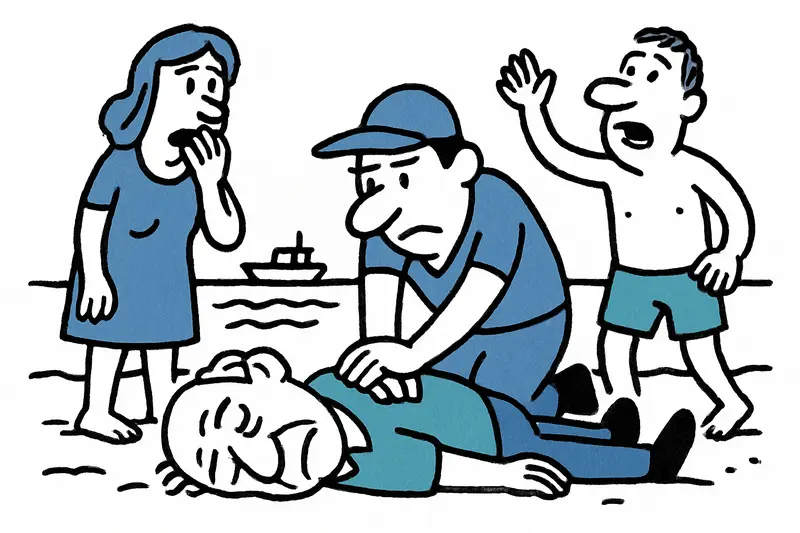
It was a clear, windy Monday morning, the sea sending small waves to the shore, the scent of sunscreen in the air — and suddenly a normal beach day in Cala Blava became the scene of an accident. Passersby discovered a man in the water at around 11:10 a.m. Lifeguards pulled him ashore and paramedics began resuscitation efforts. But all attempts were unsuccessful. The deceased: Eugeni Aguiló, 79, formerly a dean at the University of the Balearic Islands.
The central question
The central question is uncomfortable but necessary: Was this a tragic isolated incident — or does this death reveal gaps in the system that could endanger others? When a familiar island voice, like that of a professor, falls silent in the water, as in Well-known university professor dies while swimming in Cala Blava — What's going wrong on Mallorca's coasts?, we should not only mourn but also look for the causes.
What we know — and what we don't
The situation at Cala Blava: beach umbrellas, children's laughter further back, a tour boat anchored in the bay. Rescue teams were on the scene quickly; for context on maritime response services see Salvamento Marítimo. But whether heart failure, exhaustion, the effects of medication or a combination of several factors triggered the accident remains the subject of investigation. Detailed statistical data on bathing accidents at individual beaches are scarce. Similar reports exist, such as Tragic Fall in Cala Sant Vicenç: A Wake-Up Call for Greater Coastal Safety and Dead Tourist at Playa de Palma: An Accident Raises Many Questions.
More than a swim: risk factors in focus
Older people often choose the sea as a place for exercise and relaxation. Swimming is gentle on the joints and popular with retirees — but age brings risks: undiagnosed cardiovascular problems, sudden circulatory collapse, the effects of medication or the underestimated physical effort of entering the water. Local factors add to this: wind creates chop, currents can be surprising, and the proximity of boat lanes increases the risk. Not all those affected spoke to lifeguards or were accompanied.
What is often missing in the public debate
The discussion quickly turns to feelings of guilt or individual fates. Less attention is paid to structural questions: Do small coves like Cala Blava have adequately staffed lifeguard posts year-round? How well are beach visitors informed — in multiple languages — about dangers and flag systems? Are automated external defibrillators (AEDs) easily accessible at beach entrances and promenades? And how transparent are the authorities when it comes to accident numbers and response times?
Concrete opportunities and solutions
A few pragmatic suggestions that are often missing from the debate but can have a big impact:
1. Better data basis: Standardised recording of all bathing accidents by beach, time, age and cause. Only with data can risk points be identified.
2. AED network along coastal paths: Visible, multilingual signage for defibrillators on promenades and beach accesses — with regular maintenance and integration into emergency apps.
3. Focus on older swimmers: Prevention campaigns in community centres, medical networks and universities for seniors — simple checks before going into the sea, guidance on the correct way to enter the water.
4. Accessibility of lifeguard posts: Adjust staffing to seasons, more flexible duty times during rough weather, and training in cardiopulmonary resuscitation for beach staff and boat crews.
5. Multilingual danger notices: Not only Spanish and Catalan, but specifically English and German at tourist spots — because many people understand warnings only too late.
Societal responsibility — and an appeal
Mallorca is an island with close-knit neighbourhoods: you greet one another in the bakery, you meet colleagues in the café. That creates closeness — but sometimes also complacency: we think the sea knows us. Yet it is an element that demands respect. Authorities must inform and prepare better. And we can all become more sensitive: do not swim alone, pay attention to flags, ask the lifeguard station if in doubt.
What remains now
For the family, friends and the academic community of Eugeni Aguiló the most important thing is time and space to say goodbye. The island mourns a teacher, a mentor — and at the same time the duty remains to learn from such an incident. If you pass by Cala Blava in the coming days: respect the area where emergency personnel worked. And remember: small precautions can have a big impact.
Our condolences go to the relatives of Eugeni Aguiló. May his legacy at the university also help ensure that fewer people lose their lives in the sea due to avoidable circumstances.
Frequently asked questions
Is it safe to swim in Mallorca when it is windy?
What are the main swimming risks for older people in Mallorca?
How do lifeguards and rescue teams respond to beach emergencies in Mallorca?
Are defibrillators available near Mallorca beaches?
What should I know before swimming at Cala Blava in Mallorca?
Why do beach accidents in Mallorca happen even on calm-looking days?
What safety rules should swimmers follow at Mallorca beaches?
How can Mallorca improve beach safety for swimmers?
Similar News

Maribel: Five Decades of Service – Housekeeper from Peguera Celebrated with a Special Honor
Over 50 years in the hotel business: María Isabel “Maribel” Molinos was honored in Palma at the Nit del Turisme by Unive...

Orange Alert over Parts of Mallorca: Are We Prepared?
Dark clouds and an announced wet spell have triggered an Orange alert in parts of Mallorca. A reality check: what's miss...

Sundair & Co.: Sale speculation and what it could mean for Mallorca
Rumors about a possible sale of the airlines Sundair and Fly Air 41, which belong to Schauinsland-Reisen — and whether b...
Anne Wünsche in Mallorca: A job offer with a catch — who fits the role of personal assistant?
Influencer Anne Wünsche has left Berlin and is urgently looking for a full-time personal assistant in Mallorca. Why the ...

Daily from New York: Palma Between Boom and Strain
United will increase the Newark–Palma route to daily flights in 2027 using Boeing aircraft (231 seats). What does the in...
More to explore
Discover more interesting content

Can Cap de Bou

Townhouse Lleo 72
