
Earthquake near Gran Canaria — what does it mean for Mallorca?
Earthquake near Gran Canaria — what does it mean for Mallorca?
In the night of June 30, the IGN registered a quake off Gran Canaria (magnitude 3.9, 16 km depth). The risk for Mallorca remains low, but a reality check is worthwhile: how prepared are we really — especially hotels, landlords and tourists?
Earthquake near Gran Canaria — what does it mean for Mallorca?
Key question: How well prepared is Mallorca for seismic surprises, and what would happen if a quake occurred closer to our island?
In the early hours of June 30, the Instituto Geográfico Nacional recorded a tremor off the coast of Gran Canaria with a magnitude of 3.9 at a depth of 16 kilometers. Travelers in hotels and residents on the Canary Islands reported noticeable shaking. The event had no direct consequences here in Mallorca, but it raises a fundamental question: are we prepared in everyday life if the ground were to shake more strongly?
Briefly on the risk: Smaller quakes like this are not unusual in Spain, especially in volcanic and tectonically active zones like the Canaries. On Mallorca, light tremors are occasionally felt — most recently, on June 15, 2025, a 2.1 quake was recorded in the Bay of Palma. Warnings from AEMET are part of broader hazard awareness, as discussed in Orange Alert in Mallorca: What the AEMET Warning Means for the Island, Roads and Tourism.
Historically the island has experienced significantly stronger episodes, for example in the 19th century when towns such as Sineu suffered heavy damage.
Critical analysis: Public debate often focuses only on the measurements — magnitude, depth, epicenter — and on sensational night-time reports. What is missing is an honest examination of how well our infrastructure and everyday behavior cushion those risks. Many holiday rentals and older buildings on the island were built decades ago, often without modern seismic standards. There are inspections, but they remain sporadic. Hotels have emergency plans; whether every seasonal employee has internalized an earthquake protocol is questionable.
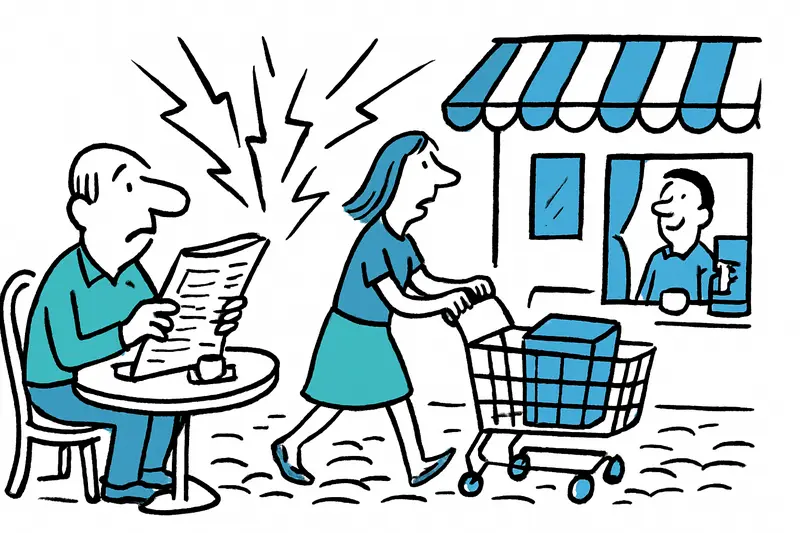
A scene from Palma the morning after the quake: on Passeig del Born a man sits with the newspaper in his hand, the café next door is buzzing, a delivery worker pushes a cart over the cobblestones. Conversation at the tables is more about supermarket prices and the weekend weather. The quake off Gran Canaria is mentioned in passing — a reminder, and no more. That casualness can be deceptive.
What is missing from the public discourse: clear, easily accessible information for short-term visitors. Hotels and hosts provide safety instructions, but these do not necessarily reach people who stay only a few nights. This lack of accessible guidance has been noted after extreme weather incidents, for example in After the Thunderstorm: Flooded Streets, Mudslides and the Big Question About Mallorca's Preparedness. The role of local municipalities is also rarely examined: who checks building plans, who funds retrofits of private older buildings, who trains restaurant and shop staff for evacuations?
Concrete measures that can have a quick effect:
1) Mandatory information for guests: A short, multilingual information card on what to do during an earthquake (Where should people assemble? Where is the nearest evacuation route?) should be available in every holiday rental and hotel room.
2) Municipal checks: Municipalities could, in coordinated action weeks, review buildings with higher visitor frequency (schools, town halls, museums) and implement simple safety measures (shelf anchoring, anchorage-point markings).
3) Training for service staff: Waitstaff, receptionists, hosts — short practical trainings (one to two hours) reduce chaos in an emergency. Not professional rescue training, but clear procedures.
4) Transparent risk map: An easily accessible overview for citizens that shows which areas are historically more vulnerable and where modernization is already needed.
These measures cost money and time, but are relatively inexpensive compared with possible damage or the loss of guest confidence. Local preparedness campaigns for storms show how small fixes can be effective, see Storm warning in Mallorca: Is the island prepared for wind and rain?. And they are feasible: small fixes to shelves, checklists at reception, a notice in the village center — none of this requires a major political debate, but local initiative.
Concise conclusion: The quake off Gran Canaria need not send us into panic, but it should wake us up. Not because of this single tremor, but because it exposes a gap: we know the ground moves from time to time — we do not, however, know across the board how well our buildings, businesses and especially our tourism sector are prepared. A bit more everyday preparedness would not ruin Mallorca, but it would make many people's nights safer.
Photos: An early taxi rolls along Avinguda Gabriel Roca, voices at the bar mingle with the sound of the coffee machine. The island carries on — with the opportunity to put a few precautionary measures into practice.
Frequently asked questions
When is Mallorca's best time to visit for beach weather?
What should I pack for a trip to Mallorca in the summer?
How safe is swimming in Mallorca, and where should I swim?
Is it easy to get around Mallorca without a car?
What should I know about Mallorcan culture and tipping etiquette?
What are the must-do activities for visitors to Mallorca?
What local foods should I try in Mallorca?
Does Mallorca have rainy or stormy seasons I should prepare for?
Similar News
Ryanair Flight Diverted to Barcelona: An In-Flight Emergency and the Questions That Follow
A Ryanair jet from Pisa to Málaga landed in Barcelona after a passenger became acutely ill. Why these cases need more at...
Alarm in Port de Pollença: What now for the polluted bay?
Hundreds of people protested on the beach of Port de Pollença. The environmental organization Arrels Marines demands a p...

Micaela Schäfer: Between Playa de Palma and a Berlin Law Firm — New Calm, an Old Tomcat and Solid Finances
The party artist from the Ballermann scene appears surprisingly down-to-earth: a new relationship with a Berlin lawyer, ...
At Playa de Palma: Fire in Residential Building – six people rescued on the roof, what is missing in prevention?
In the evening a fire broke out on the first floor of a five‑storey building on Calle Trasimé. Six residents fled to the...
New License Requirement for Mini-Boats in Mallorca: Protection Measure or Tourism Brake?
From October 1 renters of small recreational boats in the Balearics must present a boating license. Critical questions r...
More to explore
Discover more interesting content

Boat Tour with BBQ along Es Trenc Beach

Private transfer from Mallorca Airport (PMI) to Pollensa
