
Brawl at Son Llatzer: Threats, Assaults and the Question of Protection for Hospital Staff
Brawl at Son Llatzer: Threats, Assaults and the Question of Protection for Hospital Staff
A dispute at Son Llàtzer escalated: a 40-year-old man is said to have become violent after two interventions, threatened staff and damaged furniture. What does this say about safety and care in our hospitals?
Brawl at Son Llatzer: Threats, Assaults and the Question of Protection for Hospital Staff
Two nocturnal incidents, one arrested — and much stagnation in the discussion
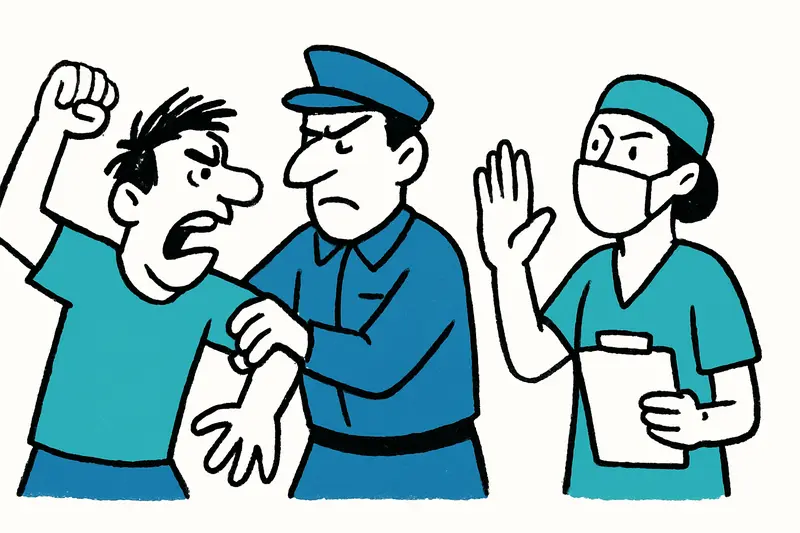
In the early hours of a hot June day, the night at Son Llàtzer hospital in Palma spun out of control. According to police reports, a 40-year-old man described as drug-dependent was detained by security personnel and later taken into custody by a night patrol of the local police. The incidents unfolded in two phases: first a loud argument in the evening, then a return with aggressive behavior and physical violence against a nurse as well as property damage in the corridor.
The facts are sparse, but clear enough to raise questions: How well protected are our hospitals at night? Who is responsible for patient and staff safety when people under the influence of drugs meet in sensitive areas? And how does the system handle family stress — here: the son of a hospitalized mother — without it escalating?
What happened according to the reports: Around 11:30 p.m. the man was allegedly in the room where his mother lay and got into an argument with a doctor. He left the building but returned later. In the early morning hours he is said to have suddenly switched on the light in a multi-bed room, shouted loudly and demanded the return of his phone. When a nurse pointed out the night rest of other patients, the situation escalated: the man allegedly repeatedly insulted staff, reacted with a powerful kick against the counter and then entered a locked area. There he reportedly cornered the nurse, threatened to kill him, struck with a beret and kicked medical trolleys. Security personnel held him until the police arrived; he was arrested at about 1:45 a.m. He is accused of making death threats and resisting state authority.
This is not just an isolated event; it is a mirror. Night wards are places between wakefulness and sleep, with thin staffing, tired colleagues and many people in need of protection in close quarters. In such moments a single spark — frustration, drugs, worry for a family member — is enough and everything erupts. I myself have stood at Son Llàtzer's reception at night: the glow of the emergency lights, the smell of disinfectant, somewhere a coffee cup, the quiet hum of the air conditioning. Then a loud scream, footsteps in the corridor. Everyone knows how quickly routine becomes fragile; similar episodes have occurred elsewhere, notably Brawl at Playa de Palma: Why a verbal exchange could have ended fatally.
Critical analysis: The police often arrive only after private security personnel have been alerted. That may be sensible in many cases. But private services are primarily security guards, not medical staff and not trained to therapeutically de-escalate psychological crises or handle drug impairment. That creates gaps: How are the lines of communication between the clinic, the private security service and the police organized? What protocols exist when aggression flares up near equally vulnerable patients? The context includes industrial actions by health staff, as discussed in No Submission: What the four-day doctors' strike in Mallorca really reveals.
Three things are currently missing from the public discourse: the perspective of the affected nursing staff, as highlighted in Alarm at S'Escorxador Health Center: When Safety Becomes a Matter of Negotiation, concrete figures on nighttime assaults on hospital personnel, and clear information about which measures hospitals and authorities are already taking. Without these elements the debate remains vague and quickly turns to blame instead of solutions.
A realistic view of solutions must connect several levels. First: prevention through training. Nursing and security staff need mandatory training in conflict management and non-violent de-escalation. Second: psychosocial intervention teams. Mobile crisis teams with psychological and psychiatric expertise should be reachable, especially at night, so that police action is not always the only response. Third: clear reporting and protection pathways. Alarm buttons, fast radio connections to the police and defined cordoning mechanisms within the hospital can help limit threats quickly without unnecessarily closing patient areas.
In addition, there need to be services for people with drug problems who become involved in acute family crises. Readily available counseling slots, low-threshold care and coordinated follow-up measures after a hospital incident prevent repetitions. And legally: employees must know how incidents are documented and what support they receive in civil or criminal matters — filing charges, witness protection, psychological aftercare.
On the street you now hear the usual tones again: calls for harsher penalties, demands for more police. All valid — but insufficient. Harsher penalties act late. Prevention and care have an earlier effect. We need both, coordinated with each other, and addressing wider logistical issues such as transport arrangements in healthcare Agreement in Medical Transport: Calm, but No Lasting Solution.
In Palma, on a warm night, an incident at Son Llàtzer has shown how vulnerable the balance in our hospitals is. The images of broken trolleys and a struck nurse are hard to ignore. They must prompt discussions between health administration, hospital management, police and civil society — not the usual outcry on social media, but with concrete responsibilities and binding measures.
Conclusion: Protecting staff and patients cannot be achieved by presence alone. It requires clear procedures, psychosocial resources, better training and transparent aftercare. Son Llàtzer is an example — one we should take seriously if we want to talk not only about symptoms but about causes.
Frequently asked questions
What measures exist to protect hospital staff during night shifts in Mallorca?
How can hospitals in Mallorca handle aggressive incidents without escalating violence?
What safety concerns did the Son Llàtzer incident in Palma reveal?
How are drug problems and family crises addressed to prevent repeat incidents in Mallorca hospitals?
What is the role of security, police, and hospital staff in responding to incidents in Mallorca?
What practical steps can be taken inside a Mallorca hospital to quickly limit threats?
What training is recommended for hospital staff to improve conflict management in Mallorca?
Are there systems for psychosocial intervention and aftercare after hospital incidents in Mallorca?
Similar News

Micaela Schäfer: Between Playa de Palma and a Berlin Law Firm — New Calm, an Old Tomcat and Solid Finances
The party artist from the Ballermann scene appears surprisingly down-to-earth: a new relationship with a Berlin lawyer, ...
At Playa de Palma: Fire in Residential Building – six people rescued on the roof, what is missing in prevention?
In the evening a fire broke out on the first floor of a five‑storey building on Calle Trasimé. Six residents fled to the...
New License Requirement for Mini-Boats in Mallorca: Protection Measure or Tourism Brake?
From October 1 renters of small recreational boats in the Balearics must present a boating license. Critical questions r...
After the Storm: Mallorca Breathes Easy — Warm Weekend with Short Showers
The thunderstorm left its mark, but calm returns for the weekend: sun, summer temperatures around 32 °C, isolated shower...
No More 'Just Hop on a Boat': Mallorca, Mandatory Boating License and the Open Questions
From October 1, the Balearic Islands will require a boating license for small rental boats under five meters/15 hp. A tr...
More to explore
Discover more interesting content

Boat Tour with BBQ along Es Trenc Beach

Private transfer from Mallorca Airport (PMI) to Pollensa
