
Phone over the cubicle: Arrest in Cala Rajada and what it means for the island
Phone over the cubicle: Arrest in Cala Rajada and what it means for the island
In Cala Rajada a 29-year-old tourist was caught filming inside a women's toilet with a mobile phone. An incident that raises questions about prevention, club security and the support for victims.
Phone over the cubicle: Arrest in Cala Rajada and what it means for the island
Key question
How can Mallorca prevent intimate spaces in nightlife venues from turning into legal incidents – and how do we protect visitors without stifling the island's nightlife culture?
Brief summary of the incident
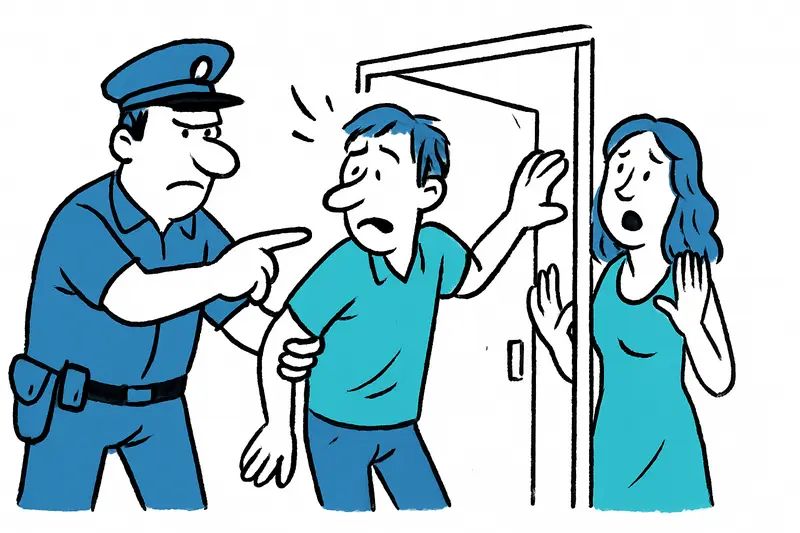
In the early hours of 21 June in Cala Rajada, a 29-year-old German tourist was detained after staff and guests caught him apparently filming with a smartphone from another cubicle. Witnesses report that the man held his arm with the device over the partition; when the victim was informed, she panicked. Club employees overpowered the man and held him until officers from the Guardia Civil arrived.
Critical analysis
The case is alarming on two levels. First: the invasion of privacy in a place where people are particularly vulnerable. Second: the role of club staff and authorities. That security personnel intervened quickly on site speaks to vigilance; at the same time the incident shows how much responsibility rests on very few shoulders. On a busy summer night along the Passeig Marítim you hear music, laughter and the clinking of glasses – but privacy doesn't disappear with the noise. Standardized procedures for such cases are often missing: who secures evidence? How are victims supported? Who can speak the victims' language?
What is often missing in public debate
Public discussion quickly focuses on lone offenders and sanctions. Less visible are preventive measures: training bouncers in de-escalation and victim support, clear multilingual signage, reporting options without long walks to the police, and technical standards for nightlife venues (for example improved cubicle designs that make inserting cameras more difficult). The question of how to systematically inform tourists about behavioural rules and legal consequences is also rarely addressed. Nighttime escalation elsewhere, such as Nighttime escalation at Playa de Palma: When a mobile phone leads to a home takeover, underlines why prevention matters.
Everyday scene in Mallorca
Imagine a summer night in Cala Rajada: small groups stroll along the illuminated promenade, late-night visitors sit at street cafés, music pounds in the clubs, and a queue forms outside the toilets. In such density opportunities arise – and often supervisors have only seconds to react. It is precisely in those seconds that a venue must be able to act: secure communication to the bar, a quick check of the cubicles, and a script that staff and guests know.
Concrete approaches
- Training for bouncers and security: regular courses on handling assaults, evidence preservation and initial victim support; content in German, English and Spanish; - Standard protocol for clubs: a short checklist for incidents in toilets, a designated contact person, documentation, and a fast alert chain to the Guardia Civil; - Improved cubicles: smaller, firmly screwed partitions, narrower overhangs at the top so no arm can reach over; this is not high-tech, but construction design; - Visible information: signs and flyers in the venue explaining how to report an incident — also via app or short-number; multilingual and unobtrusive; - Cooperation with landlords and booking platforms: preventive notices to guests before arrival about conduct rules and legal consequences, as highlighted by cases such as Court Convicts Tourist After Assault in Llucmajor: How Safe Are Hotel Employees Really?; - On-site victim protection: a quiet room for withdrawal, contact with counselling centres, translation support and accompaniment for filing a report without further retraumatization.
Legal and societal considerations
Legally, such recordings in Spain are considered a serious intrusion into privacy; prosecution is the responsibility of the competent authorities. Court rulings, for instance Secret Recordings in Palma: Verdict, Questions and What Matters Now for Those Affected, illustrate judicial responses, and in practice the coordination of witnesses, staff and police often determines how a case proceeds, as shown in Phone Tracking Leads to Arrest in Palma – One Case, Many Questions. Societally, we should ask whether the island invests enough in prevention outside the tourist season – or whether the focus is too much on response rather than prevention.
Conclusion
The incident in Cala Rajada is more than a single report: it is a wake-up call. Not only for club operators and police, but for everyone involved in organising the summer by the sea. Better procedures, more prevention and a culture that takes victims seriously while setting clear boundaries for offenders are needed. Only then will Mallorca's nightlife remain lively — and safe enough to still go to the beach in the morning with a clear conscience.
Frequently asked questions
What is Mallorca's climate like, and when is the best time to visit?
Can I swim in Mallorca year-round, or are beaches just for summer?
What should I pack for a Mallorca trip?
Is Mallorca good for families with kids?
What makes Palma de Mallorca worth a visit?
Is Sóller a good day trip from Mallorca?
Are there family-friendly beaches in Mallorca?
What should I know about driving in Mallorca or getting around the island?
Similar News

Cap Vermell Grand: Second Michelin Key – a Gift for the East
The Cap Vermell Grand in Capdepera has been awarded its second Michelin key. For the region this elevates the luxury off...

Eurowings lets four aircraft carry names – a friendly idea that also reaches Mallorca
Eurowings is launching a campaign: four Airbus A320s are to carry the first names of people who help others in everyday ...
From the Reality Studio to the Pitch: Aleks Petrovic Makes Mallorca His Base
The former participant in numerous TV shows moves from Dubai to the island and launches a project with FC Germania Mallo...

When the Phone Falls Silent: Concern for Sarah Joelle in Mallorca — and What It Reveals
After days without a response, the TV personality's unreachability in Mallorca sparked concern. Shortly afterwards an al...

Ultraluxury on the Ground: Four Seasons Jet in Palma — a Reality Check for Formentor and the Island
A high-priced flight crosses Mallorca and its guests stay for days at the Formentor resort. What does the island get bes...
More to explore
Discover more interesting content

Can Cap de Bou

Townhouse Lleo 72
