
State of emergency in Pere Garau: Why abandoned cars are choking the neighborhood
State of emergency in Pere Garau: Why abandoned cars are choking the neighborhood
Residents in the market district Pere Garau complain about an increasing number of vehicles parked for months. Rules about maximum parking duration exist — but who enforces them? A reality check from the neighborhood with concrete proposals.
State of emergency in Pere Garau: Why abandoned cars are choking the neighborhood
Who clears the streets when rules remain only on paper?
In the early morning, even before the stalls of the Mercat de Pere Garau are fully set up, you can already see it: delivery vans maneuvering, traders pushing baskets, and between them vehicles with peeling paint, flies on the windows and tires that have hardly any air left. The scene repeats itself on several streets in the neighborhood. Residents say some cars apparently haven't been moved for months — an annoyance for finding parking, an eyesore and increasingly a safety and hygiene problem. Local reporting even highlights specific incidents, such as A delivery van struck a woman at Plaça Pere Garau.
The legal situation is clear: In Palma a vehicle may park in the same spot for a maximum of ten days. If this period is exceeded, the owner has 48 hours to act before a tow can be carried out. That's the rule on paper. The problem: enforcement lags behind. This is precisely where residents' criticism starts — not because rules are missing, but because the rules are not noticeable on the street.
The criticism can be broken down into three levels. First: inspections and towings are too sporadic. Second: bureaucratic hurdles and limited personnel resources delay measures. Third: the integration between administrative decisions (for example the planned expansion of paid parking zones) and practical activation lags. On site the parking meters are already installed; expectations that this will soon help are high — but reminders of previous promises have made the mood tense. Long-term planning debates for the area are reflected in pieces such as From Cinema to Neighborhood Center: What Pere Garau Really Needs.
What is missing from the public debate? Clear monitoring: there are clues — for example comparison images from map services — that show which vehicles remain in the same place for a long time. These digital traces are rarely used systematically. Transparent figures are also missing: How many reports for exceeded parking limits have been filed? How many towing orders have actually been executed? Without such data the debate remains a string of isolated cases and subjective impressions. By contrast, other parts of Palma have recently seen more intensive enforcement efforts, as reported in Police clear parking chaos in Palma industrial areas — checks, towing, open questions.
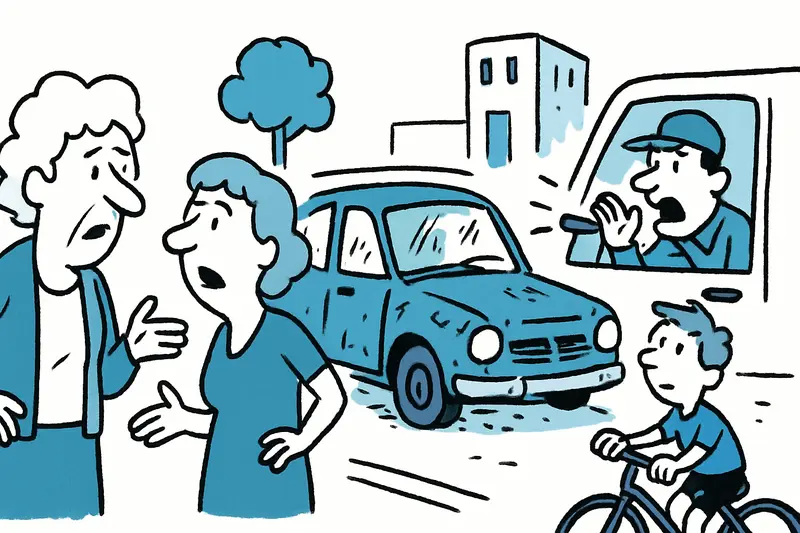
Everyday scene: On the square near the market two older women discuss free parking spaces while a boy rides past on a bicycle and nearly brushes against a sunken fender. A delivery driver honks because a rusted car is blocking the loading zone. A corner eatery smells of freshly fried empanadas; the owner waves a clipboard — she needs her customer parking space, but the barrier stays closed. These moments show how closely business, life and public order are connected in the neighborhood.
Concrete solution approaches can be formulated without promising miracles: First, a targeted, time-limited towing campaign in the most affected streets, accompanied by clear communication — date, time, how owners can register their vehicle, and information on appeal procedures. Second, a digital reporting and monitoring tool: residents and shopkeepers could upload georeferenced photos; the administration could automatically analyze concentrations and prioritize deployments.
Third, pragmatic rules for exceptional cases: if a vehicle is clearly derelict and no owner can be reached, there must be faster disposal or recycling paths; this saves storage costs and frees up space. Fourth, the rapid activation of the already installed parking meters together with temporary resident permits for traders and care workers, so the whole neighborhood is not immediately burdened with fees.
Technology and civic engagement can complement each other: Google Maps comparison images and other freely available map data are evidence, but they do not replace a formal complaint. Cooperation with the local police, a clear process chain for towing cases and transparent reports on towed vehicles would build trust. Small, visible actions such as better signage and regular cleaning also bring the issue back into daily life. Similar patterns of obstructive parking have been documented in other high-pressure locations, for example in hospital parking areas described in Beyond the Parking Lottery: Son Espases and the Daily Parking Chaos.
It would be naive to believe that a one-off action will solve all problems. But politics is also will and timing: if announced measures — such as the expansion of the blue zone, which has already been prepared — are not implemented promptly, frustration grows. Residents need fewer promises and more binding dates. Otherwise the feeling will grow that public space is becoming a storage yard.
Conclusion: The rules exist; the gap lies in enforcement. A bundle of decisive towing actions, digital registration, pragmatic disposal routes and the quick activation of existing parking zones would visibly reclaim space in Pere Garau. For the people in the neighborhood it is not about statistics but everyday life: space for shopping, safe sidewalks for children and an urban image not marked by decay. The guiding question remains: who takes responsibility when the streets begin to speak against the city? The answer must come now — loud, visible and with a clear deadline.
Frequently asked questions
When is the best time to visit Mallorca for good weather and fewer crowds?
Are Mallorca beaches good for swimming year-round?
What should I pack for a trip to Mallorca?
What are the best ways to get around Mallorca?
What outdoor activities are popular in Mallorca?
Which local foods should I try in Mallorca?
Is Mallorca a good destination for families with kids?
How long should I stay to see Mallorca's highlights?
Similar News

Missing 24-year-old from Bavaria found on Mallorca
The 24-year-old woman from the Augsburg area who had been missing since August 3 was found on Mallorca. Family members, ...

Heat and Power: Why the Balearic Islands Are Sweating Now — a Reality Check
Weeks of heat waves, rising cooling demand and suddenly flickering lights: Mallorca, Ibiza and Formentera have seen an i...
When the Water Taps Run Dry: Why Tankers Are Not the Solution
In villages like Deià, Valldemossa or on Menorca, municipalities are limiting water use because of drought. Who decides,...
Ryanair Flight Diverted to Barcelona: An In-Flight Emergency and the Questions That Follow
A Ryanair jet from Pisa to Málaga landed in Barcelona after a passenger became acutely ill. Why these cases need more at...
Alarm in Port de Pollença: What now for the polluted bay?
Hundreds of people protested on the beach of Port de Pollença. The environmental organization Arrels Marines demands a p...
More to explore
Discover more interesting content

Boat Tour with BBQ along Es Trenc Beach
Private transfer from Mallorca Airport (PMI) to Pollensa
