
Pere Garau: Market and delivery traffic — why the coexistence became dangerous
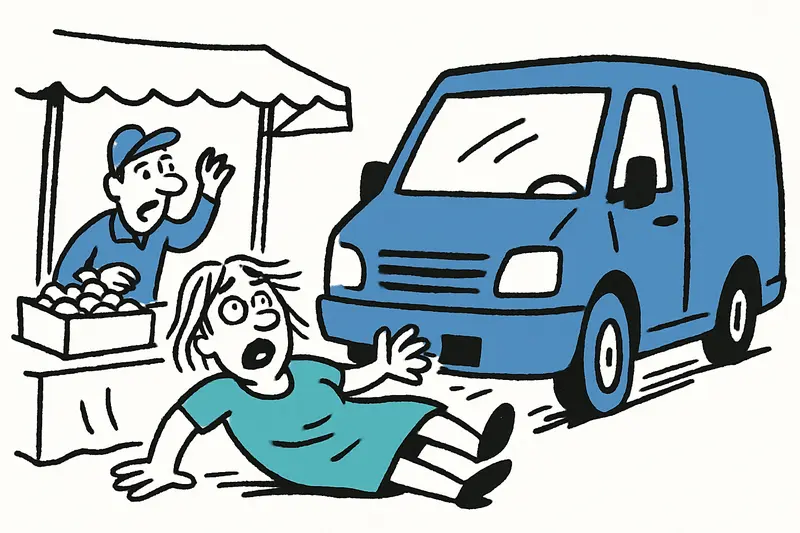
A delivery van struck a woman at Plaça Pere Garau. The incident highlights that deliveries and market bustle often don't fit together. How can safety be improved without losing the market?
Pere Garau: Market and delivery traffic – why the coexistence became dangerous
On Saturday morning, shortly after ten, a short, loud bang changed the familiar morning melody at Plaça Pere Garau. Among fruit crates, umbrellas and the constant calling of the vendors, the howling of a siren was suddenly heard. A delivery van, maneuvering in one of the narrow loading and unloading areas, had struck a middle-aged woman, local report that a delivery van struck a pedestrian at the Pere Garau market. SAMU 061 emergency teams arrived quickly, a privacy tent was erected, the injured person stabilized and taken to hospital. Vendors, neighbors and long-standing customers stood stunned — only the distant hum of a refrigerator and the clatter of a crate ramp broke the silence.
The guiding question: How can the market remain lively — and safe?
The Pere Garau market is more than a place to shop for many residents: it is a meeting place, an information exchange and the neighborhood's morning stage. At the same time, this everyday proximity is the problem: delivery traffic and pedestrians share narrow alleys, often without clear rules. The central question is therefore: Can the market atmosphere be preserved without constantly accepting a risk?
Many voices now demand swift measures. But it is not enough to show outrage — a sober look at the causes and practical solutions that do not suffocate life at the square is necessary.
Why it becomes dangerous so quickly
The explanation that it was just "negligent maneuvering" is too simple. Behind the accident is a bundle of factors: vendors are subject to the time pressure of supply chains — fresh fish, vegetables and baked goods spoil quickly and must be delivered at specific times. The streets have grown historically: narrow, winding, with little room for separate lanes. And finally, there is often a lack of clear, enforced regulations on market days.
Particularly explosive is the coincidence of peak times: when delivery vans arrive, many customers begin their shopping. There is also a psychological effect: regular vendors move routinely between crates and vans, but visitors are distracted, occupied with children or bags — reaction times differ. In this mix, dangerous situations arise.
Practical solutions that can act quickly
What does not help now are big plans without the will to implement them. What is needed are measures that take effect in the short term and endure in the long term. Concretely, residents and business owners suggest the following steps:
1. Delivery time windows: Designated loading times in the early morning or late evening would avoid the simultaneous presence of delivery traffic and customers. This rule would have to be monitored so that it does not remain merely a well-intentioned recommendation.
2. Temporary barriers and marshals: Mobile bollards, tape and clearly visible signs on market days — supported by volunteers or city staff as traffic marshals — quickly create safe areas for pedestrians.
3. Separate delivery zones: Small unloading islands outside the busiest market areas, from which goods are brought to the stalls by handcart or trolley, would banish maneuvering movements from sensitive zones.
4. Awareness and sanction mechanisms: Information campaigns for drivers and vendors must be linked to clear sanctions. Fines and controls ensure commitment — otherwise everything remains theoretical.
5. Pilot project with sensors: A time-limited test phase with sensors to measure pedestrian flows and video analysis could show when and where the greatest need exists. This allows measures to be planned precisely without immediately carrying out major changes.
Looking ahead: Small interventions, big effect
Market management and the city administration have announced reviews — that is good, but not enough. It takes courage for small, pragmatic interventions: clear delivery times, visible barriers on peak days, a few more handcarts and, above all, consistent enforcement. Such measures cost little but protect people and preserve the market's identity.
Of course there will be resistance: some vendors fear additional effort, delivery companies want to keep appointments, and the daily rhythm is hard to change. But the alternative would be the gradual restriction of the market — out of fear of accidents. The candle and the flowers that lay on a corner of the square in the afternoon were a silent appeal: we want to keep our market, but safe.
It would be a sad irony if only another serious incident forced the necessary changes. It makes much more sense for the city, businesses and neighborhood to act together now. Then the familiar babble of voices will soon dominate Plaça again — and not the wail of sirens.
Frequently asked questions
Why can market deliveries be dangerous at Pere Garau in Mallorca?
What are the best ways to make a busy Mallorca market safer for pedestrians?
What time of day is the Pere Garau market busiest?
Is it safe to walk through Pere Garau market during delivery hours?
What changes could reduce traffic problems at Pere Garau in Mallorca?
Why do narrow streets make market traffic harder to manage in Mallorca?
What should visitors keep in mind when shopping at Pere Garau market?
Could sensors help improve safety at Pere Garau market in Mallorca?
Similar News
After Being Admitted to Hospital Again: Heinz Hoenig and the Questions We Should Ask in Mallorca
Long-time Mallorca resident Heinz Hoenig was admitted to hospital again. A clear “what next?” is missing from the covera...
Yellow Alert: Is Mallorca Prepared for the Next Rain Band?
Aemet has issued a yellow alert for the south, southwest and the island's interior. Thunderstorms and heavy rain are for...
Kegel brothers trial postponed: Why Mallorca must wait for a verdict
The trial of 13 German holidaymakers will not begin until May 2028. The long wait raises questions — for victims, defend...
Chaos on Palma's Runway: Why the Summer at the Airport Was So Disrupted
This summer laid bare where Palma airport is faltering: only just over half of departures were on time and seven percent...
Cocaine Offer on Ham Street: Why the Open Trade Should Ring Alarm Bells
In the middle of Pare Bartomeu Salvà a tourist was offered a packet of cocaine as part of a sunglasses deal. A short int...
More to explore
Discover more interesting content

Can Cap de Bou

Townhouse Lleo 72
