
After seven years: Late-antique ship from Playa de Palma brought ashore
After seven years: Late-antique ship from Playa de Palma brought ashore
A 1,600-year-old merchant ship, discovered by a swimmer in 2019, has been brought ashore after months of recovery. Amphorae, inscriptions and a Christ seal provide new insights into late-antique trade.
After seven years: Late-antique ship from Playa de Palma brought ashore
320 amphorae, handwritten inscriptions and a hull that slept under the sand for a long time
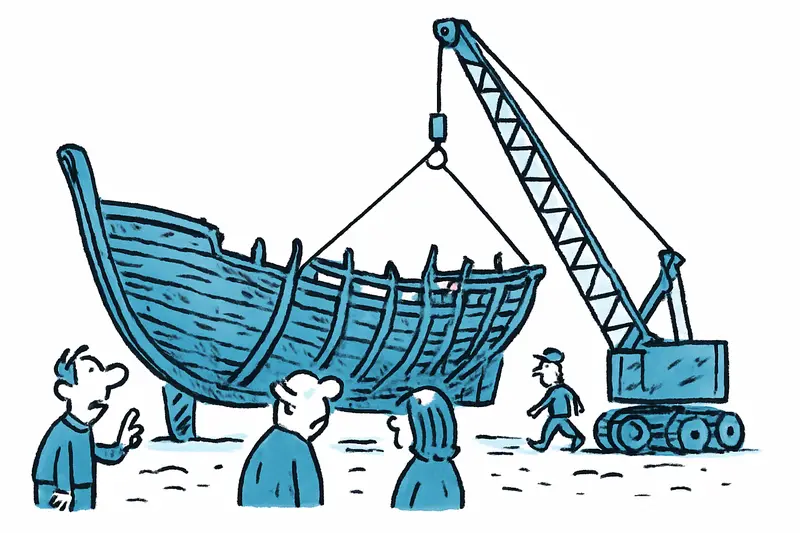
In the morning, when the bakeries at Playa de Palma deliver bread and ensaimadas and seagulls circle over the waves, people stood yesterday morning on the quay at Can Pastilla and watched as the last large wooden sections of a roughly 1,600-year-old merchant ship were lifted ashore. What began in 2019 as the chance discovery of a swimmer in just two meters of water has kept the island on edge in recent weeks: buoys, lifting airbags and specially welded steel frames brought a late-antique wreck to light (see Roman Wreck off Can Pastilla: Piecemeal Recovery Raises Questions for the Island).
For the island this is more than a spectacular summer image: the researchers found an almost fully preserved cargo – about 320 amphorae, many of them sealed. On 84 vessels black-ink inscriptions, so-called tituli picti, have survived. Names like Alumnio and Ausonio, weight indications and labels for goods can be deciphered. For example, there are mentions of high-quality garum fish sauce as well as several types of olive oil.
Analytical investigations suggest that part of the cargo came from the Cartagena area. Residual traces in some amphorae match anchovy-based fish sauce; other samples point to virgin olive oil. Seals bearing a Christ symbol indicate a dating to the late-antique period, estimated roughly to the 4th century.
The recovery work took around four months and required a team of archaeologists from various universities as well as support from the police and the Guardia Civil (see Can Pastilla: The Roman Wreck and the Question of Responsibility and Funding). Wind, waves and the peak tourist season did not make the work any easier: divers repeatedly had to change course while everyday life with parasols, beach vendors and cyclists continued on the beach.
The rescue proceeded in stages: first the amphorae and other cargo remains were recovered, then the larger wooden parts of the hull were brought up. Lifting airbags gently raised the fragments, tugboats brought them to the harbor where steel structures made lifting them ashore possible. Conservation now begins: over months the wooden pieces will be treated in desalination baths so that the fragile material is preserved.
From a scientific perspective the find is special because the combination of trade inscriptions, weight indications and private merchants allows much to be reconstructed about the economic processes of the time. The mix of private business entries and standardized weight markings provides insights into the organization and control of goods transport that are scarcely known from the Mediterranean in this form.
For Mallorca itself the find has a visible value: it broadens the island's cultural profile beyond beach imagery and tourism advertising. In the coming months the conserved objects will form the basis for exhibitions, educational programs and outreach formats. Museums and local institutions are already considering how to make the find accessible to residents and visitors — from information panels at the harbor to digital tours (see Deeper Cistern, a Thousand Shards: What the New Finds at Alaró Castle Mean).
And then the small, human scenes: fishermen standing at the pier during breakfast discussing how such a ship might have sunk; school groups looking at the amphorae with curious eyes; pensioners on the promenade sharing their stories of the sea and storms. These pictures show: archaeology is not only research, it is part of the island's everyday life.
The raising of the wreck is now complete, but the work is far from over. While the wood is slowly stabilized, anticipation grows about telling the stories of this old ship in display cases and educational projects. For Mallorca it is a bit like an unexpected glimpse into another life at sea — and a reminder that our coasts hold more than meets the eye.
Frequently asked questions
What is the late-antique ship found off Playa de Palma and why is it important for Mallorca?
How long did the ship’s recovery take and what did the process involve?
What can the inscriptions and amphorae reveal about ancient trade networks?
Where did the cargo likely originate from and what items were found?
Will there be exhibitions or educational programs about the wreck for residents and visitors?
What happened at Can Pastilla and Playa de Palma during the recovery?
How does this discovery affect Mallorca’s cultural identity beyond beach tourism?
When did the discovery begin and what sparked the find?
Similar News

Micaela Schäfer: Between Playa de Palma and a Berlin Law Firm — New Calm, an Old Tomcat and Solid Finances
The party artist from the Ballermann scene appears surprisingly down-to-earth: a new relationship with a Berlin lawyer, ...

At Playa de Palma: Fire in Residential Building – six people rescued on the roof, what is missing in prevention?
In the evening a fire broke out on the first floor of a five‑storey building on Calle Trasimé. Six residents fled to the...

New License Requirement for Mini-Boats in Mallorca: Protection Measure or Tourism Brake?
From October 1 renters of small recreational boats in the Balearics must present a boating license. Critical questions r...

After the Storm: Mallorca Breathes Easy — Warm Weekend with Short Showers
The thunderstorm left its mark, but calm returns for the weekend: sun, summer temperatures around 32 °C, isolated shower...
No More 'Just Hop on a Boat': Mallorca, Mandatory Boating License and the Open Questions
From October 1, the Balearic Islands will require a boating license for small rental boats under five meters/15 hp. A tr...
More to explore
Discover more interesting content

Boat Tour with BBQ along Es Trenc Beach
Private transfer from Mallorca Airport (PMI) to Pollensa
