
Rollator as a Hiding Place: Arrest at Palma Airport – Questions for Security and Prevention
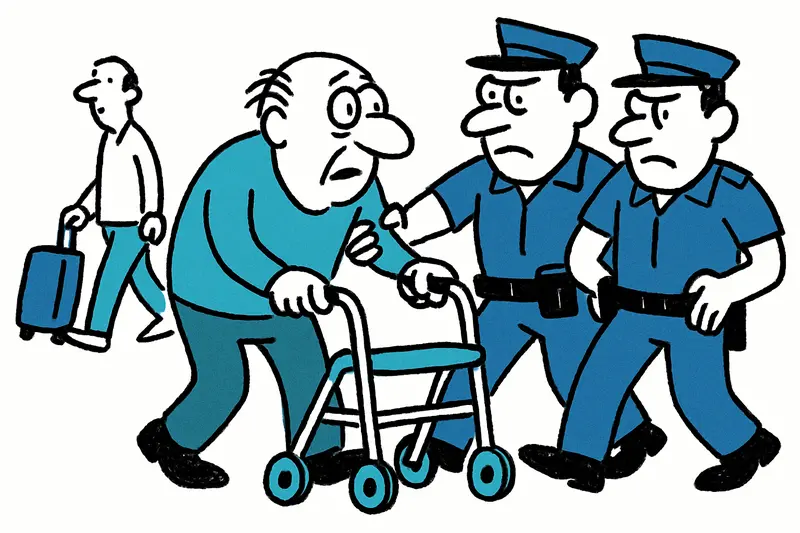
At Palma Airport a 70-year-old man with a rollator was arrested—allegedly because he had hidden stolen valuables in it. The incident raises not only questions of guilt or innocence but also about how to treat older offenders and how travelers can be better protected.
Rollator instead of an alibi: What the incident at Palma airport reveals
In the morning there was the usual hum in Palma's departure hall: rolling suitcases over tiles, distant announcements over the loudspeakers, the smell of coffee and the heat already coming through the panoramic window on this late spring day. Among it all an older gentleman was leisurely pushing his rollator—and was shortly afterwards detained by security personnel. The news sounds at first like a curious crime story: a mobility aid used as a hiding place for stolen items at Son Sant Joan Airport.
The central question is: how could such an everyday scene go unnoticed for so long—and what should airport operators and travelers pay attention to in future? This is not just about the guilt or innocence of a 70-year-old, but about security procedures, prevention work and the fine line between care and mistrust.
According to on-site reports, the man initially did not stand out until security staff noticed that he repeatedly lingered near waiting travelers and seemed nervous. A discreet accompaniment by the team, then a search—witnesses report. Under the seat of the rollator the officers found valuables that apparently did not belong to the man. Early indications suggest that some items may have been taken months earlier.
Such cases provoke reflex reactions: outrage at brazen thieves, relief when security intervenes, but also questions about how to deal with older suspects. Many passengers know the image of a pensioner seeking help with luggage; that expectation can disable protective reflexes. The tragedy: a rollator inspires trust—and that very trust can be exploited.
What is often missing in the public debate are the structural backgrounds: why do certain people fall into such patterns? Age alone is not an explanation, but poverty, addiction, older homeless people or repeated relapses into crime can play a role, as local reporting has shown in the case of a suspected hotel thief arrested in Palma. On the other hand is the question of the effectiveness of airport security measures: are observation and intervention guidelines sufficient to act discreetly, lawfully and respectfully?
On site the security staff appeared calm and professional—no big spectacle, rather a precise intervention. That matters: an excessive approach can frighten passengers, while too lax a response can leave victims behind; similar concerns have been raised in coverage questioning arrests and procedures at Son Sant Joan. But routine alone does not solve social problems. We should ask how prevention, victim protection and police measures can be better coordinated.
Concrete opportunities and approaches
First: awareness campaigns for travelers. Small notices in clearly visible places—not sensational, but succinct—remind people to keep an eye on bags and valuables. In a hall where announcements and advertising compete, clear, repeated messages are needed.
Second: staff training. Security teams, gate agents and cleaning staff should be trained regularly to recognize suspicious behavior and respond appropriately—respectful toward older people, but consistent in protecting travelers, as incidents involving staff have shown in reports of arrests of external employees at Palma Airport.
Third: cooperation with social services. If older people repeatedly show problematic behavior, the response should not be only criminal. Outpatient social work, addiction counseling and help finding accommodation should be considered alongside enforcement to address causes rather than just symptoms.
Fourth: documentation and information exchange. A better reporting and analysis system for suspicious incidents at the airport would help to identify patterns and plan targeted prevention measures. Privacy-compliant and legally sound, but usable.
For the affected travelers the practical advice remains: do not leave valuables visible in bags, keep money and documents close to your body and speak to staff if you feel uneasy. Such simple rules of conduct can significantly reduce the risk.
The detainee was taken into temporary custody; the responsible authority is continuing the investigation. Hopefully the follow-up to this case will not stop at the arrest but will lead to improved protection and prevention concepts at Palma Airport. Because between announcements over the loudspeakers and the monotonous roll of suitcases there is room for more attention—and a few smarter answers to long-standing problems.
Frequently asked questions
How safe are valuables at Palma Airport?
What should I do if I notice suspicious behavior at Mallorca airport?
Can mobility aids like a rollator be checked by airport security in Mallorca?
Why do older people sometimes get less scrutiny at airports?
What can travelers in Mallorca do to avoid theft in airport terminals?
What kind of prevention measures help at Palma Airport?
How do airport staff handle theft cases respectfully in Mallorca?
What should I keep in mind when traveling through Son Sant Joan Airport?
Similar News
After Being Admitted to Hospital Again: Heinz Hoenig and the Questions We Should Ask in Mallorca
Long-time Mallorca resident Heinz Hoenig was admitted to hospital again. A clear “what next?” is missing from the covera...
Yellow Alert: Is Mallorca Prepared for the Next Rain Band?
Aemet has issued a yellow alert for the south, southwest and the island's interior. Thunderstorms and heavy rain are for...
Kegel brothers trial postponed: Why Mallorca must wait for a verdict
The trial of 13 German holidaymakers will not begin until May 2028. The long wait raises questions — for victims, defend...

Chaos on Palma's Runway: Why the Summer at the Airport Was So Disrupted
This summer laid bare where Palma airport is faltering: only just over half of departures were on time and seven percent...
Cocaine Offer on Ham Street: Why the Open Trade Should Ring Alarm Bells
In the middle of Pare Bartomeu Salvà a tourist was offered a packet of cocaine as part of a sunglasses deal. A short int...
More to explore
Discover more interesting content

Can Cap de Bou

Townhouse Lleo 72
