
Accident on the Marella Explorer 2: What Helps Prevent Onboard Accidents?
A 76-year-old passenger fell from the twelfth deck of the Marella Explorer 2 in international waters. The ship began search efforts, but the man remained missing. Time for a critical look at safety gaps and practical solutions.
Accident on the Marella Explorer 2: What Helps Prevent Onboard Accidents?
Key question: Could technical, organizational or simple everyday measures have saved the life of the 76‑year‑old passenger?
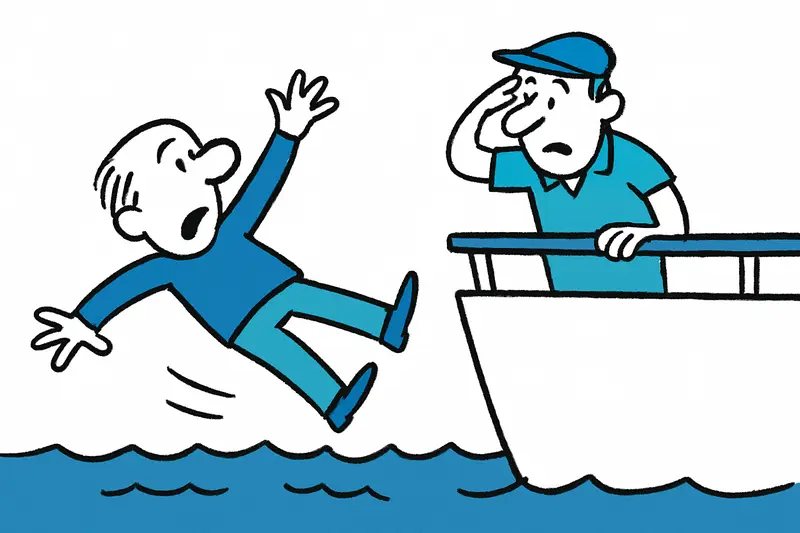
Early on Thursday morning a British passenger fell from the twelfth deck of the Marella Explorer 2 while the ship was en route from Madeira to the Canary Islands (reported in Accidente en la Marella Explorer 2: ¿qué ayuda contra los percances a bordo?). The crew launched liferafts, circled the suspected location and alerted Spanish rescue boats and a helicopter (see Emergency on Board the Aidamar: Why a Helicopter Medical Evacuation Raises Questions), but according to authorities the man remained undiscovered into the late morning. The accident occurred about 14 nautical miles off Tenerife; the ship subsequently made an unscheduled port call there.
The facts are clear: a fall from a high deck, an immediate emergency protocol, search operations — and still no success. In conversations in Mallorca, at cafés on Passeig Mallorca or with taxi drivers at the harbor the same question is heard: why is the emergency protocol not always enough? On the docks of Palma fishermen in thick jackets look out to sea and often shake their heads when such rapid but incomplete missions are discussed. Distance, currents and the depth of the Atlantic make quick rescue a lottery.
Initial critique: maneuvers such as circling the suspected spot and lowering liferafts are necessary but of limited effectiveness. Modern technology — automatic man‑overboard detection, thermal imaging cameras, more precise GPS marking of the point of departure — is not universally in use on many ships or functions only as a supplement to human observation. At the same time, the time between the event and the notification of external rescue services delays the chance of saving a life, especially if the person is unconscious or quickly carried away.
What is missing from the public debate: reliable figures and transparent procedures. There are hardly any publicly accessible statistics on how often people are injured or go overboard on ships, what role alcohol, medication or health problems play, and how fast the response times actually are. Without these data the discussion remains superficial. There is also often a lack of focus on preventive measures that go beyond the mere emergency protocol.
Everyday scene: in the winter light of Port d’Alcúdia an elderly woman sits on a bench with her dog and says she found the railings on deck to be “low” on earlier cruises. In cafés on the Plaça Major people talk about those who travel alone (see 82-year-old tourist dies in Port de Sóller — why an accident at the harbor must not remain an isolated case). These quiet observations show: it’s not just about technology, but about designing spaces used by all age groups.
Concrete approaches that could be implemented relatively quickly: mandatory minimum railing heights and strengthened fall protections on promenade decks, regular training for crew and passengers on behaviour in emergencies, wider use of automatic in‑water location systems and thermal imaging cameras, centralized and standardized reporting chains to national maritime rescue authorities, and rapid tracking of the precise GPS position at the moment of departure. Digitally conceivable are wristbands for at‑risk passengers with an emergency button or GPS ping, used only voluntarily and with data‑protection safeguards.
In the long term more transparency is needed: shipping companies should systematically document incidents and publish anonymized reports, authorities could define binding minimum standards for man‑overboard equipment, and ports and air rescue units would need to coordinate missions more clearly. In Mallorca we could also ensure that local maritime schools and rescue services regularly conduct joint exercises with private shipping companies — this sharpens procedures and builds trust.
The Marella Explorer 2 itself is not a new ship: built in 1995 as "Century" at the Meyer Werft in Papenburg and modernized in 2006, she carries decades of seafaring history in her hull. Age alone does not explain such accidents, but it does show that operation and modernization often lag behind new safety innovations.
Punchy conclusion: the emergency protocol that was invoked was correct, but it is not enough to cover the weaknesses that exist in technology, data availability and prevention. As long as shipping companies, authorities and passengers do not pull together more — with transparent statistics, simple structural measures and modern detection technology — every man‑overboard case remains a tragedy that can recur. In Mallorca, where the sea shapes everyday life, we should not leave the discussion to alarm calls, but bring in local experience and pragmatic solutions.
Frequently asked questions
What usually helps prevent accidents on cruise ships around Mallorca?
Can a man overboard be rescued quickly from a cruise ship?
What safety features should cruise ships in Mallorca have on open decks?
Why is it so hard to find a person who falls into the sea near Tenerife or Mallorca routes?
What should older passengers keep in mind on cruise ships in Mallorca?
Are cruise ship safety rules in Mallorca and Spain transparent enough?
What kind of training can help prevent accidents on cruise ships serving Mallorca?
Why do Mallorca maritime workers care about cruise ship accidents?
Similar News

Caro Robens: 15 kilograms lighter — and again in the crossfire of online comments
Bodybuilder Caro Robens, who lives in Mallorca, has lost 15 kilograms. Her success on Instagram was met with applause — ...

Meager Industry in Mallorca: How the Island Can Be More Than Just Tourism
The industrial sector in Mallorca is shrinking, productivity is falling and firms remain tiny. The key question: can the...
Pre-Nit de l'Art: Galerie Mensing invites to a special evening with Tom Boston
Before the big art night, Galerie Mensing opens its doors: pop art, champagne, a DJ and a hand-signed print by Tom Bosto...
Sea view and more seats: Cappuccino Grand Café reopens in Port d'Andratx
After a long renovation, the Cappuccino Grand Café on the Port d'Andratx harbor promenade has quietly reopened. Larger t...
Enric Mas wins the Vuelta – a triumph that resonates in Mallorca
Mallorcan Enric Mas has won the 82nd Vuelta — the first Spanish overall victory since 2014. Cyclists and neighbors on Ma...
More to explore
Discover more interesting content

Can Cap de Bou

Townhouse Lleo 72
