
Open in the afternoons: New indoor pool "s'Aigo Dolça" brings life back to the Passeig Marítim
Open in the afternoons: New indoor pool "s'Aigo Dolça" brings life back to the Passeig Marítim
A new public indoor pool opened on the Passeig Marítim. 's'Aigo Dolça' offers two 6-lane pools, fitness rooms and afternoon opening hours – a benefit for residents and the neighborhood.
Open in the afternoons: New indoor pool "s'Aigo Dolça" brings life back to the Passeig Marítim
A piece of everyday life returns – neighbors, athletes and children immediately embrace the offer
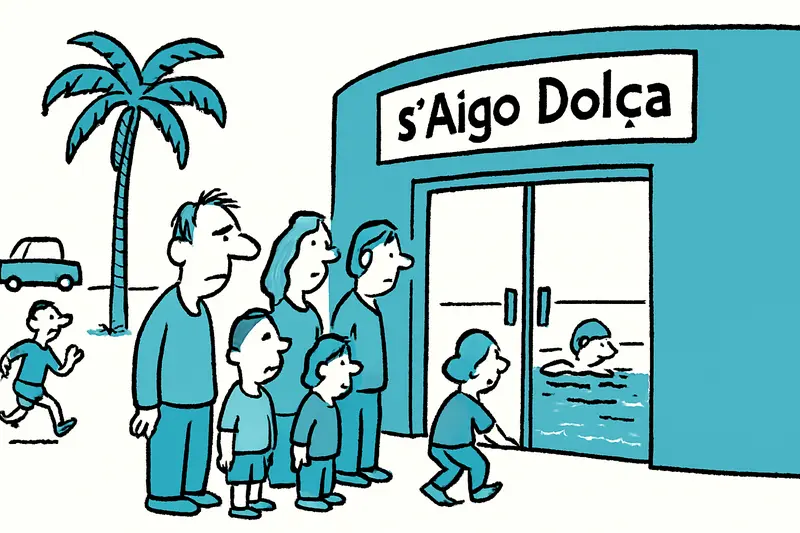
Anyone walking along the Passeig Marítim on Thursday afternoon saw a queue – not in front of a café, but at the entrance of the new indoor pool "s'Aigo Dolça". The square between palm trees, the taxi rank and the quiet rustle of the harbor waves feels livelier. From inside comes the muffled echo of lane strokes; every now and then the smell of chlorine mixes with the salty air – a typical afternoon scene in Palma, only at a new location.
The facility now belongs to the network of IME centers and is aimed at both residents and visitors. On the third floor there are two pools with six lanes each – enough space so that freestylers and backstrokers do not constantly have to give way. In addition there is a fitness studio and a program of classes that could include exercise sessions, swimming lessons for children and rehabilitation units in the future.
Opening hours for the moment: Monday to Friday from 16:30 to 20:30. A single ticket costs €3 for adults and €1.50 for children and seniors. Guided tours took place during the first days, which continue until the 24th and open the building to the curious – a good opportunity for those who want to have a look first.
This is not the first pool on this site: about fifty years ago there was already a public facility here that later fell into disrepair. That water flows again at this spot after several years of construction carries symbolic weight. For the El Terreno neighborhood this means more than just a sports center: it is a piece of normality returning, says the atmosphere on the Paseo. People who used to travel to Son Hugo or Son Moix can now come here on foot or by bus.
The immediate neighborhood reacted attentively and often with relief. Some residents said they had come specially to register; others used the first week to reconnect with familiar faces on a small scale. Children coming from school that afternoon used the new opportunity before homework started – an everyday but very tangible benefit.
Practical information: There are parking spaces inside the building, primarily reserved for residents; for some neighbors this is a convenience, for others a sign that the pool was planned to be integrated into the neighborhood. The operators deliberately chose the location so that it is easy to reach on foot, by bike or by public transport – a plus for traffic on the Passeig.
Why is this good for Mallorca? A publicly accessible indoor pool connects people of different generations: students, athletes, older neighbors, rehabilitation patients. It creates regular meeting points, exercise opportunities and a meaningful use of urban space. Especially at a time when leisure facilities are often private and chargeable, an openly accessible offer is a welcome addition.
And a few ideas for the future: morning classes for seniors, cooperation with schools for swimming lessons, special times for families or early swimmers would further embed the center in everyday life. Such offers could also help avoid long waiting lists and make the pool a real meeting place for the neighborhood.
In the end, a simple impression remains: this pool is seen not only as a building but as part of the district. When you walk along the Passeig on an early evening and see people gliding in the lanes through the window, it feels like a small return of everyday life – not spectacular, but important. And sometimes these are exactly the things that do a city good.
Opening hours (first phase): Mon–Fri 16:30–20:30. Single ticket: €3 adults, €1.50 children/seniors. Tours and viewings until the 24th of the month.
Frequently asked questions
When is the best time to visit Mallorca for beach weather?
What should I pack for a Mallorca trip in summer?
Is it safe to swim at Mallorca’s beaches?
What are the must-do experiences for a first visit to Mallorca?
Do temperatures vary much between seasons in Mallorca?
What water activities are popular in Mallorca?
Do I need rain gear in Mallorca or should I expect rain only in certain seasons?
What are the best ways to get around Mallorca?
Similar News

Just before landing: Brawl on Ryanair plane — What does it say about flight safety?
A dispute over the toilet escalated on a flight to Ibiza. Question: Are rule enforcement and de-escalation on board stil...
Barceló Takes Over Valparaíso Palace: A Reality Check for Palma
The pending sale of the Valparaíso Palace & Spa to Barceló raises hopes — and questions. What will the modernization mea...

From Manacor to the Gulf: Nadal expands international network with new center in Bahrain
Rafael Nadal's academy opens its ninth tennis center on the Amwaj Islands in Bahrain. Six tennis courts, three padel cou...

Climate change prolongs mosquito season: Why Mallorca must not relax
Mild autumn temperatures and rain can extend the tiger mosquito season into December. A reality check: what's missing in...

Son Mayol in Establiments: Massive estate with winery for €34 million — what does it mean for the island?
Son Mayol, 97 hectares near Palma with a wine cellar, chapel and 25 hectares of vineyards is for sale for €34 million. A...
More to explore
Discover more interesting content

Can Cap de Bou

Townhouse Lleo 72
