
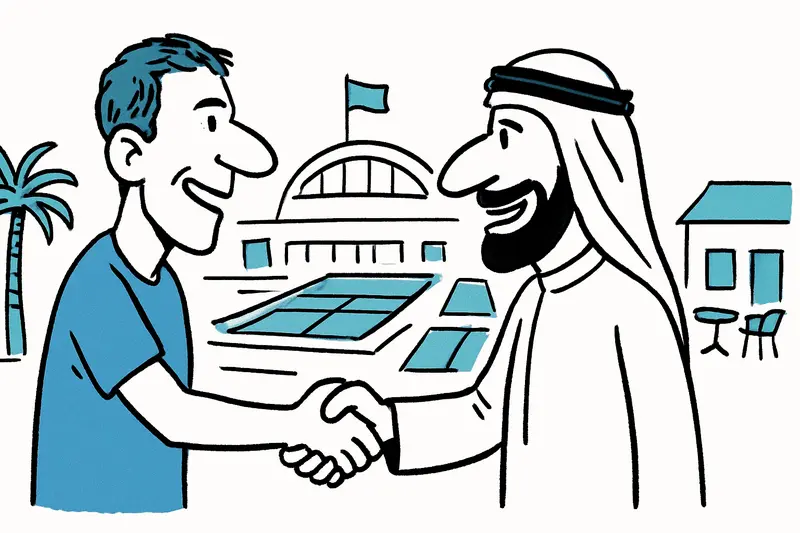
From Manacor to the Gulf: Nadal expands international network with new center in Bahrain
From Manacor to the Gulf: Nadal expands international network with new center in Bahrain
Rafael Nadal's academy opens its ninth tennis center on the Amwaj Islands in Bahrain. Six tennis courts, three padel courts, fitness and recovery areas, as well as a sports shop and a cafeteria are designed to attract recreational and competitive players. For Mallorca this means increased international renown and another expression of its sporting identity.
From Manacor to the Gulf: Nadal expands international network with new center in Bahrain
Six tennis courts, three padel courts and a cafeteria — the Rafa Nadal Academy continues its expansion
On Mallorca the image is familiar: very early in the morning the first balls roll across the red clay in Manacor, on the grounds of the Rafa Nadal Academy opened in 2016, while behind the wall the corner bakery sends the scent of freshly baked ensaimadas into the streets. Watching there, you see not only training; you see a brand that is growing. Now this network gains another link: the ninth Rafa Nadal Tennis Center opens on the Amwaj Islands in Bahrain.
The new location was deliberately placed in an exclusive coastal residential and tourist area. Six courts will be built on site, distributed between indoor and outdoor areas, three padel courts, spaces for fitness and recovery, a sports shop and a cafeteria. The offer is aimed at all ages and levels of play. Training follows the methodology developed in Manacor, which emphasizes discipline, hard work and technical precision.
Joan Suasi, responsible for the academy's international expansion, describes the opening as a step that "brings" expertise and the training philosophy "to the region" and aims to support local talent. The local partner is the HARVE group, which is involved in infrastructure and operations in Bahrain. Such partnerships ensure that the concept is not only exported but adapted to local needs.
Why is this relevant for Mallorca? Because the Nadal name continues to have magnetic appeal. Young players on the island look up to a success story that originated in Manacor. Coaches, physiotherapists and small service providers benefit indirectly: training concepts, exchange programs and international tournament contacts create demand beyond the island. In the evenings on the Passeig Mallorca, when the streetlights come on and the voices of tennis parents still linger in the cafés, you can feel this connection — a local ecosystem with a global effect.
The expansion is not new: in addition to Manacor, there are already locations in Kuwait, Mexico, Greece, Hong Kong, Marbella and the Dominican Republic in the network; there are also programs in Egypt. Further centers are planned in Brazil (2027) and on Lombok in Indonesia (2028). The new opening coincides with the academy's ten-year anniversary — but it is not an occasion to rest. Rather, it is a moment to take stock and set new goals.
On Mallorca the practical result remains important for parents and young people: solid development pathways, visibility for talent and a clear connection to a training philosophy that originated on the island. If you jog past the academy in Manacor in the morning, you don't just hear serves; you hear hope and hard work. In Bahrain the same rhythms may soon be heard — only with a different sea breeze in the background. This is a story that is celebrated here and from which many on the island will benefit: a piece of Mallorcan sporting identity travelling the world.
Frequently asked questions
What is the best time of year to visit Mallorca if I want sun and outdoor activities?
Are there beaches in Mallorca suitable for swimming for beginners or non-swimmers?
What should I pack for a trip to Mallorca?
How can I get around Mallorca without a car?
What should I know about the weather in Mallorca?
Are there family-friendly activities in Mallorca?
Do I need to know Catalan to visit Mallorca, or is Spanish enough?
What water activities are common in Mallorca and where can I find reliable info?
Similar News

Just before landing: Brawl on Ryanair plane — What does it say about flight safety?
A dispute over the toilet escalated on a flight to Ibiza. Question: Are rule enforcement and de-escalation on board stil...
Open in the afternoons: New indoor pool "s'Aigo Dolça" brings life back to the Passeig Marítim
A new public indoor pool opened on the Passeig Marítim. 's'Aigo Dolça' offers two 6-lane pools, fitness rooms and aftern...

Barceló Takes Over Valparaíso Palace: A Reality Check for Palma
The pending sale of the Valparaíso Palace & Spa to Barceló raises hopes — and questions. What will the modernization mea...

Climate change prolongs mosquito season: Why Mallorca must not relax
Mild autumn temperatures and rain can extend the tiger mosquito season into December. A reality check: what's missing in...

Son Mayol in Establiments: Massive estate with winery for €34 million — what does it mean for the island?
Son Mayol, 97 hectares near Palma with a wine cellar, chapel and 25 hectares of vineyards is for sale for €34 million. A...
More to explore
Discover more interesting content

Can Cap de Bou

Townhouse Lleo 72
