
Aggression during Traffic Stop in Palma: Who Protects the Streets and the Vulnerable?
Aggression during Traffic Stop in Palma: Who Protects the Streets and the Vulnerable?
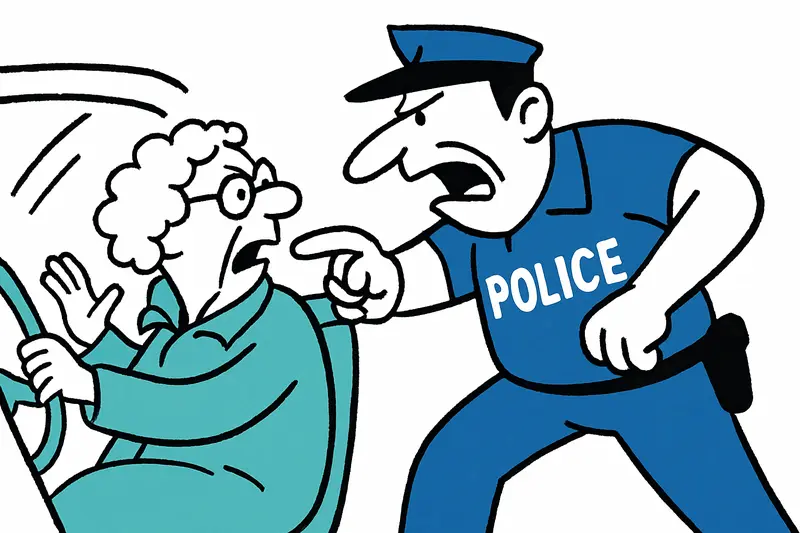
A woman over 80 was arrested in Palma after a risky drive: biting and kicking attacks on officers and refusal of an alcohol test raise questions about road safety, age-related checks and police operating procedures.
Aggression during Traffic Stop in Palma: Who Protects the Streets and the Vulnerable?
Key question: How do we deal with older drivers when safety and dignity come into conflict?
An incident on a Sunday afternoon in Palma briefly shattered the calm on the streets: a woman in her eighties was stopped by police after a problematic drive. According to the incident report, there were physical attacks on officers and the driver repeatedly refused the prescribed alcohol tests. The episode ended with an arrest for obstructing traffic and resisting law enforcement officers. A similar reported case involved a 72-year-old woman in Palma caught with alleged forged disabled parking permit.
Against this background, a simple but uncomfortable question arises: Are our rules and procedures sufficient to prevent such situations proactively — without reflexively depriving older people of their mobility?
Anyone who looks closely sees multiple problem areas at once. First, the street itself: Palma's old town is narrow, parked cars squeeze lanes, and pedestrians crowd the curbs. An unsafe drive there can quickly put people at risk. Police operations in such zones require good coordination between traffic monitoring and de-escalation. That an attempted stop finally escalated to the point where an officer was bitten and kicked shows that the situation spun out of control — not just for a moment, but until the arrest. Other dangerous behaviours, such as wrong-way driving, have been documented in Palma: Drunk driving in Palma – 61-year-old stopped after wrong-way drive.
But this is not just an isolated road incident: what is missing from public debate is a sober discussion about age and driving fitness that links medical, social and policing aspects. We often hear buzzwords like “license revoked” or “refused alcohol test,” but rarely figures on how often such incidents occur, the effectiveness of regular vision and reaction tests, or voluntary offers for older drivers. Also lacking is a look at why people over 80 still drive: for many, the car is more than transport — it is independence, shopping, medical appointments, social connection.
In Palma's neighborhoods you see this every day: elderly women heading to the Santa Catalina market with shopping bags, pensioners with sun hats trying to reach the stop at Plaça Major. Abruptly restricting this mobility risks social isolation. At the same time, no one should feel endangered on our streets.
So what would sensible steps look like — concrete and practical?
1. More frequent, targeted checks: The administration could enforce clear intervals for vision tests and short reaction tests when renewing licenses and combine them with mobile testing stations in community centers. This would reduce travel distances and make tests more accessible.
2. Preventive offers instead of punishment: Free refresher courses on "driving dynamics and reflexes" in cooperation with driving instructors and senior associations, complemented by voluntary telematics checks, could reduce insecurity.
3. Adapt police training: Police and traffic units need more training in age-appropriate communication and de-escalation. Physical confrontations often arise from misunderstandings and fear; targeted training can lower the risk.
4. Strengthen social alternatives: More flexible village and neighborhood shuttles, community driving services and coordinated neighborhood networks reduce the pressure to keep one’s own car at all costs.
5. Transparency and data: Without reliable numbers the debate remains emotional. Authorities should publish anonymized data on accidents, age groups and causes so measures can be targeted effectively. Broader prevention strategies also address issues like youth car thefts, as the case of three arrested juveniles shows: Juveniles arrested: Palma car-theft series raises questions about prevention.
Some may say all this is expensive or paternalistic. The counterargument is banal: what does a bitten officer, a damaged car or a life restricted by fear cost us? In Mallorca, where short distances, buses and neighborhood ties still function, solutions are possible — if politics, police and social services talk to each other instead of only reacting.
Meanwhile, the arrest of the elderly driver remains an active case to be legally processed. For everyday life in Palma, however, it should serve as a wake-up call: it's not about stigmatizing people, but about designing systems smartly so that mobility remains safe and dignified.
Conclusion: Road safety requires more than random checks. It needs preventive testing, better communication and a range of alternatives. That way we can balance older people's desire for independence with society's claim to unobstructed safety.
Frequently asked questions
What should older drivers in Mallorca know about traffic stops and alcohol tests?
How safe is driving in Palma’s old town?
Can older people in Mallorca still drive if they rely on their car for daily life?
What practical checks could improve road safety for elderly drivers in Mallorca?
What is the best way for police in Mallorca to handle tense traffic stops?
Are there alternatives to driving for seniors in Mallorca?
Why does driving fitness matter so much in a place like Mallorca?
What can Mallorca learn from a serious traffic-stop incident in Palma?
Similar News
Released with Conditions: The Plus Ultra Suspicion and a Mallorcan Finca as Residence
A Dutch entrepreneur, sought in connection with the Plus Ultra case, was extradited to Spain after his arrest in Germany...

Haute Nuit in Puerto Portals: Fashion, Art and Indulgence by the Water
On October 2 the Lobster Club in Puerto Portals will be transformed into a stage for curated fashion, art and culinary e...

Magaluf: Watchtower Alarm – Lifeguards Pull Unconscious Beachgoer from the Water
After a drama in the late afternoon, two lifeguards at Magaluf beach rescued an unconscious 44-year-old man. He was stab...

Turquoise in the City: How dangerous is the color play of the Sa Riera?
The Sa Riera in Palma suddenly turned turquoise — a pretty motif, but behind the effect lies a discharge of saline waste...

Jeckliner at Sunnesching: Cologne spirit sets sail from Palma
In September 2027 the Mein Schiff 2 briefly becomes a floating carnival stage: four days with Cologne bands, comedy and ...
More to explore
Discover more interesting content

Can Cap de Bou

Townhouse Lleo 72
