
With a Wine Glass and a Straw Hat: What AI Reveals About the "Typical" Mallorca Expat
With a Wine Glass and a Straw Hat: What AI Reveals About the "Typical" Mallorca Expat
A reality TV soaplet had an AI design the image of a 'typical' German expat in Mallorca. Behind the pretty stereotype there's more than a fashionable accessory: the usual biases of training data and a distorted picture of our island society.
With a Wine Glass and a Straw Hat: What AI Reveals About the "Typical" Mallorca Expat
A critical look at an AI image and what's missing from the public debate
Key question: What does an image generated by artificial intelligence say about our idea of people who move to Mallorca?
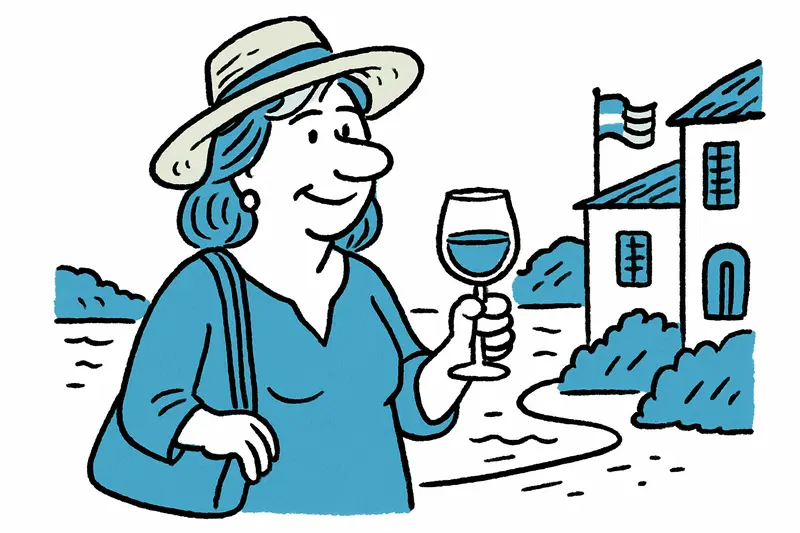
Last week an AI draft presented by a TV crew circulated: a woman in her mid-forties, sun-tanned, straw hat, white tunic, leather handbag, wine glass in her hand, in the background a picturesque bay with green shutters and a Balearic flag. Charming to look at, certainly. A related feature, From the Conference Room to the AI Canvas: How an Ex-PR Woman Starts Anew in Mallorca, examines similar AI image practices. And precisely therefore problematic: the image compresses an entire, heterogeneous spectrum of people into an easily digestible stencil.
Critical analysis: Artificial intelligence reproduces what its data present to it. The depicted "Claudia Sommer" is less the result of an individual portrait than the sum of frequently occurring visual and textual patterns: middle-class tourism, lifestyle content, retail and coaching professions, wine as accessory. Such models benefit from broad network patterns—and at the same time reinforce common narratives. Result: a pretty but false image. On top of that come technical flubs (yes, two pairs of sunglasses in one image made it through), which show that aesthetics are not equivalent to truth.
What's missing in the discussion: voices of people who live here and don't fit the cliché. No one talks enough about the Spanish and international women working in hotels and supermarkets, about teachers, nurses, fishermen, female farmers, craftsmen or young families who came for economic reasons. Not mentioned are the legal and social questions—from residency regulations to tax issues to housing situations and neighborhood conflicts. This blind spot is discussed in Who Shapes Mallorca's Streets? A Reality Check on Island Demographics. The ecological side is also left out: How do seasonal consumption and short-term rentals change places like Port d'Andratx, Palma or Sóller?
Everyday scene from the square: On Passeig Mallorca, right next to the editorial office, I hear street sweepers in the morning, the rattling of buses, the hubbub of market stalls. A German retiree argues in Mallorquí with a shop assistant, a detail reflected in Between Welcome and Wariness: Germans in Mallorca — What's Really Happening, teenagers on scooters zip by, a fisherman hauls the net basket in Port de Sóller. This mix does not fit into a one-image stereotype—and would be a better starting point for AI models that are meant to depict local reality.
Concrete proposals: First: data transparency. Whoever creates AI images should disclose which datasets were used—at least in broad strokes. Second: more diverse training data. Local archives, photos of workers, multicultural families, people of all ages and professions belong in the training, not only status posts from social networks. Third: participation. Municipalities, interest groups and residents should have a say in the development of local image models. Fourth: media responsibility. Editorial formats should label AI creations as what they are: crafted fictions, not reports. And fifth: educational offerings. Workshops for media professionals and local politicians can help to understand and assess the limits of image AI.
Practically on Mallorca this means: cooperation between municipalities, cultural institutions and local photographers to create open, diverse image collections; publicly funded projects that document real life paths; and clear labeling requirements for AI-generated content in broadcasts and contributions—an approach promoted in How Mallorca Really Becomes Your Home: A Practical Guide from Island Experience. A simple tool to report misleading AI depictions would also be useful here.
So what to do when AI again paints "the typical German in Mallorca"? First: look instead of clicking away. A pretty image must not be the only source for a judgment. Second: ask questions. Who created the image, what feeds the model? Third: demand diversity—in reporting, images and conversations.
Pithy conclusion: The island is not a set for lifestyle postings. AI does not show us who we are, it shows which stories we tell most often. Whoever wants to really understand Mallorca goes outside, listens and collects the many unspectacular voices of the island—not just the wine glass in front of the backdrop.
Frequently asked questions
What does the typical Mallorca expat really look like?
Why can AI images of Mallorca expats be misleading?
What kinds of people are often missing from Mallorca expat stereotypes?
What should I know before moving to Mallorca for practical reasons?
How does tourism and short-term renting affect places like Port d'Andratx and Sóller?
What is everyday life really like on Passeig Mallorca in Palma?
How should AI-generated Mallorca images be labeled?
What would make AI images of Mallorca more realistic?
Similar News
Injured captain, big plans: Germania Mallorca before the away match in Consell
The newly founded FC Germania Mallorca travels to Consell on Saturday. Captain Bastian Müller is out injured, but coach ...
Palma, Palma de Mallorca, Palma‑Mallorca: What is it really about?
The debate over the city's name is more than grammar: it concerns identity, law and branding policy. A sober reality che...
Warning to Bathers: Nipping Fish in Cala Major and Other Coves — a Reality Check
In Cala Major and several beaches around Mallorca, bathers report painful “nips”. Who are the animals, why are they gett...
Rental Car Theft in El Arenal: What This Incident Reveals About Our Gaps
A teenager steals a running rental car in El Arenal, flees on foot, climbs over walls and is caught by the Guardia Civil...
Red Rope in Palma's Library: What Helps Against Selfie Tourism — and What's Missing
Palma's city library cordoned off an area with a red rope to keep selfie tourism away from reading and working activitie...
More to explore
Discover more interesting content

Can Cap de Bou

Townhouse Lleo 72
