
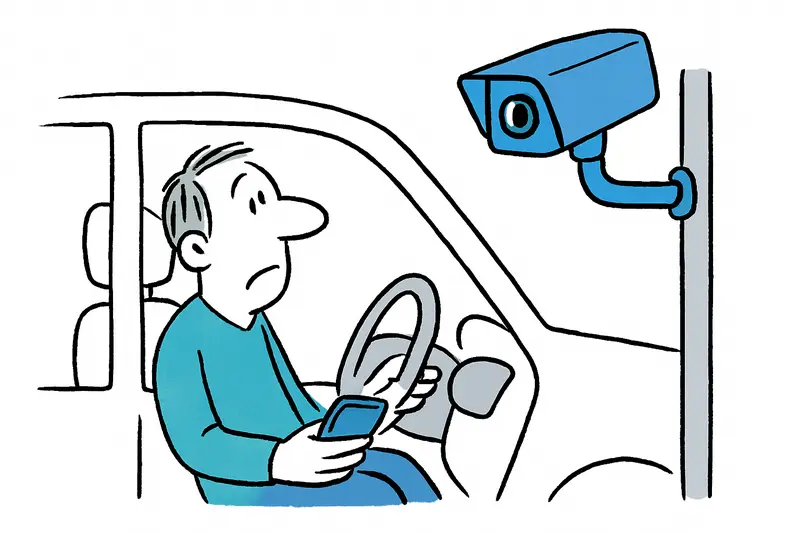
Phone on the lap? Mallorca and the new AI super-cameras — more control or less trust?
Phone on the lap? Mallorca and the new AI super-cameras — more control or less trust?
The new generation of traffic cameras detects roadside phone use and seatbelt violations in milliseconds. A technical opportunity — and a data protection problem that is not being discussed enough on Mallorca.
Phone on the lap? Mallorca and the new AI super-cameras — more control or less trust?
Guiding question: How much surveillance can Mallorca's road traffic tolerate before safety eats into privacy?
At the roundabout in front of Passeig Mallorca the traffic lights click, motorcycles whiz by, taxis stop briefly at Plaça d'Espanya (see When Palma's squares are watched: AI cameras, new jackets and the question of trust), someone calls from the bus stop. In this soundscape another eye could soon be added: movable camera housings mounted higher, with a wider field of view and an AI that evaluates movement patterns in fractions of a second — for example: is someone holding a phone on their lap? Is the seatbelt fastened?
The facts are simple: traffic control centers like the Catalan SCT are upgrading (see Palma steps up: More cameras, drones and the big question of privacy). Cameras are becoming more mobile and images are analyzed by algorithms in real time. Spain has strict rules: calling or holding a phone while driving is prohibited; the ban also applies in traffic jams or at a red light. Those who ignore this risk hefty fines — and now also recording by systems that are supposed to detect even the smallest gestures (see Hidden speed cameras in the Balearic Islands: safety or trap?).
Critical analysis: technical accuracy vs. real-world sources of error. AI can detect movements but not always the context: is the driver holding a smartphone or reaching for a glasses cloth? Have shadows, strong sunlight or backlight on the Cala Millor seafront road been sufficiently accounted for? (see Digital Eyes on Mallorca's Beaches: Protection or Surveillance?) False alarms lead to unjustified charges; systematic errors often affect the same groups — older people, people with hands affected by manual work, or commuters with different seats and vehicle types.
Another problem is data sovereignty. Which authority stores the recordings? For how long? Who may access them — police, traffic authorities, private companies that service the cameras? Technically possible analyses go beyond phone and belt detection: license plate recognition, linking with mobile data, movement profiles. Such possibilities open the door to expanding surveillance far beyond the original purpose.
What is missing in the public debate is a discussion about proportionality and control. On Mallorca I often hear: "If only my phone gets me, it's my own fault." That is too short-sighted. There is a lack of transparent studies on error rates, independent audits of the algorithms, and binding rules on data retention. Also hardly discussed is the spatial selection of measurement sites. Will cameras be installed in front of schools, on residential streets or in tourist-sensitive locations?
An everyday scene: on a Monday morning in Palma, on the way along Carrer de Sant Miquel, I observe delivery drivers, commuters, seniors at the bus. Many glance briefly at their smartphone — not always out of negligence, often to check directions or a message. A camera that triggers the system at every glance turns private everyday actions into enforcement acts and generates mistrust.
Concrete solutions that should be discussed now: first, transparent procurement: public tenders with access to technical specifications and independent test reports. Second, strict data minimization: image material should remain on the device only briefly and be passed on to human reviewers only in cases of justified suspicion. Third, mandatory external audits of algorithms by independent data protection experts. Fourth, clear signage: visible signs informing drivers about camera surveillance — no hidden use.
Further measures: local pilot projects with fixed evaluation periods and publicly available results; an appeals procedure if someone is to be penalized based on a camera report; no transfer to third parties for commercial purposes; and technical solutions such as edge processing and immediate anonymization of sensitive areas (e.g. faces and passengers) where possible.
Legally, Spain and the EU follow the principle of proportionality. That means: surveillance only when a concrete benefit is demonstrated and less intrusive means are insufficient. The traffic authority DGT can sanction violations — but the control chain must be clear: who reviews the camera recordings, who decides on fines, and how often are the systems checked for errors?
A final, practical proposal: a local ombuds office for digital traffic controls on Mallorca. It could receive complaints, initiate rapid reviews and publish transparency reports. Such an office would build trust — or quickly expose if the technology causes more problems than it solves.
Conclusion: the new generation of cameras can help reduce distraction at the wheel and prevent accidents. At the same time there is a risk of losing control over personal data and an increase in wrongful decisions if humans are removed from the loop. On Mallorca the debates should be held now — not only when the first fines arrive. Otherwise traffic safety will be left with a sharp eye but no social trust.
Frequently asked questions
What is the best time of year to enjoy Mallorca’s beaches?
Is it safe to swim in Mallorca's sea and what should I know about currents?
What should I pack for a Mallorca trip in spring or autumn?
Do you need a car to get around Mallorca or are buses and trains enough?
What are family-friendly activities to enjoy around Palma and beyond?
Which beaches near Palma are good for a relaxed day by the sea?
What should I know about Mallorca’s water temperatures and swimming seasons?
Are there any must-know practical tips for visiting Mallorca on a budget?
Similar News

Closing 2026 at Ballermann: Parties, Prices and the Quiet Questions Afterward
Megapark, Bierkönig and MK Arena have announced their closing dates. Good news for partygoers — but rising prices and th...

Pool Boom in Mallorca: 23 New Pools per Week — and What Now?
According to an environmental study, 10,680 new swimming pools were built in Mallorca between 2015 and 2024. What does t...
Money after death: How safe are seniors at home?
In Artà a 61-year-old caregiver is suspected of having withdrawn €600 twice from the account of an 87-year-old German wo...

"Fifth Season" in Port d'Andratx: A glass-bottom pool that makes passersby stop
An unusual superyacht with a dark hull and a partially glazed infinity pool is currently at the Yacht Club of Port d'And...

Newark–Ibiza: What the new direct flights mean for Mallorca
United will operate four weekly direct flights from New York–Newark to Ibiza with the A321XLR from May 2027. For Mallorc...
More to explore
Discover more interesting content

Boat Tour with BBQ along Es Trenc Beach

Private transfer from Mallorca Airport (PMI) to Pollensa
