
Departing Early, Two Guests Left Behind: What the "AIDA Luna" Case Reveals
Departing Early, Two Guests Left Behind: What the "AIDA Luna" Case Reveals
A cruise ship left port earlier than planned — two guests remained ashore. Who is responsible, and how could something like this be prevented in places such as Mallorca?
Departing Early, Two Guests Left Behind: What the "AIDA Luna" Case Reveals
When weather and schedule collide, people get stuck between sea and bureaucracy
Key question: Are cruise companies allowed to leave passengers ashore if the ship departs early for safety reasons — and how should procedures be improved so this does not happen again?
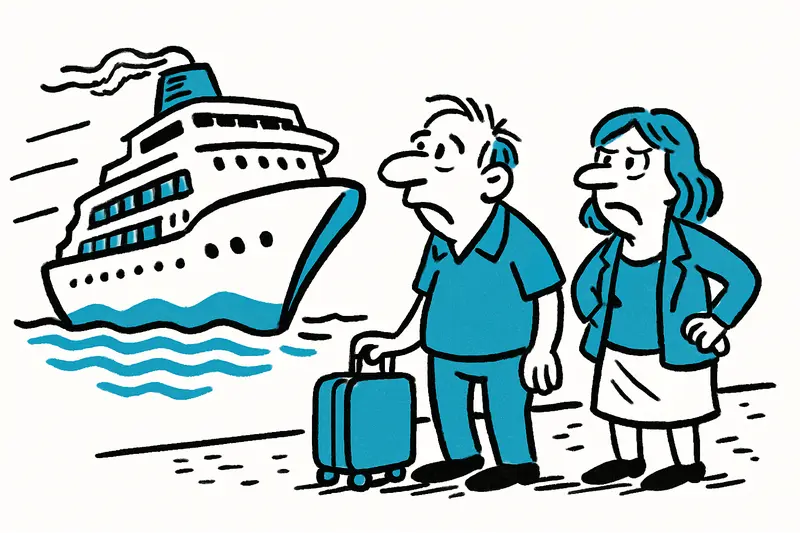
Early on Wednesday morning the AIDA Luna left its berth in Funchal earlier than planned. The official reason: poor wind forecasts and an exposed position at the pier. The ship had already cast off around 06:15, but two guests remained ashore — they had spent the night on Madeira and could not be reached by phone at short notice. Their onward travel was arranged later. The AIDA Luna, built in 2009 as part of the Sphinx class (about 252 meters, capacity for around 2,050 guests), made additional port calls in the Canary Islands after the incident, including Arrecife and Puerto del Rosario.
The facts are straightforward. Yet uncomfortable questions remain: Was the captain's decision unavoidable? Similar operational questions were raised after the Accident on the Marella Explorer 2: What Helps Prevent Onboard Accidents? Could a different organization of procedures have kept the two holidaymakers on board? And what does this mean for travellers who go ashore to shop, hike or just get some fresh air?
From a nautical standpoint the action can be explained. Leaving a ship pressed against a pier structure in an exposed berth during strong winds can cause damage — both to the ship and to the quay. Anyone who has stood in Palma harbour knows the uneasy feeling when gusts whip up the water and smaller boats bang against bollards like paper. In such situations the ship's command usually prioritises the safety of everyone on board and of the vessel. But safety must not stop at formal communication.
This is where the criticism starts: responsibility for the presence of guests is shared. Passengers must be reachable for information — which is often practically difficult: island mobile networks, switched-off devices, missed calls. At the same time the company must have internal check and communication chains that do not rely solely on reaching a private number. A short, loud announcement check, a fixed return window before departure or even local staff who can call at meeting points would be possible measures.
What is rarely discussed in the public debate is the perspective of ports and local service providers. For a port like Funchal an unexpected earlier departure means less revenue for taxis, excursion operators and restaurants — and extra stress for local tourism staff who have to look after passengers left behind. On Mallorca we often see this on a smaller scale: when a day trip is cancelled, people sit on the Passeig Mallorca and ask how to get home — and sometimes larger transport breakdowns occur, as in An Outrage at Palma Airport: Why Did Passengers Disembark — and the Plane Fly Off Empty?. In both cases it becomes clear how closely maritime decisions are interwoven with everyday life ashore.
Concrete improvements would be technically and organisationally feasible:
1. Mandatory check-in before departure: A standardised time window (e.g. 90–120 minutes before the scheduled departure) in which all guests must once confirm that they are on board or where they are located. Clearly defined escalation steps apply if there is no response.
2. Multi-channel alerting: Use SMS, app push, shipboard loudspeakers and port staff in parallel instead of relying on a single phone call. A brief automatic location via app (with consent) could help identify people in port towns.
3. Cooperation with ports: Contractual emergency plans between the cruise line and port authorities that regulate procedures for strong winds, tender failures or earlier departures and ensure local accommodation/transport.
4. Transparent customer rights: Clear information before booking about how the operator handles early departures — including coverage of costs for alternative travel and accommodation if the responsibility does not lie solely with the guest.
As an editor who often walks along the Passeig Mallorca, I see the small scenes: early in the morning fishermen haul in their nets, coffee tins clatter, and tourists stand with maps in their hands. A similar morning on Madeira must have been different for those left behind: strange beds, phone calls, a taxi, the pressure of a departure time window. Such images strike the balance between the captain's technical duty and human hardship.
Conclusion: The early departure of the AIDA Luna may have been justified nauticaly. Yet the organisation around attendance checks and the protection of guests was still patchy. When we look at promenades, port offices and cruise ships, one thing becomes clear: safety also means not leaving people out in the rain. Practical rules, digital tools and better coordination with ports could ensure that captains' decisions do not turn into personal emergencies in the future.
Frequently asked questions
Why might a cruise ship leave port earlier than scheduled in bad weather?
What happens if cruise passengers are not back on board before departure?
How can cruise lines avoid leaving passengers behind in port?
Can a cruise company be held responsible if passengers are left ashore?
What should cruise passengers do when going ashore in Mallorca or another port?
Why do ports and local businesses care when a cruise ship leaves earlier than planned?
What are the safest ways for cruise ships to handle strong wind in port?
What would better cruise passenger check-in rules look like?
Similar News
Bendinat as a meeting place: Padel Cup brings together nearly 120 players
Three days of padel at the Bendinat Urban Country Club: organized by El Económico and Borbalán, with around 120 particip...
Large-scale Anti-Tourism Graffiti at Cala Mendia: Protest or Vandalism?
On the morning walkers discovered an approximately 50-meter-long slogan against tourism on the wall above Cala Mendia. W...
Bomb threat before Jet2 flight in Tenerife: A reality check for security protocols
A passenger reported a bomb in luggage shortly before departure in Tenerife. Evacuation, baggage checks, delays — and ma...
Who is stripping Mallorca's coast bare? Why entire slopes are being removed for villas
On Mallorca steep slopes are again being removed to make way for luxury construction sites. Who bears the responsibility...

Robber Falls While Fleeing in Sant Agustí: Who Takes Responsibility?
During a purse-snatching in Sant Agustí, a non-commissioned officer chased the suspect; the man jumped from a bridge and...
More to explore
Discover more interesting content

Can Cap de Bou

Townhouse Lleo 72
