
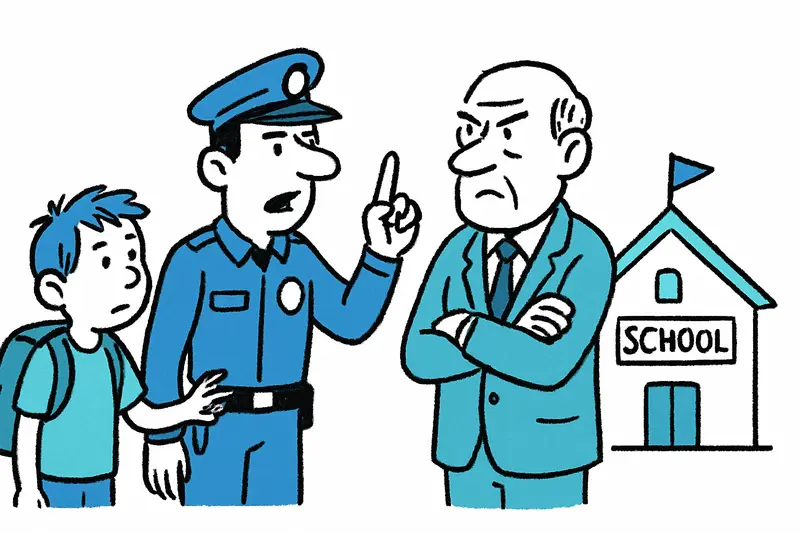
Alaró reorganizes the police — who really looks after our children?
Alaró reorganizes the police — who really looks after our children?
Alaró wants to reorganize the local police: a "Policía Tutor" for schools, renewed traffic trainings and a 7-days-on, 7-days-off shift model. Are the staff and concepts sufficient?
Alaró reorganizes the police — who really looks after our children?
Key question: Is a single contact person and a new shift model enough to strengthen safety, prevention and trust in a small town like Alaró?
On an early afternoon at the Plaça d'Espanya in Alaró you can smell freshly baked pa de cristal, children push their bikes past the ice cream shop, and the old town clock slowly ticks toward the next full hour. A patrol car is rarely far away — but how many hours a day is there actually someone on site who listens to children at school or shows cyclists the traffic rules?
The municipality has decided to reorganize police presence: the "Policía Tutor" project is to return — after a pause since 2015 — and again provide an officer who primarily works with girls and boys, adolescents and teachers. Regular traffic training is also planned again, including pedestrians, cyclists and e-scooter users. In addition, a new shift model is coming: seven days on duty, seven days off, with the aim of having two officers present in town more often.
On paper this sounds like a return to prevention and greater visibility. Viewed critically, however, central questions remain unanswered: Is a single "Policía Tutor" position sufficient for all schools and age groups in Alaró? How will success be measured? And who will fill this role professionally — a trained youth worker or a police officer with a short additional course?
A problematic personnel breakpoint is the staff issue: small municipalities often struggle to retain personnel permanently. A 7-day duty schedule can increase visibility during a week, but it also creates long deployment blocks that encourage exhaustion and turnover. Will the new model require more staff in the long term, or will it remain a redistribution of scarce resources?
Furthermore, the current information lacks a clear link with schools, social services and families; this gap was highlighted in reporting such as After Arrest in s'Arenal: Police Are Not Enough — Social Solutions Needed. Good prevention relies on reliable networks: trusted contacts in schools, clear reporting channels for concerns about a child, and regular exchange meetings between teachers, social work and police. This multi-stakeholder work requires time, spaces and coordinated standards — not just a new duty roster.
Traffic education is often reduced to information days. In reality we see children with helmets on the Carretera d'Inca in the mornings and e-scooters next to parked cars, without marked bike lanes. Trainings help if the infrastructure cooperates: secure parking areas, speed limits in front of schools, more visible crosswalks and ongoing actions rather than one-off workshops.
What has so far hardly been discussed in the public debate are clear success criteria, financial commitments and transparency, and how local budgets compare to wider proposals such as Palma's Budget 2026: More Police, E‑Buses — But Is That Enough for the City of Tomorrow?. The discussion should reveal how many positions are actually funded, what training tutor officers receive, and how parents and teachers are involved in planning. Without these details the initiative remains vulnerable to the usual administrative routine: declarations of intent instead of lasting change.
Concrete proposals for how Alaró can make the project truly substantive:
1. Pilot phase with evaluation: Start in two schools, run for six months, regular surveys of teachers, parents and students. Clear metrics: number of counseling sessions, reported incidents, satisfaction.
2. Cooperation agreements: Written agreements between the town hall, schools and the Balearic security department on training standards, working hours and substitution rules.
3. Infrastructure support: 30 km/h zones in front of schools, marked bike lanes and parking for scooters; combined with recurring traffic patrols by the police.
4. Training and relief: Tutor officers need further education in youth protection, de-escalation and intercultural communication. At the same time administrative tasks should be reduced so that time can be spent in schools.
5. Transparency and participation: Public interim results after three months; parent councils and the municipal council should have a say in setting objectives.
An everyday scene shows what it's about: when two teachers stand by the school gate on a Wednesday morning and say how unsafe many parents feel on the school run, the best concept is useless unless someone permanently stands in the street and practices crossing with the children. A tutor who is only sporadically on site remains a symbolic face. A well-integrated contact person, visible every week, builds trust — and that requires structure, time and backing.
Conclusion: The return of the "Policía Tutor" and regular traffic training are steps in the right direction. What will be decisive is whether Alaró creates the necessary framework: clear funding, training, cooperation with schools and concrete infrastructure measures. Without these elements the project risks becoming a nice headline. The municipality should now show that it's not just about presence, but about prevention and responsibility — and that means: plan, measure, adjust.
Frequently asked questions
What is the Policía Tutor in Alaró, and what does this role do?
Will a police presence in Alaró make schools safer for children?
How does the new 7 days on, 7 days off police schedule work in Alaró?
What kind of traffic safety training is planned in Alaró for children and teenagers?
Why is school cooperation important for child safety in Alaró?
Is the area around schools in Alaró safe for cycling and e-scooters?
What should parents in Alaró expect from the new police plan?
Has Alaró explained how the new police project will be funded and checked?
Similar News
Palma, Palma de Mallorca, Palma‑Mallorca: What is it really about?
The debate over the city's name is more than grammar: it concerns identity, law and branding policy. A sober reality che...
Warning to Bathers: Nipping Fish in Cala Major and Other Coves — a Reality Check
In Cala Major and several beaches around Mallorca, bathers report painful “nips”. Who are the animals, why are they gett...
Rental Car Theft in El Arenal: What This Incident Reveals About Our Gaps
A teenager steals a running rental car in El Arenal, flees on foot, climbs over walls and is caught by the Guardia Civil...
Red Rope in Palma's Library: What Helps Against Selfie Tourism — and What's Missing
Palma's city library cordoned off an area with a red rope to keep selfie tourism away from reading and working activitie...
Fort San Carlos: Museum, Harbor Dispute — and a Conflict That Demands Answers
The military museum at Fort San Carlos sits right on Palma's harbor, with unexpectedly quiet rooms filled with cannons a...
More to explore
Discover more interesting content

Can Cap de Bou

Townhouse Lleo 72
