
Without insurance and deregistered: BMW seized in Palma — a symptom, not an exception
Without insurance and deregistered: BMW seized in Palma — a symptom, not an exception
In Palma, a blue BMW with a British license plate was stopped: deregistered and without liability insurance. What the incident reveals about checks, rules and everyday life on the island.
Without insurance and deregistered: BMW seized in Palma — a symptom, not an exception
Stop on the Camí dels Reis exposes gaps — and we ask: How clean is our road traffic really?
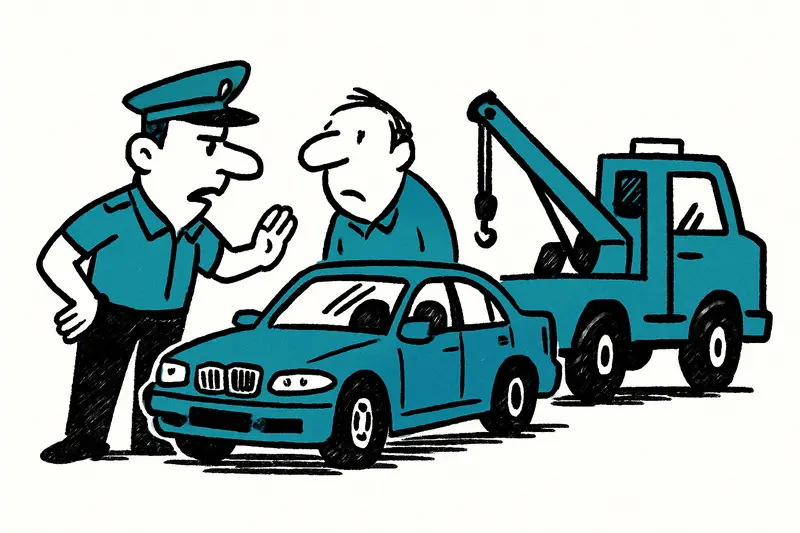
On the evening of March 26, a local police patrol stopped a blue BMW with a British license plate on the Camí dels Reis. The scene unfolded in the glare of the patrol car lights; taxi and delivery traffic rushed by — a disruption of the peace typical of that road. Officers found a vehicle that had officially been deregistered and could not provide mandatory liability insurance. The 27-year-old driver from Romania was reported, the car was impounded and taken to the municipal towing depot.
The facts are clear: a car without insurance endangers other road users and is also legally not permitted. In this case, the vehicle had also been deregistered. The depot administration informed the customs surveillance service, because deregistered vehicles in circulation often involve more complex issues. The driver must pay outstanding fines before he is eligible to have the vehicle returned.
Key question: What does a single case like this say about the effectiveness of checks and the mechanisms Mallorca uses against vehicles that are used here without authorization? This question is not merely academic. For months authorities have stepped up attention to vehicles with foreign plates, as shown by Palma tightens ZBE control: Drivers with foreign license plates now need an extra permit, and they also remind residents to re-register their car within one month. Still, deregistered or uninsured vehicles repeatedly appear on the roads, as in After Cash Robbery in Playa de Palma: What the Risky Escape in a Stolen Rental BMW Reveals About Mallorca's Security Gaps.
Critical analysis: The incident reveals several weaknesses. First: prevention — control mechanisms do detect such vehicles, but often discovery is random during patrols, as with Sant Elm: Car slides down the embankment — Driving without a license and insurance raises questions. Second: traceability — deregistered cars with foreign plates can remain in circulation longer before being noticed due to missing cross-border data exchanges. Third: enforceability — if vehicle owners are barred due to unpaid fines or are abroad, enforcing measures becomes difficult.
What is often missing in public debate is the everyday perspective: how does this affect residents? Anyone driving along the Avenidas at night notices that fines are often not paid immediately — which creates frustration among citizens who follow the rules. And in neighborhoods like Amanecer or around the Plaza de España, you quickly hear neighbors complaining about risky driving while authorities work through piles of paperwork behind the scenes.
Concrete solutions: 1) Better digital networking: a real-time check during stops that immediately cross-references insurance status and registration data would reduce chance discoveries. 2) Cooperation at borders: ports and the airport should increase checks on vehicles entering and leaving, especially during peak season. 3) Simplified return conditions: clear digital payment solutions for outstanding fines could speed up release from the depot. 4) Prevention campaigns: multilingual information at car rental stations, ferry terminals and on social media so vehicle owners know the deadlines for re-registration and insurance requirements. 5) Mobile units: deployment of vehicles with fast-check software instead of fixed checkpoints alone.
Everyday scene: Imagine it is a Tuesday evening, the only corner bar still has seated customers, a tow truck maneuvers slowly in reverse, its hydraulics clacking. An older resident shakes his head: 'Another car with foreign plates,' he says, taking a drag on his cigarette. Such impressions accumulate and shape the mood in the neighborhoods.
Conclusion: The seized BMW is not an isolated case but an indication of structural problems in the interaction between registration, insurance and enforcement. The police are doing their job; the task for politicians and administration is to improve technology and procedures so that such cases are rarer and processed faster. For people on the island this means: more transparency, fewer bureaucratic loops and noticeably safer streets.
Anyone registering a vehicle as a resident or using a car with foreign plates should know the deadlines and comply with insurance requirements. For everyone else: when a patrol stops you, it is not an interrogation but a protection mechanism — also for the neighbors who hear sirens at night.
Frequently asked questions
Can a car be seized in Mallorca if it has no insurance?
What does it mean if a car is deregistered but still driving in Mallorca?
How often do police in Mallorca check foreign-plate cars?
Do Mallorca residents need to re-register a car after moving to the island?
What happens if police stop an uninsured car in Palma?
Where do impounded cars in Palma usually go?
Why do Mallorca authorities pay special attention to foreign-plated vehicles?
What should drivers in Mallorca check before using a car on the road?
Similar News
More Electric Cars in the Balearic Islands: Sales Rise Sharply
Between January and August, 14,185 vehicles without petrol or diesel propulsion were sold — an increase of more than 40 ...
Autumn in Mallorca: What Truly Remains of Summer
The days grow shorter, the evenings cool — and yet more of summer lingers than you might think: sounds, recipes, people,...
Rescue operation at Tolleric: Why nighttime cliff parties become dangerous
A British holidaymaker fell about ten meters at the cliffs of Tolleric during the night, later climbed back up and was r...
Car accident on the MA-1: Mother and daughter on a bicycle struck by a fellow countryman – Who protects cyclists here?
On the MA-1 between Portopí and the Cala Major exit, a mother and her daughter on a bicycle were struck by a car. A para...
Smoke over the UIB: Who is responsible for the fire on the roof?
On Saturday afternoon a fire broke out on the roof of the Arxiduc Lluís Salvador building at the University of the Balea...
More to explore
Discover more interesting content

Can Cap de Bou

Townhouse Lleo 72
