
Almost two euros? Why Mallorca's fuel price could affect us all
Almost two euros? Why Mallorca's fuel price could affect us all
Fuel prices in the Balearic Islands are rising – Mallorca is still cheaper than Germany for now, but tax cuts, a rising oil price and ferry supply routes are weighing on the island economy. A reality check with everyday scenes and concrete measures.
Almost two euros? Why Mallorca's fuel price could affect us all
A reality check on rising fuel costs and their effects on the island
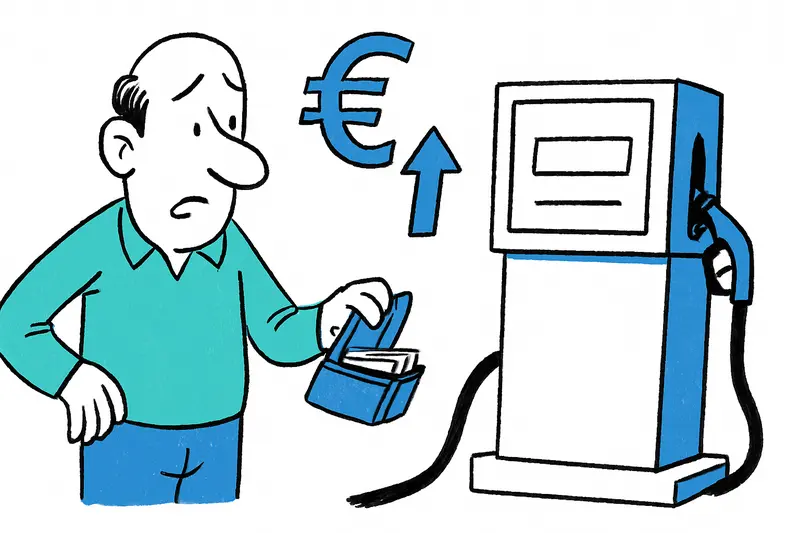
On the road to Son Castelló, where lorries often stand in the midday heat and the air smells of diesel, it becomes noticeable for many: the price of petrol and diesel is climbing. On the Balearic Islands the average price for Gasolina 95 is now about €1.93 per litre, roughly ten cents above the Spanish national average. In Germany daily values have recently been significantly higher, but the gap is shrinking: between Mallorca and Germany it is currently only about €0.37 per litre — with a 50-litre tank that quickly becomes almost €19 difference.
Key question: How dangerous is the current price spiral for Mallorca's everyday life, economy and prices in restaurants, trades and delivery services?
Critical analysis: Several factors are pushing prices up at the same time. State relief on the excise duty has been gradually reduced in recent months (from €0.15 in July to €0.10 in August, now about €0.05 in September). For diesel there is currently an exception because the year-on-year comparison showed a strong increase and the discount there was raised, but the overall situation remains tense. In addition, the reduced value-added tax has been returned to 21 percent, and the international crude oil price (Brent) is again trading above the $90 mark. In Europe, persistently low investment in refinery capacity is creating a strained situation in the long term — this makes prices more volatile.
What the ordinary pump price does not reveal: Mallorca is an island. Almost everything that arrives here — food, building materials, packaging, spare parts — travels by ferry or ship. That makes us vulnerable: when fuel costs rise, lorry and ferry prices become more expensive, and these additional costs filter through the supply chain to final prices, contributing to a rising cost of living in Mallorca.
What is often missing in public debate are concrete figures on cost pass-through and protection mechanisms for those most affected. People talk about litres and prices at the pump, but rarely about how many percentage points local businesses actually have to pass on, or how long fixed delivery contracts can continue to buffer prices. Likewise, there is little discussion about the extra burdens faced by low-income households — especially in island communities outside Palma, where public transport is thin and a car remains indispensable, an issue examined in Inflation Falls, Costs Remain: Who Pays the Price in Mallorca?.
Everyday island scene: On an early weekday at the Passeig Marítim I see vans with cooling units coming out of the harbour; drivers talk about rising daily expenses, and a cleaner at the market in la Llotja calculates whether it's still worth spending money on petrol to drive privately to the supermarket. At some stations around the Plaça de Mercats short queues are forming again, and taxi drivers in the city centre stop more often at the boot to compare fuel prices.
Concrete approaches — not a wish list, but practical steps:
1) Short term: Obligation of transparency for large supply contracts: authorities could require that regional tenders for public procurement disclose fuel components so price developments can be better tracked. A temporary transport alliance of small retailers for joint fuel procurement could enable volume discounts, as seen with the government's price cut for butane gas.
2) Medium term: Targeted relief instead of blanket tax cuts: subsidies that specifically support low-income households and cross-sector assistance for logistics and hospitality protect against social disruption. At the same time, promoting electrification makes sense: more fast-charging points in commercial areas (Son Bugadelles, Palma South) and incentives for electric delivery vehicles would reduce dependency.
3) Long term: Strengthen infrastructure and make supply chains more resilient: better ferry contracts, storage capacity for critical goods and investments in alternative energy sources (biofuels, green shipping) can mitigate price spikes. On the transport level, a better bus network and mobility offers outside the main tourist corridors help ensure that private cars are not the only option.
Also missing from the debate is the role of smaller actors: the bakery in Port d'Andratx, the cleaning company in Manacor, the vegetable supplier for weekly markets — their margins are thin, their ability to pass on prices is limited, as shown by Why Food Is So Much More Expensive in the Balearic Islands — A Reality Check. Policy-makers and municipalities should design aid measures so that these businesses do not become the losers in the coming months.
Pointed conclusion: The litre price is not an abstract value; it is a lever that can amplify everyday costs through supply chains and tax decisions. Mallorca cannot control the global oil price in the short term. But we can cushion the consequences: through more transparency, targeted support for the vulnerable and investments in alternatives. Anyone who now only discusses pump-price headlines overlooks how deeply the tank reaches into the island economy.
On the way back from the harbour it still smells of the sea and diesel, and the conversation at the petrol station ends with a simple sentence: "If this keeps up, you'll notice it in everything." He is right.
Frequently asked questions
What is the best time of year to visit Mallorca for sun and beaches?
Do I need to pack for rain or heat in Mallorca?
Is swimming safe in Mallorca’s seas and beaches?
What are good outdoor activities to try in Mallorca?
How does the weather vary across Mallorca’s seasons?
Are there family-friendly beaches or areas in Mallorca?
How to get around Mallorca without a car?
What should I know about language and etiquette in Mallorca?
Similar News

World Cup Trophy in Palma: Two Days Up Close
The World Cup trophy is coming to Palma at the end of October: two days on display at City Hall, and on 31 October photo...

End of October: Can you still swim in the sea in Mallorca?
The late-autumn sun still warms the air and the sea has retained its summer heat—many people don't pack away their swimw...
Years of abuse in Costa de la Calma – Neighbor calls Guardia Civil
In a villa in Costa de la Calma a neighbor alerted the Guardia Civil: a 19-year-old woman reported years of violence by ...

Schauinsland Takes Over Management of the Morito in Cala Millor – a Reality Check
From March 2027 the German tour operator Schauinsland will manage the Morito hotel in Cala Millor. The Batle Erikson fam...
Still bathing season? Why Mallorca still invites a plunge into the sea at the end of October
The air is mild, the beaches quieter — and the water surprisingly warm. We have summarized the current temperatures and ...
More to explore
Discover more interesting content

Can Cap de Bou

Townhouse Lleo 72
