
Years of abuse in Costa de la Calma – Neighbor calls Guardia Civil
Years of abuse in Costa de la Calma – Neighbor calls Guardia Civil
In a villa in Costa de la Calma a neighbor alerted the Guardia Civil: a 19-year-old woman reported years of violence by her brother. What is missing in the discourse about domestic violence in affluent neighborhoods?
Years of abuse in Costa de la Calma – Neighbor calls Guardia Civil
Key question: Why is domestic violence in affluent residential areas so often overlooked?
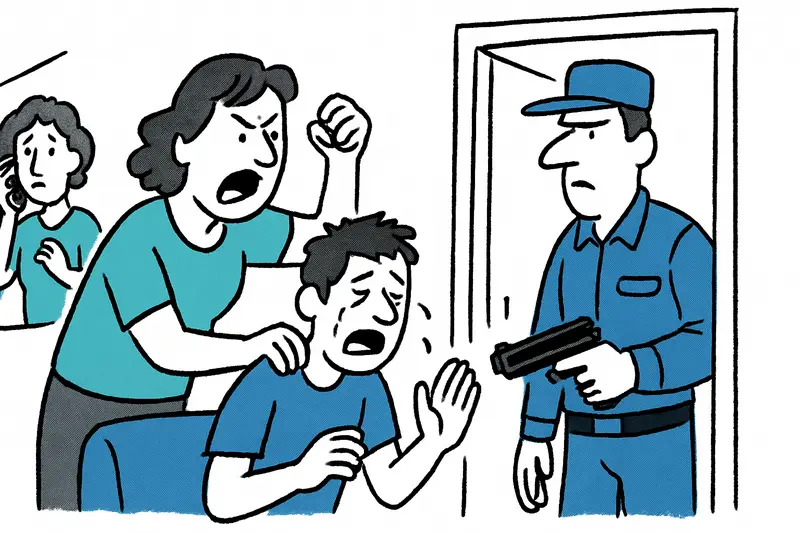
The operation one evening on Huguet des Far street in Costa de la Calma seemed at first like one of many checks in the southwest of Mallorca: well-kept driveways, cars quietly humming into garages, and the usual calm after the afternoon siesta. But the sound a neighbor heard from one of the apartments was anything but ordinary – screams that alarmed her and prompted her to call the police.
Officers of the Guardia Civil from Calvià arrived on site. According to preliminary information, a young woman reported years of physical abuse by her brother. Both are 19 years old and share the same nationality. She also told officers that her parents had so far not allowed her to work or study and that she had recently been forced to go to Italy for three months. The brother was temporarily detained and later released; investigations are ongoing.
Such facts are shocking because they show that violence does not only occur in overcrowded inner-city apartments or in neighborhoods considered problematic. Costa de la Calma, with its well-kept paths and proximity to the sea, offers a deceptive aura of safety. Precisely for this reason, observers often find it hard to imagine domestic violence here – and that is part of the problem (see Algaida: 40 years' prison demanded — how could this go on for years? and Manacor: Chain, Coercion and House Handover – How Long Did This Remain Hidden?).
Critical analysis: The situation cannot simply be dismissed as an isolated case. Wealthy or gated residential developments create social isolation. Families live behind walls, neighborhood contacts are fleeting; those who regularly need help find it less easily. At the same time, language barriers and cultural norms among newcomers increase the distance to public support services. Victims, according to the case details, feel controlled: no work, no studies, controlled stays abroad – classic forms of power and dependency that operate over years.
What is missing in the public discourse: discussions often remain limited to the criminal level – report (Arrest in Cala Bona: How Could This Go On for So Long?), arrest, investigation. There is less talk about long-term protection concepts: how do you reach people in gated communities? What role do property managers, caretakers, delivery services and neighbors play? Where are multilingual services, and how are victims informed about their rights? The question of preventive training for private villa security staff and employees of the municipality of Calvià is also rarely raised.
An everyday scene from Mallorca: late in the afternoon a woman sits on the wall at the cove, a small breeze carries the smell of salt and freshly cut grass. Tourists chat on the promenade, children ride bicycles. In the villas above, lights glow behind shutters. It is precisely this contrast – lively public life below, closed-off privacy above – that makes listening so hard. The neighbor who heard the screams was not part of an official network; she reacted out of the spontaneous feeling that something was wrong. Such individual acts of civic courage are often the first and most important step (for another recent example, see Severely injured in Port d'Alcúdia: When life explodes behind closed doors).
Concrete solutions: First: public relations and information in multiple languages directly in residential complexes – flyers in stairwells, notices for parcel deliverers and cleaning staff who can act as "informal eyes". Second: training for property management and security staff so they can recognize signs of isolation and abuse and know how to alert authorities without endangering victims. Third: low-threshold contact points in Calvià, reachable by email and chat, with language mediation that work closely with the Guardia Civil and social services. Fourth: a standardized protection protocol for cases in which police, social services and women's shelters cooperate quickly – including temporary accommodation and legal advice.
It is also important to encourage neighbors: pass on precise observations (time, place, type of sounds), take photos or videos only when safety is not endangered, and clearly state the urgency when calling emergency services. The municipality and police should make transparent which steps follow after a report so that doubts about effectiveness do not lead people not to report at all.
Pointed conclusion: Violence behind beautiful facades is not a contradiction. Costa de la Calma reminds us: walls do not only protect possessions, they can also hide invisible power structures. Anyone who wants to live in this society must learn to listen — and act. The neighbor who looked had shaken a system. Now more is needed than police operations: clear support chains, language access and the municipality's willingness to pay attention even where everything seems peaceful.
Frequently asked questions
When is the best time to visit Mallorca for beach weather and outdoor activities?
What should I pack for a Mallorca trip to cover warm days and cooler evenings?
Is swimming in Mallorca possible outside the peak summer months?
What’s a good one day plan to explore Palma de Mallorca?
Which areas in Mallorca are best for scenic coastline and beaches?
What family-friendly activities are available in Mallorca?
How do I get around Mallorca — buses, trains, or car hire?
Are there easy day trips from Palma or other towns that don’t require heavy planning?
Similar News

End of October: Can you still swim in the sea in Mallorca?
The late-autumn sun still warms the air and the sea has retained its summer heat—many people don't pack away their swimw...

Schauinsland Takes Over Management of the Morito in Cala Millor – a Reality Check
From March 2027 the German tour operator Schauinsland will manage the Morito hotel in Cala Millor. The Batle Erikson fam...

Still bathing season? Why Mallorca still invites a plunge into the sea at the end of October
The air is mild, the beaches quieter — and the water surprisingly warm. We have summarized the current temperatures and ...
A Spanish Evening at the Auditorium: Guitar, Colors and the Sea in Palma
Rodrigo, Ravel, Albéniz — and a new work by the guitarist: the second subscription concert brings Spanish music in a lar...

When Palma Becomes a Zombie Zone: 'Mallorca Z', AI and the Thought Experiment with Side Effects
A Mallorcan lawyer built a strategy game over a weekend using AI that treats the island as the scene of a zombie crisis....
More to explore
Discover more interesting content

Can Cap de Bou

Townhouse Lleo 72
