
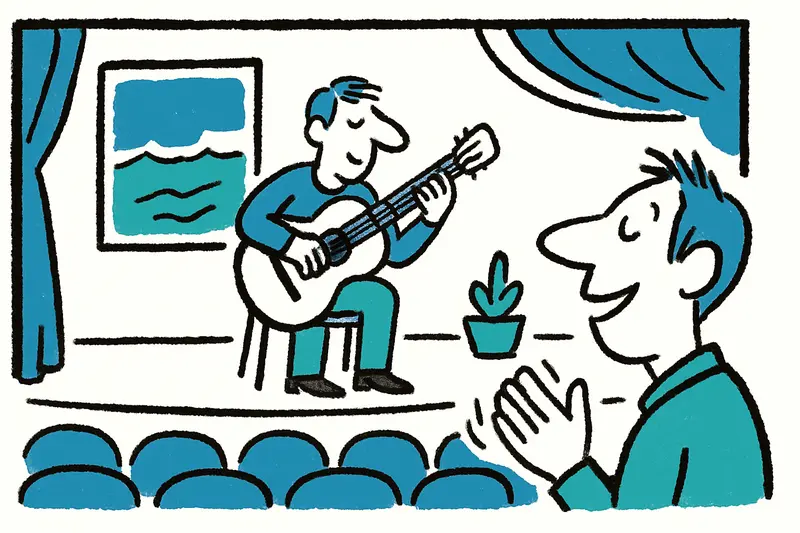
A Spanish Evening at the Auditorium: Guitar, Colors and the Sea in Palma
A Spanish Evening at the Auditorium: Guitar, Colors and the Sea in Palma
Rodrigo, Ravel, Albéniz — and a new work by the guitarist: the second subscription concert brings Spanish music in a large orchestral sound. Why this is good for Palma and how to best experience the evening.
A Spanish Evening at the Auditorium: Guitar, Colors and the Sea in Palma
Between Aranjuez Melancholy and an Orchestral Burst of Temperament
When the evening in the Auditorium fades away in soft shafts of light and a last bus still hums through the streets of Palma in the distance, such a concert night is exactly what the city needs in autumn: music that tells of home and yet looks outward. The second subscription concert of the season places the guitar at the center and spans a wide arc from Romanticism to the present.
At the heart stands Joaquín Rodrigo's Concierto de Aranjuez, that work whose slow adagio has for decades brought audiences in the hall nearly to silence. The melody carries memories of gardens and water, of bright afternoons and quiet longing. On Mallorca, where sun and sea shape the days, this music feels both familiar and strange — as if one had rediscovered the memory of Andalusian evening light in an old building on Passeig Mallorca.
The guitar, the night's solo instrument, is more than just an instrument; it is a voice. With the program section "Diamantes para Aranjuez" the guest guitarist brings his own piece, which responds dialogically to Rodrigo's legacy. Here tradition meets personal handwriting: the familiar is not merely quoted but newly illuminated. That is a good thing — art that breathes excites the audience more than mere reproductions.
Alongside the Spanish originals, the orchestra also shows a French perspective on Iberian colors: Maurice Ravel's "Alborada del gracioso" sparkles with rhythmic wit and orchestral sheen. Ravel never lived in Spain, yet his piece sounds like a bow to the dances and percussion of the south. In the hall, castanet-like gestures and bright woodwind registers will provide small surprises.
The evening closes with a selection from Isaac Albéniz’s "Suite Española". Originally piano pieces, they gain dimension in orchestral dress: landscapes, cities, moods are described in sound pictures. From hot Andalusia to the Castilian expanse — you hear characters, not postcards.
For Palma, an evening like this has several benefits: it strengthens the local orchestral culture (see Brilliant Season Opening: OSIB Between Intimacy and Storm – an Evening That Resonates), offers access points for younger listeners, and shows that classical concerts need not be dusty. When, after the concert, people still stroll in small groups along the Passeig with a warm coffee in hand, the music stays in conversation — and that is the real value.
Practical tips: arrive early and enjoy the atmosphere around the venue — from the last market stalls at Mercat de l'Olivar to the streetlights that make the façades look warmer. If you have time, a few tapas before the concert will round off the evening. Tickets are available through the Auditorium; subscription holders usually benefit from better seats and discounted rates.
And a small wish from the everyday life of a concertgoer: more programs that showcase the guitar in large forms would enrich Mallorca's cultural offering. Workshops for young guitarists, school projects with orchestra visits, short introductory talks before the concert — such ideas bring people closer to classical music and make evenings like this worthwhile for more than just occasional visitors.
Conclusion: An evening with Rodrigo, Gallardo and Ravel's palette of colors is not only a pleasure for connoisseurs but an invitation to everyone who wants to experience Palma with ears and heart. The Auditorium provides the right setting — precise art inside, the city living on outside. A combination worth treating yourself to.
Frequently asked questions
What can I expect from a guitar-centered classical concert in Palma?
Is Concierto de Aranjuez a good entry point for someone new to classical guitar?
What should I do the night of the concert in Palma?
Are tickets available and do subscription holders get benefits?
What role does Ravel's Alborada del gracioso play in the program?
How does Albéniz's Suite Espanola translate to an orchestral setting?
What makes a Palma concert night like this meaningful for the city?
How could Mallorca expand guitar-focused programs for younger audiences?
Similar News

When Palma Becomes a Zombie Zone: 'Mallorca Z', AI and the Thought Experiment with Side Effects
A Mallorcan lawyer built a strategy game over a weekend using AI that treats the island as the scene of a zombie crisis....

Learning to Wait: How Leisure Is Making Space Again on Mallorca
Waiting doesn't have to be lost time. A mild October day in Palma shows how small pauses slow down our lives — and what ...
Cala en Brut: Body in the Sea — a Fatal Autumn Day and What’s Missing
In Cala en Brut (Ciutadella) a man's body was recovered during storm Dana "Adam". Why do autumn storms in the Balearics ...

When the road is gone: Port de Valldemossa cut off after storm 'Adam'
After heavy rains a retaining wall gave way and two sections of mountain road MA-1131 became impassable. Why are rural p...

Crypto Promises, Ferry, Arrest: How Investors in Mallorca and the Neighboring Islands Fall into the Trap
A Swiss man wanted under a German arrest warrant was captured in Ciutadella. The case raises questions about cross-borde...
More to explore
Discover more interesting content

Can Cap de Bou

Townhouse Lleo 72
