
When the road is gone: Port de Valldemossa cut off after storm 'Adam'
When the road is gone: Port de Valldemossa cut off after storm 'Adam'
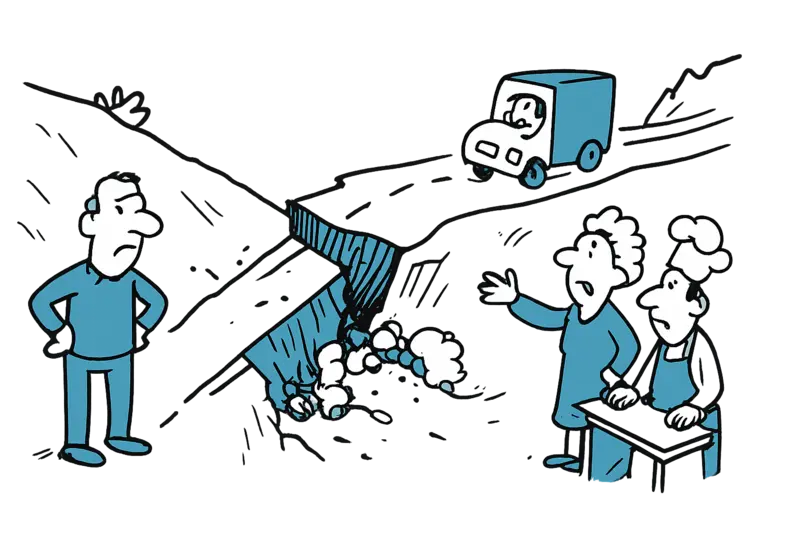
After heavy rains a retaining wall gave way and two sections of mountain road MA-1131 became impassable. Why are rural precautions no longer sufficient?
When the road is gone: Port de Valldemossa cut off after storm 'Adam'
MA-1131 closed, residents improvise – and the question remains: Who protects access routes before they fail again?
The facts are brief and harsh: in the night to Wednesday, after days of rain, a retaining wall on the mountain road MA-1131 gave way; two sections are currently impassable, the road is closed, and Port de Valldemossa is effectively cut off. Some residents said they would prefer to work from home that Wednesday rather than risk a detour. The trigger: the storm system called 'Adam' here — and a lot of rain in a short time. Similar incidents have occurred before, such as a car overturned near Valldemossa that highlighted local road vulnerabilities.
Main question: Who makes sure that a single wall doesn't overnight separate a village from the outside world? This is not only a technical question. It's about responsibilities, money, prioritisation and the way we adapt to increasingly frequent extreme weather events.
Critical analysis: On Mallorca many access roads in mountainous areas are older, narrow and peppered with retaining walls that were designed for a different climate and lower loads. When heavy rainfall arrives in a short time, water attacks weak points: drains clog, slope protections are overwhelmed, soils lose load-bearing capacity. A single collapsed wall is often only the visible end of a longer smouldering problem. Also striking is that responsibilities are fragmented. Road maintenance, geotechnical work and emergency management fall to different bodies — the municipality, the Consell, partly the autonomous government. This distribution can slow decision-making when swift action is needed, as seen when a rockfall at Sa Calobra blocked a key serpentine route and required coordinated response.
What is missing in public debate: clearly named priorities. We hear reports about closures, but too rarely an overview of which routes are classified as critical at island or regional level, how often they are technically inspected and how quickly repairs can be funded. There are no transparent inspection intervals, a map of risk points and simple communication for people on the ground: which detours are safe? Who brings medicine and food if a road remains closed for a longer time? Previous events during a stormy night in the island's interior exposed how unclear responsibilities can hamper rescue and supply operations.
An everyday scene from Mallorca: it's still raining, the roof tiles patter, the smell of wet pine forest hangs in the air. On the plaza in Valldemossa an elderly woman discusses with the baker how she will get to the pharmacy in the afternoon. A delivery driver weaves along the remaining side roads. Children who normally come by school bus stay home; the teacher turns on her laptop and teaches via videoconference. All this shows: infrastructure is not an abstract project but a small-scale guarantee of life — a truth underlined by accounts of flooded streets and mudslides after heavy storms that disrupted everyday services.
Concrete solutions: First, quick, pragmatic steps must be possible. Technical immediate measures can include temporary fillings, provisional barriers and the creation of safe footpaths so residents can be supplied. In parallel, an accelerated geotechnical assessment is needed to determine whether slope protections, drains or the wall itself must be replaced. In the longer term, regular inspections of vulnerable sections should be mandatory, documented and publicly accessible. Municipalities and the Consell should coordinate emergency plans: mobile shuttle lines, stockpiling for remote houses and prioritising repairs by level of hazard. Funding routes must be clarified — budget allocations, special reserves for climate impacts or structural funding could be pooled.
Technically feasible and economically sensible would be the use of modular, quickly assembled support elements at particularly exposed sites. Also: better drainage systems, regular cleaning of gutters and pipes and the creation of infiltration areas higher on the slope reduce peak runoff in heavy rain. Digitally, a simple warning system linked to AEMET weather alerts and local alarm levels could help inform residents earlier and reroute supply chains.
What must happen now: the closure must not remain a weekend phenomenon that only prompts action after media pressure. Authorities must immediately present a timetable for assessment and repair — with responsibilities and a rough estimate of duration. For the people of Port de Valldemossa short-term transport and supply options are needed. For the future it's clear: if we get more heavy rain, infrastructure must become more resilient — and that means: plan, invest, communicate.
Pointed conclusion: a slipped retaining wall is not a natural event that must be accepted without question. It is the result of a system that has not yet adjusted maintenance, risk assessment and emergency management to the new weather conditions. Anyone driving the narrow switchbacks to the coast in the coming days should not only think of closed kilometres, but ask: how many such weak points are there still — and when will the next one fail?
Frequently asked questions
What is the best time to visit Mallorca for warm beach weather?
What should I pack for a Mallorca trip?
Are there good swimming beaches in Mallorca and how safe is the water?
Is Palma de Mallorca a good base for exploring the island?
What outdoor activities are popular in Mallorca?
What local Mallorcan foods should I try?
How can I get around Mallorca without a car?
What should I know about Mallorca weather and sea conditions?
Similar News
Cala en Brut: Body in the Sea — a Fatal Autumn Day and What’s Missing
In Cala en Brut (Ciutadella) a man's body was recovered during storm Dana "Adam". Why do autumn storms in the Balearics ...

Crypto Promises, Ferry, Arrest: How Investors in Mallorca and the Neighboring Islands Fall into the Trap
A Swiss man wanted under a German arrest warrant was captured in Ciutadella. The case raises questions about cross-borde...
Santa Catalina loses a piece of everyday life: Why Xoriguer must now close — and what it means for Palma
The Xoriguer on Calle Fábrica, a venue with Basque roots and almost half a century of tables and stories, stands empty b...
Body in Cala en Brut: What the disaster with Storm "Dana/Adam" teaches us about emergency preparedness
A man was recovered from Menorca's coast after the storm. The details raise questions about warning systems, beach patro...
More than €450,000 watch seized: What remains from the raid against gangs?
The National Police report 34 arrests and the seizure of a watch worth more than €450,000. A reality check: what do the ...
More to explore
Discover more interesting content

Can Cap de Bou

Townhouse Lleo 72
