
Accident near Valldemossa — A wake-up call for the Tramuntana country roads
Shortly after 7:40 a.m. a car overturned near Valldemossa. A woman was seriously injured — time for concrete measures: safety, rescue routes and infrastructure.
Accident near Valldemossa — A wake-up call for the Tramuntana country roads
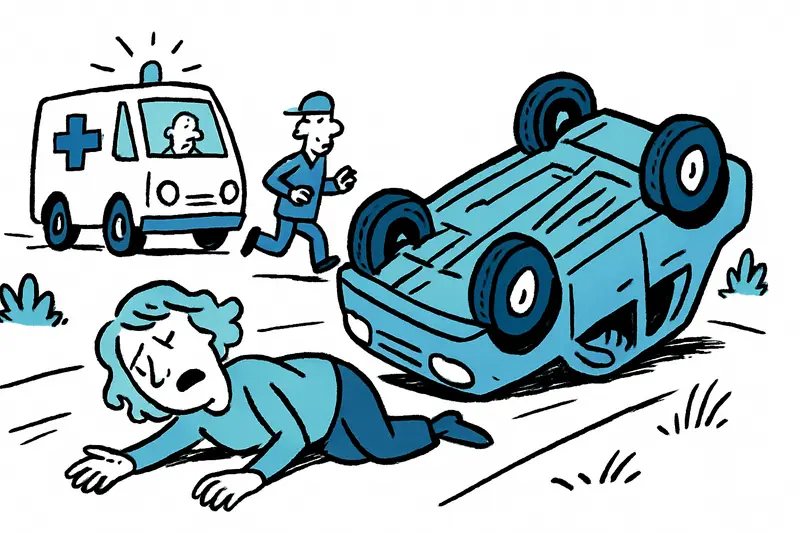
In the early morning, just before the entrance to Valldemossa, a car overturned and came to rest upside down. Around 7:40 a.m. sirens pierced the humid mist that envelops the switchbacks on such days. The driver, a woman in her 50s, was initially trapped in the vehicle; firefighters cut open the doors, and emergency services and the Guardia Civil transported her to Son Espases hospital with serious injuries. Residents recall the dull bang, the smell of petrol and the unusual silence, broken only by the distant roar of the sea.
The key question: Are our country roads safe enough?
The incident raises a simple but pressing question: How safe are the narrow connecting roads around the Serra de Tramuntana really? The route from Palma towards Valldemossa is part of many daily routines — tight bends, hardly any hard shoulder, crowded commuters in the mornings and occasional delivery trucks; concerns echo recent coverage such as Three serious accidents in one night: What's wrong with Mallorca's country roads?. But it is not only about speed. Driver errors, technical defects, wet leaves on the road or insufficient markings can create a dangerous mix just as quickly. The Guardia Civil is investigating the cause, but the public debate should not stop at the big 'why?'. We need a clearer picture of the structural risks.
What often gets overlooked: rescue routes and resources
When a car ends up in a steep bend, every minute counts. The usual buzzword "rescue chain" sounds good — in practice you encounter narrow access roads, slippery embankments and places where tow trucks can hardly turn. Are emergency vehicles sufficiently equipped for the peculiarities of the Tramuntana? Are there turning or bypass areas for emergency teams at critical points? And how reliable are radio and mobile connections in the deep valleys — a faulty radio can delay communications by minutes. These questions are often treated as secondary in many debates, yet they matter in every accident.
Concrete approaches instead of general concern
Instead of only expressing concern, pragmatic steps help. In the short term, visible measures are possible: additional reflective lane markers, regular clearing of verges after storms, targeted pothole repairs and better signage before especially treacherous bends. Previous incidents such as Crash on the Ma-10: Bus collides head-on with a truck — What does this say about our roads? underline the urgency of these steps. At key locations guardrails should be added or renewed — of course with ecological considerations, but with a clear priority for human life.
Prevention can also be digital: mobile speed controls during commuter hours, temporary warnings on navigation apps and a stronger presence of the Guardia Civil at peak times would reduce risky overtaking maneuvers. In the medium to long term, better bus connections and commuter options are important — fewer cars mean less crash potential. For practical advice on safer driving on mountain roads see Mallorca's Curves without a Racing Heart: Staying Safe on the Tramuntana & Co.. Finally, infrastructure also includes equipping emergency services: winches, specialized rescue tools for steep slopes and regular training on mountain roads.
A local perspective: sounds, people, everyday life
On such gray mornings village life seems slowed down. On the terraces the first coffees steam, dogs bark at the dry-stone walls, delivery vans cautiously climb the hills. Today the routine stopped at the cordon: workers had to take detours, school buses were delayed, neighbors gathered with trembling voices and spoke about the loud bang. Such scenes stick with you — not just as news, but as a reminder that a second of inattention is enough to change lives.
What to do now
The Guardia Civil is asking for witnesses: anyone who was on the road between Palma and Valldemossa this morning is asked to come forward. Every observation can help clarify the sequence of events. For drivers the obvious but essential rules apply: reduce speed, especially when wet; perform regular vehicle checks (brakes, tires) and keep a little more distance in the bends. For politicians and administrators the incident should be a reason to prioritise targeted investments in safety and to better equip emergency services.
This accident is more than an isolated misfortune — it is a sharp wake-up call for the island administration, the municipalities and all of us who drive these roads daily. We will continue to follow the story and report as soon as there is new information about the cause of the accident and the condition of the driver.
Frequently asked questions
Are the country roads around Valldemossa safe to drive in Mallorca?
What makes Mallorca's Tramuntana roads more dangerous than other routes?
What should I do if I have a car accident on a mountain road in Mallorca?
When is driving from Palma to Valldemossa most difficult?
How can I drive more safely on Mallorca's winding country roads?
What safety improvements could help on the roads near Valldemossa?
Do emergency services have trouble reaching accidents in the Tramuntana?
What should witnesses do after a serious crash near Valldemossa?
Similar News
When a Taxi Fare Dispute Turns Violent: What the Magaluf Case Reveals About Safety and Prevention
In Magaluf a 2023 dispute over a taxi fare escalated: an 18‑year‑old British man is accused of seriously injuring a taxi...
Bloody clash in Canòdrom Park: What is missing in addressing violence on Mallorca's streets?
At midday on October 23, an 18-year-old man was critically injured in Canòdrom Park in Palma. The attack raises question...
Palma raises bus fares: Who pays the bill for public transport?
Single tickets rise from €2 to €3, airport trips have a reference price of €4.50. It remains unclear whether residents w...
Palma's New Indoor Pool: Sea View, Sunbeds and Space for Everyone
At Aigua Dolça, near the Paseo Marítimo, Palma has a new municipal indoor pool. For a small fee people can now train, re...
How Four Burglars Emptied Ten Houses with a Simple Trick — and What It Means for Mallorca
Four men used the impressioning technique, posed as delivery workers and accepted two years in prison. A reality check f...
More to explore
Discover more interesting content

Can Cap de Bou

Townhouse Lleo 72
