
Raid in Palma's Prison Ruins: Control Instead of a Solution – Who Helps the 500 People on Site?
Raid in Palma's Prison Ruins: Control Instead of a Solution – Who Helps the 500 People on Site?
A large-scale check took place early morning in Palma's former prison: 160 people were identified and one person was arrested. The operation reduces the immediate danger, but a lasting strategy for the people living there is still missing.
Raid in Palma's Prison Ruins: Control Instead of a Solution – Who Helps the 500 People on Site?
Key question: Who takes responsibility for the people living in and around the ruins of the former prison?
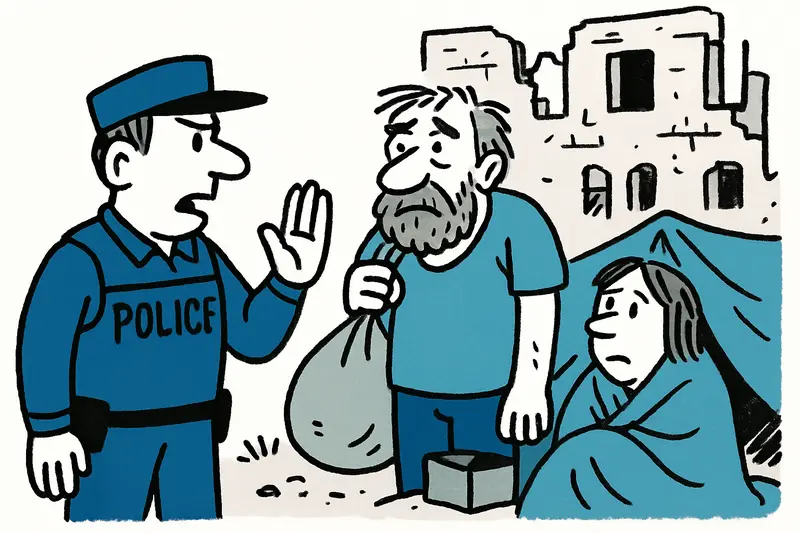
In the early morning, hectic activity broke out in front of the fenced area of Palma's former prison. Flashing lights buzzed, officers in vests moved purposefully between the gates, and garbage bags and plastic tarps fluttered in the cold wind. Around eight o'clock, officers asked residents to leave the buildings to carry out checks. The result of the New Raid in Mallorca: More Arrests — But Are the Roots of the Problem Untouched?: more than 160 people checked and one arrest — the man reportedly had an outstanding arrest warrant for theft. Authorities reported the operation went "without incident."
Raid on Mallorca: Network of Drug Trafficking and Money Laundering Shakes Palma and Surroundings: units from the National Police, municipal enforcement staff and specialized teams were on site. The aim was not only to verify identities but also to search for people who are the subject of judicial proceedings. The action was prompted by complaints from neighbors and parents of a nearby school: an increase in small fires, noticeable thefts, and a sense of insecurity that had spread through the neighborhood.
The Red Cross assisted on site: volunteers handed out blankets and simple meals and pointed out the unhygienic conditions. Many buildings are dilapidated, and water and electricity are not regularly available. Authorities and aid workers estimate that around 500 people stay on the site at times — a number that hides very different life stories: long-term homeless people, those who ended up there because affordable housing is lacking, and newcomers who have only recently arrived on the island.
Critical analysis
Such checks contain acute problems: violent confrontations are prevented, wanted offenders can be identified, and local residents feel safer in the short term. Yet the action remains a symptom treatment: authorities check identities, aid organizations hand out blankets — real housing prospects do not arise from this. The operation was operationally successful but strategically incomplete.
The rift between law-and-order policy and social policy is visible here. A Major raid in Palma: Biker leader and former investigator arrested — How deep does the network reach? alone does not change the causes: a lack of social housing, precarious labor markets, bureaucratic gaps in the reception and registration of new arrivals, and poor coordination between the city, the Balearic government and NGOs. Without available alternatives, the site will remain an attraction point.
What is missing from the public debate
There is a lack of clear figures on capacities in emergency shelters, a lack of transparency about placements already initiated, and an absence of continuous health and care services for residents. Hardly anyone is discussing how vacant public buildings could be sensibly repurposed in the medium term, or what employment programs specifically for people without a fixed address should look like. It is equally rare to hear how much staff social services actually need to systematically provide assistance on the street.
Everyday scene
During the day you can hear the school bell near the complex as parents bring their children to school; in the evening some residents sit around small fires to keep warm. A school bus stops at the stop, teachers watch thoughtfully. A delivery van drives by; from a Benjamí-Capllar street you could say the sounds of the city mix with the rustling of tarps. These scenes make it clear: the ruin lies in the middle of everyday urban life — it is not a marginal phenomenon that can simply be cleared away.
Concrete approaches
1. Quick housing alternatives: temporary accommodations in municipal buildings, accompanied by clear timetables for transitions into permanent solutions.
2. Mobile teams: interdisciplinary street teams (social work, health services, legal advice) that are regularly on site to build trust and plan individual paths out of homelessness.
3. Secure infrastructure on site: clean drinking water, sanitary facilities and safe access to electricity (no improvised connections) reduce health risks.
4. Coordinated placement: a central case management system that brings together checks, assistance offers and housing — linked with data that respects privacy but avoids duplicate work.
5. Housing construction and employment programs: rapid expansion of social housing and local employment projects targeted specifically at residents (renovation work, municipal services).
Concise conclusion
Money-laundering raid in Palma: three more arrests — total rises to 52 revealed its limits. Police create short-term order, volunteers relieve need — but without a concrete plan to move people into permanent housing and care, the ruin will remain a recurring problem. Anyone who truly wants to make Palma safer and more socially just must put housing at the center instead of repeating raids. Otherwise the pattern repeats: today the check, tomorrow the return of those who have no one to open a door for them.
Frequently asked questions
Why are police checks carried out at Palma’s former prison ruins?
How many people live in the former prison area in Palma?
What help do people in Palma’s prison ruins get from the Red Cross?
Why do people keep returning to the former prison site in Palma?
Is it safe to walk near Palma’s former prison ruins?
What is missing in Mallorca’s response to homelessness in Palma?
Can vacant public buildings in Palma be used to house people more quickly?
What long-term solutions are being discussed for the former prison area in Palma?
Similar News
Injured captain, big plans: Germania Mallorca before the away match in Consell
The newly founded FC Germania Mallorca travels to Consell on Saturday. Captain Bastian Müller is out injured, but coach ...

Palma, Palma de Mallorca, Palma‑Mallorca: What is it really about?
The debate over the city's name is more than grammar: it concerns identity, law and branding policy. A sober reality che...

Warning to Bathers: Nipping Fish in Cala Major and Other Coves — a Reality Check
In Cala Major and several beaches around Mallorca, bathers report painful “nips”. Who are the animals, why are they gett...

Rental Car Theft in El Arenal: What This Incident Reveals About Our Gaps
A teenager steals a running rental car in El Arenal, flees on foot, climbs over walls and is caught by the Guardia Civil...

Red Rope in Palma's Library: What Helps Against Selfie Tourism — and What's Missing
Palma's city library cordoned off an area with a red rope to keep selfie tourism away from reading and working activitie...
More to explore
Discover more interesting content

Can Cap de Bou

Townhouse Lleo 72
