
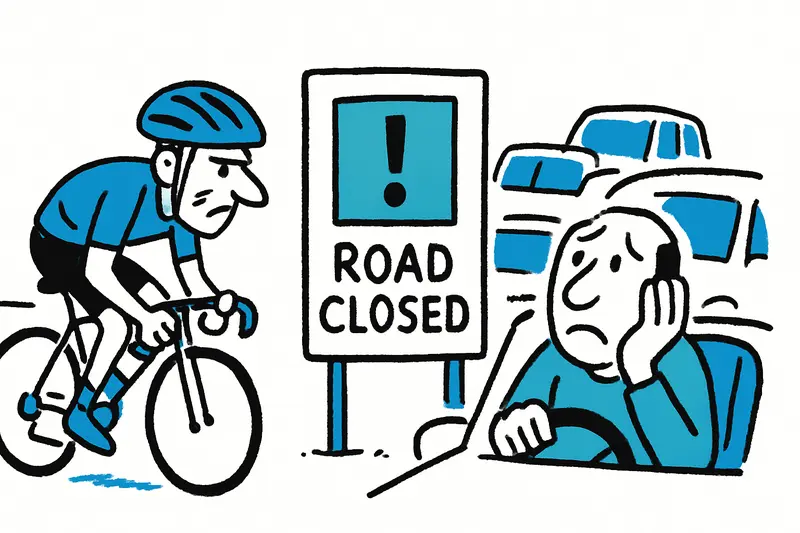
Road closures during Challenge Ciclista 2026: Who is thinking of commuters?
Road closures during Challenge Ciclista 2026: Who is thinking of commuters?
The five-day Challenge Ciclista causes more than 100 road closures – the first stage runs through Calvià and the Tramuntana (Sóller, Valldemossa). A fact-finding look: what is missing in the preparation, who is affected in everyday life and which quick solutions help now?
Road closures during Challenge Ciclista 2026: Who is thinking of commuters?
Main question: How do you protect the race without turning everyday life on the island into traffic chaos?
Five days, more than a hundred closed roads, and in the first stage the Tramuntana route: Calvià, Sóller, Valldemossa. These are the hard facts of the Challenge Ciclista 2026, which is currently sweeping across the island, as with the 550 Challenge road closures in Mallorca.
I recently stood early in the morning at the plaza in Sóller. The smell of coffee mixed with chain oil, tyres squeaked – racers, team staff, a few tourists with trailers. At the same time delivery vans rolled up, a bus driver stepped out and squinted: "Today it'll be tight," he said and went to the stop. Scenes like this repeat along the route: sporting anticipation meets necessary everyday logistics.
An objective analysis: big events need space. The organisers have planned the race, the roads are closed, the sport wins. What is underrepresented in the public debate is the consequence for commuters, craft businesses and local shops. More than a hundred affected roads do not just mean short delays, but in some cases full days of replanning for people who have no buffer – craftsmen, medical professionals, commuters.
What is missing in the discussions? First: precise, timely alternative routes that are practical for locals. Second: traffic management at critical points during peak times. Third: transparent information about the duration of closures on individual sections, not just a list of places. Fourth: coordinated delivery windows for local businesses. And fifth: a clear contact person on site who coordinates shifts – not always just tape and a lone police officer.
Practical solutions that help quickly: more mobile signage on side roads, digital panels at roundabouts with real-time information, temporary bus shuttles between places cut off by closures, and coordinated delivery times for craftsmen and supermarkets. At the municipal level, short-term notices in town centres and SMS/WhatsApp messages to registered businesses could be used. That costs little but provides planning security.
In the long term the island administration should develop a checklist for major events: emergency lanes for rescue and supply, mandatory information plans for affected municipalities, agreed detour routes and a digital dashboard with live information – accessible via municipal websites and the transport operators' social media channels.
Another blind spot: commuters without cars. When main connections are closed, people switch to motorcycles, mopeds or already overcrowded buses. That creates new hazards if additional safe transport options are not provided in parallel. Authorities could cooperate with bus companies to run temporary extra trips or offer park-and-ride areas on the edges of closure zones.
Better training in traffic management at sporting events would help police and on-site helpers. Experienced steward teams and coordinated radio plans between organisers, municipal administrations and the transport service reduce chaos at junctions like the exits from Sóller, which have seen nightly closures in the Sóller Tunnel, or the approaches to Valldemossa.
Everyday tips for drivers right now: leave earlier, build in time buffers, check local municipal information and the transport operators' social media channels, prefer side roads where possible. If you are expecting a delivery: contact the service provider and arrange a flexible time window, and stay informed about other events such as the Palma triathlon and cycling tour road closures that may coincide.
Conclusion: Major sporting events like the Challenge Ciclista are a gain for Mallorca – they bring attention, visitors and economic benefit. Still, race success must not automatically lead to worse conditions in everyday life. With a few pragmatic rules and better coordination both can be achieved: a safe race on the Tramuntana passes and transparent mobility for the people who live and work here. A good start would be: clear alternative routes, temporary shuttles and a hotline for affected businesses – it costs little, saves nerves and makes the island accessible to everyone, not just the athletes.
Frequently asked questions
How do road closures during a cycling race in Mallorca affect everyday traffic?
What should drivers in Mallorca do when a cycling race closes major roads?
Are there alternative routes during the Challenge Ciclista in Mallorca?
How can businesses in Mallorca prepare for cycling race road closures?
What is happening on the Tramuntana route during the Challenge Ciclista 2026?
Will buses and public transport in Mallorca be affected by cycling race closures?
What should people in Sóller expect during a major cycling event?
Where can people in Mallorca check traffic updates during race closures?
Similar News
Car on MA-13 near Inca in flames – a safety check for the island
A vehicle caught fire on the MA-13 towards Alcúdia on Tuesday afternoon. The driver was uninjured, the car was destroyed...

Real Estate in Mallorca: Fewer Buyers, Higher Prices — What's Behind It?
Sales on Mallorca are falling, yet prices continue to climb. Why fewer transactions do not equal relief — and what shoul...
Just Bought — Already Trouble: Water Damage in the Heiters' Villa and What Owners in Mallorca Should Know Now
A newly purchased sea-view property — and within days a water damage. What risks lurk in new properties in Mallorca, and...

Rich, Richer, Mallorca? A critical look at the growing super-rich bubble
Numbers: Around 3,600 millionaires in the Balearic Islands hold a combined €27.6 billion. What this concentration of wea...
Chain reaction on the MA-1: Eight injured in rear-end collision near Portopí
On Tuesday morning there was a crash at the Andratx exit to the MA-1 towards Palma: a rear-end collision between a car a...
More to explore
Discover more interesting content

Can Cap de Bou

Townhouse Lleo 72
