
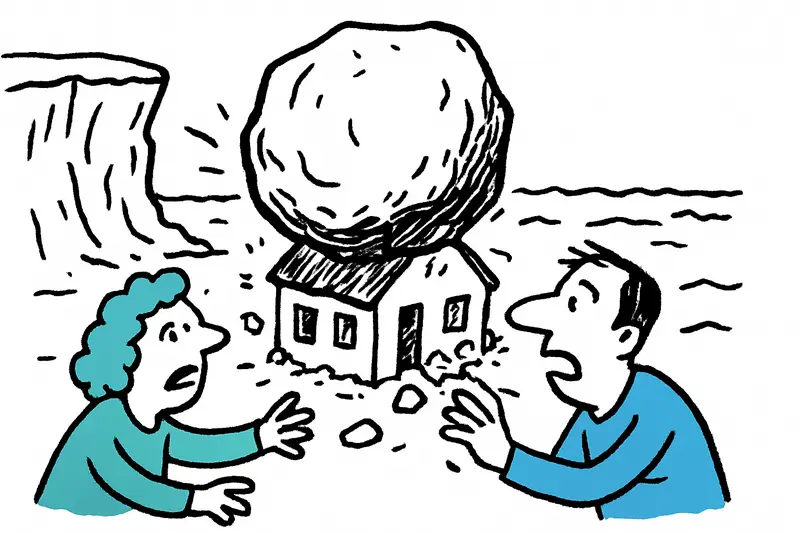
Deadly rockfall in Es Castell: Who protects houses on the coast?
A five-meter boulder fell onto a house near Fort Marlborough (Es Castell). A man died and a woman was seriously injured. A wake-up call for better hazard preparedness and communication along the coast.
Deadly rockfall in Es Castell: Who protects houses on the coast?
Key question: Could the death of the roughly 65-year-old man have been prevented - and what needs to change so that something like this does not happen again?
In the early morning hours, around 4:15 a.m., the quiet bay by Fort Marlborough turned into a scene of destruction: an approximately five-meter boulder detached and struck the terrace of a three-story residential building in Cala Sant Esteve (municipality of Es Castell). The rock smashed through two floors and crashed into the ground-floor bedroom where a couple was sleeping. The man was recovered dead, the woman was seriously injured and taken to hospital. Emergency services - fire brigade, ambulance and Guardia Civil - found the two under the rubble, used drones for situational reconnaissance and evacuated around ten houses in the affected area.
The scene on site is distressing: the cry of a seagull over the port of Maó, a fishing boat starting its engine in the morning, neighbours with cups of coffee staring stunned at a cordon. The narrow road up to the fort, usually busy with tourist buses and tradespeople, lies silent. Difficult access and poor mobile coverage complicated the rescue efforts - a detail that here can affect not just logistical fine-tuning but life and death.
Critical analysis
What lies behind the event is not a simple natural force that cannot be understood. Two factors stand out: geological vulnerability and human proximity to endangered slopes. After heavy rain, the ground can swell and reveal cracks in cliffs and rock bands. Especially on steep coastal sections, as around the entrance to the port of Maó, even a small additional load can be enough for a block to detach. There have been similar rockfalls that disrupted traffic, notably the rockfall on the Ma-2141 at Sa Calobra.
Added to this is construction in immediate proximity to such slopes. The affected building housed seven people across three levels - not a large complex, but enough that a collapse would have catastrophic consequences. The question arises: Are hazard zones currently and effectively mapped for the public? How often are engineering inspections carried out and who takes responsibility when warning signs are overlooked? Past incidents, including a construction site accident in Santa Margalida, underline the consequences when safety chains fail.
Poor network coverage on site is not a side issue. When alerting, coordinating evacuations or checking on family members is slowed by mobile dead spots, the effectiveness of measures suffers. The use of drones was appropriate, but it does not replace permanent monitoring at critical points.
What is missing in public discourse
Public discussion often focuses on severe weather - rightly so. Yet the conversations remain schematic: rain = flooding. Rarely is attention given specifically to rockfall risks in residential areas, the legal responsibility of building on slopes, or the practical question of how quickly residents can actually be evacuated at night. The discussion about mobile coverage blind spots and simple local alert networks is also too brief. And: the voice of residents who have lived for years with cracks, falling stones and small shifts is rarely heard systematically. Other tragedies, such as the tragic fall in Cala Sant Vicenç, show the human cost that these gaps in attention can produce.
Concrete proposals for solutions
- Immediate measures: temporary cordons and exclusion zones, systematic inspections by geologists on problematic coastal sections, and prioritisation of buildings with bedrooms close to slopes. After storms such checks should be triggered automatically. - Communication: build local, redundant alert structures (sirens, SMS clusters with satellite backups, mandatory emergency contact addresses with the municipality). Map mobile coverage gaps and deploy mobile repeater systems quickly during operations. - Structural prevention: assess whether protective nets, rock anchors or retaining walls are sensible and financially feasible at exposed locations. Regular inspections of rock faces, documented and publicly accessible. - Spatial planning and law: clearly designate hazard zones, regulate new builds and retrofitting on slopes more strictly, better inform and compensate owners if use restrictions are necessary. - Community: neighbourhood emergency plans, local training and central assembly points so that on a morning like this there is no need to improvise.
A concrete, relatively inexpensive measure would be a Balearic Islands map portal that combines rockfall, landslide and flood risks and offers layers for municipal use, residents and emergency services. In addition, a mandatory inspection interval for rock formations in inhabited coastal zones after heavy rainfall events.
Everyday scene and responsibility
A shopkeeper in Es Castell once told me that people get up early: fishermen, cooks, builders. When the sea is calm and the smell of fresh bread drifts through the streets, hardly anyone thinks of the rock that has lain quietly on the slope for years. It is precisely this everydayness that fosters complacency in preparedness. Authorities, engineers and neighbours must share the same perception: the quiet in the harbour is no guarantee of safety.
Conclusion: This death is not a random event without lessons. It reveals weaknesses in monitoring, communication and planning along our coasts. What matters now is not moral outrage, but the rapid establishment of practical protection and warning measures. Otherwise it will not remain at a single death - it will be the same story, retold.
Frequently asked questions
Are coastal homes in Mallorca at risk from rockfalls after heavy rain?
What should residents in Mallorca do if a rockfall threatens their home at night?
How do emergency services handle a rockfall rescue in hard-to-reach parts of Mallorca?
Can building too close to cliffs increase danger in Mallorca?
Where in Mallorca can rockfall risks be a concern after storms?
What warning signs can suggest a slope in Mallorca is unstable?
Is mobile coverage important during emergencies in Mallorca’s coastal towns?
What safety measures could better protect homes in Es Castell, Mallorca?
Similar News
Warning to Bathers: Nipping Fish in Cala Major and Other Coves — a Reality Check
In Cala Major and several beaches around Mallorca, bathers report painful “nips”. Who are the animals, why are they gett...

Rental Car Theft in El Arenal: What This Incident Reveals About Our Gaps
A teenager steals a running rental car in El Arenal, flees on foot, climbs over walls and is caught by the Guardia Civil...
Red Rope in Palma's Library: What Helps Against Selfie Tourism — and What's Missing
Palma's city library cordoned off an area with a red rope to keep selfie tourism away from reading and working activitie...
Fort San Carlos: Museum, Harbor Dispute — and a Conflict That Demands Answers
The military museum at Fort San Carlos sits right on Palma's harbor, with unexpectedly quiet rooms filled with cannons a...
Old Town Under Pressure: When a Doorway Becomes a Sleeping and Shower Place
For months a woman has been living with a parasol, a clothes rack and personal belongings next to the social welfare off...
More to explore
Discover more interesting content

Can Cap de Bou

Townhouse Lleo 72
