
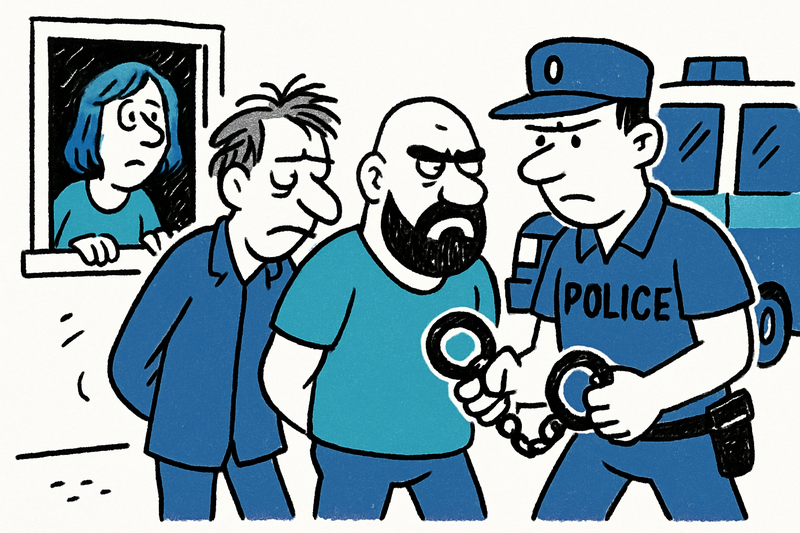
Major raid in Palma: Biker leader and former investigator arrested — How deep does the network reach?
In an early morning major raid in Palma, the alleged leader of the "United Tribuns" and a former head of the island's drug enforcement were arrested. What does this mean for tourism, security authorities and the neighbourhood around Playa de Palma?
Police rouse the promenade — a morning that felt different
It was still dark, the night hung over the promenade like a damp towel, when early on Monday the spotlights and blue lights flashed across the façades at Playa de Palma. Neighbours, usually woken by music, the smell of barbecues and the sound of the waves, stood in bathrobes or with an espresso pot in hand in front of their doors. Vans, helmeted officers, the clink of handcuffs — the club district looked for an hour like a film set, except that here real livelihoods and an entire community structure were at stake, as reported in Major raid in Palma and Son Banya: How extensive is the network behind the 17 arrests?.
The central question: Is this only the tip of the iceberg?
The public prosecutor speaks of money laundering, of a system that for years should have channelled drug-related proceeds into clean accounts. Yet the scene in Palma raises a more pressing question: Does the suspicion reach only to the clubhouse and a few properties, or are local structures — lawyers, security circles, even former investigators — more deeply networked than previously assumed? The arrest of an alleged leader of the "United Tribuns" is spectacular; the detention of a former head of the island's drug enforcement is even more explosive, as detailed in Major raid in Mallorca: Arrest of an alleged clan leader raises big questions. Two sides of the same coin: law enforcement and the duty to protect seem to collide here.
For people on Passeig Mallorca this feels like a betrayal of trust. Those who swore to protect the island now find themselves in the investigators' spotlight. In cafés people speak quietly, at the market speculation is rife — and the coffee machines hum as if trying to drown out the loud topic.
Less visible: the role of real estate and shell structures
According to investigators, the focus is on bank accounts, property purchases and allegedly concealed business structures. That is no coincidence. On Mallorca, real estate is a common tool for money laundering: holiday apartments, clubhouses, restaurant equipment — they all offer ways to disguise money flows, a point highlighted in New Raid in Mallorca: More Arrests — But Are the Roots of the Problem Untouched?. Outsiders often have no clear view of who stands behind a company. A lawyer's mailbox in the city centre, an apparently legitimate consulting firm, and large sums quickly become hard to trace.
What often receives too little attention in daily headlines: money laundering is less spectacular than armed clashes, but in the long run much more dangerous for the local economy. It distorts markets, drives up prices, poisons the business climate and creates dependencies that spread like roots through villages and neighbourhoods, as shown in Raid on Mallorca: Network of Drug Trafficking and Money Laundering Shakes Palma and Surroundings.
Police under suspicion — a systemic problem
The fact that a former head of drug enforcement is in custody makes politicians and ministers uneasy. It opens the debate: how good are the control mechanisms within security agencies? Internal investigations, rotation of officers, independent complaint offices — these are not luxury measures in theory, but core questions when former guardians suddenly need to be scrutinised themselves.
Another little-noticed risk: fear of reprisals can silence witnesses. Someone living in a small town on the island who suddenly experiences a raid on their doorstep does not necessarily expect an open court case months later; they worry about jobs, guest numbers and family peace.
Concrete approaches: what could help now
The investigations are still young and the documents need to be reviewed. But there are practical steps the island and the judiciary should take now:
1. Focus on money flows instead of just faces: Efficient financial investigations, forensic audits and international cooperation yield more than merely spectacular arrests.
2. Transparency in property purchases: Who really benefits from holiday apartments and clubhouses? Stricter checks on beneficial owners could make backroom deals harder.
3. Protection for whistleblowers: Residents, employees or officials who report irregularities need anonymous, secure channels and legal protection.
4. Independent oversight of security forces: External audits and mandatory rotation in sensitive departments reduce corruption risks.
These measures are no silver bullets, but they can help rebuild trust in institutions — and prevent criminal business models from embedding themselves deeply in everyday life.
What the arrests mean for everyday life
For residents of Playa de Palma this means temporary unrest; for restaurateurs possible losses while the story circulates. For the judiciary it means endless work — reviewing documents, untangling networks, initiating cooperation with banks and international authorities, as explained in Major Raid in Palma: What the Investigations Mean for the Island. That judges and prosecutors carefully consider whether to bring charges is another signal: justice takes time.
The morning after the raid still smelled of sea salt and fried fish. At the counter of the small café next to the clubhouse, three retirees discussed world affairs quietly while children played on the beach, unbothered by the investigations. That is Mallorca's ambivalence: a place loud and sunny, touristy and peaceful, but also a market where money and power operate in the shadows.
Whether this is the tip of a deep iceberg or a serious but localized case remains an open question. The answer will be found in stacks of files, bank statements and in court — and perhaps one day again in the conversations on Passeig, when the coffee machines hum without worry.
Frequently asked questions
What does a major police raid in Palma usually mean for residents and businesses?
How do police money laundering investigations work in Mallorca?
Why is real estate often linked to money laundering in Mallorca?
What does the arrest of a former anti-drug investigator in Mallorca raise concerns about?
Is Playa de Palma affected when police investigate club or biker networks?
What can Mallorca do to stop organised crime from embedding itself in local business?
Why do Mallorca raids sometimes lead to fears of retaliation?
How long do major criminal investigations in Palma usually take?
Similar News

Release after bloody attack in Palma: Why the court's decision raises questions
An 18-year-old who allegedly inflicted a serious neck injury on a man at Plaza Gomila using a wristwatch wrapped around ...
Kidnappings in Inca: Three young men forced into car trunks and abused in the forest – a reality check
In Inca, three 18-year-old men were forced into car trunks by masked assailants at the Plaça des Bestiar, taken to a for...
Spreading Massification: The Brake That Still Has Much Work to Do
Marga Prohens announces limits on volume tourism. The measures sound harsh — but are they enough to save everyday life, ...

Through the Keyhole onto the Party Yacht: How Daniela Katzenberger Is Planning Her 40th on Mallorca
Daniela Katzenberger turns 40 and wants to celebrate it on the island — likely with a boat, cake and her mother. A relax...
By Boat Instead of the Road: Palma's Water Bus — a Reality Check
The 'Bus Nàutic' launches in two stages — but questions remain over interim operations, fares and environmental requirem...
More to explore
Discover more interesting content

Can Cap de Bou

Townhouse Lleo 72
