
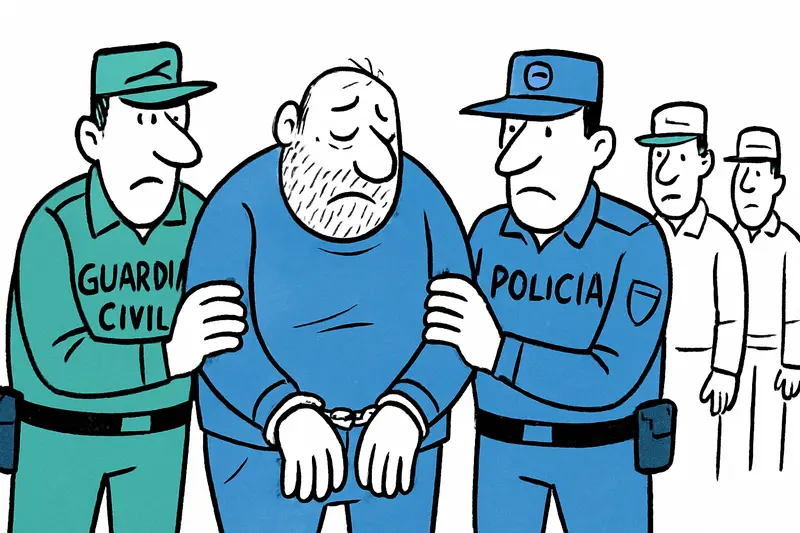
Major raid in Mallorca: Arrest of an alleged clan leader raises big questions
13 arrests, 18 searches — but the strike against the drug ring raises more questions than it answers. How deep do the structures on Mallorca really go?
A major blow — and an even bigger question mark
It was a gray morning in Palma. The wind drove leafy debris across the Passeig, scooters rumbled by, and camera flashes reflected in wet lenses. The Guardia Civil and National Police reported a coordinated large-scale raid: 13 arrests, 18 apartments and business premises searched in Palma, Manacor, Marratxí, Llucmajor, Cala Ratjada and Son Servera. Passersby murmured on the street, and the harbor café was abuzz with discussion — relief and unease were closely intertwined.
The arrest of a man from the island's interior, whom investigators describe as the alleged head of an extensive drug ring, is undoubtedly a strike at the heart of a criminal network. But the central question remains: How deep do the structures reach, and who quietly protected them?
The facts — according to the police
The operation is the sixth phase of a long-running investigation, as detailed in Major Raid in Palma: What the Investigations Mean for the Island. Surveillance and tapped phone calls apparently led the officers to their targets. Large quantities of narcotics and cash were seized; the judiciary has not yet released concrete figures. The trail leads not only across the island but apparently to the mainland and abroad. A previously discovered cocaine delivery on the mainland played a role and had furthered the investigations, as reported in Raid on Mallorca: Network of Drug Trafficking and Money Laundering Shakes Palma and Surroundings.
The problem behind the headline
What reporting often overlooks are the invisible cogs that keep such a network running: flows of money, shell companies, informal helpers. Not every role is punishable with handcuffs; some operate behind desks, in seemingly harmless jobs, or in administrative offices.
Particularly explosive is the indication that a former high-ranking police officer appears in the investigation files. He is being investigated for bribery and disclosure of official secrets. Details are partly under a media blackout due to an information embargo — a condition that is understandable for the sake of the investigation, but poisonous for public trust.
Who protects whom?
In small towns like Manacor or Llucmajor, neighbors ask at the bakery: Should we have noticed something? The answer is rarely clear-cut. Often small signs suffice — unusual working hours, trips at night, cash transactions — which in tourist-heavy areas go largely unnoticed. Holiday homes, short-term rentals and logistics centers create opportunities for anonymous movements. Here the tourism system becomes a shell for illegal business.
The leading question remains provocative: Who protects whom — and how did it come to this? When investigations point to connections within your own ranks, crime-fighting quickly becomes an issue of internal control.
What is often missing — and what needs to come next
Arrests are important. But they often fall short if the organization's financial base remains untouched. Therefore the next phase must decisively attack money flows. Three practical starting points that are urgently needed now:
1. Stricter financial scrutiny: Systematic asset checks, faster account freezes and accelerated seizure of illegal gains. Banks and payment service providers must report suspicious patterns. In Mallorca this also includes tourism-related income — from holiday rentals to seemingly harmless shop takings.
2. Independent oversight in security agencies: External, independent audits could strengthen trust. Clear reporting channels for suspicions, protection for whistleblowers and transparent disciplinary procedures are necessary. Those who abuse the uniform must not disappear behind closed doors.
3. Better networking among investigators: More exchange between island, mainland and international authorities, digital matching of logistics and payment data, and closer information sharing with platforms operating holiday rentals and transport companies.
In addition, preventive measures are needed: more presence in affected communities, social work, low-threshold information services and simple reporting channels for citizens. Not every solution requires handcuffs; some things can be defused through education and community work.
Looking ahead — and the unease remains
The judiciary now wants to clarify how far the network reaches, who else is involved and what the connections abroad look like. Further summonses and possibly additional arrests are expected. Until all the puzzle pieces are presented in court, much remains in the dark — and the chill that runs through the streets on days like this remains. The sentence of one detainee in front of the cameras — "Show me at my best!" — sounds almost cynical. Inside, apartments were searched, families stepped out of their homes in shock, and judges made decisions behind closed doors.
This large-scale raid is a success for law enforcement, covered in Major raid in Palma and Son Banya: How extensive is the network behind the 17 arrests?. But it is also a wake-up call: Mallorca must take the fractures in its systems seriously. Otherwise the next network will appear elsewhere again — silently, with a new disguise and an unremarkable company letterhead.
The investigations continue. We will report as soon as new details are released by the judiciary.
Frequently asked questions
What was the major police raid in Mallorca about?
Which towns in Mallorca were searched in the police operation?
How did police in Mallorca uncover the alleged drug network?
Why is the Mallorca raid also linked to money laundering?
Was a former police officer investigated in the Mallorca case?
Why do Mallorca towns like Manacor or Llucmajor matter in a drug investigation?
What happens next after a major police raid in Mallorca?
How can Mallorca stop drug networks from hiding behind legal businesses?
Similar News

Maribel: Five Decades of Service – Housekeeper from Peguera Celebrated with a Special Honor
Over 50 years in the hotel business: María Isabel “Maribel” Molinos was honored in Palma at the Nit del Turisme by Unive...

Orange Alert over Parts of Mallorca: Are We Prepared?
Dark clouds and an announced wet spell have triggered an Orange alert in parts of Mallorca. A reality check: what's miss...

Sundair & Co.: Sale speculation and what it could mean for Mallorca
Rumors about a possible sale of the airlines Sundair and Fly Air 41, which belong to Schauinsland-Reisen — and whether b...
Anne Wünsche in Mallorca: A job offer with a catch — who fits the role of personal assistant?
Influencer Anne Wünsche has left Berlin and is urgently looking for a full-time personal assistant in Mallorca. Why the ...

Daily from New York: Palma Between Boom and Strain
United will increase the Newark–Palma route to daily flights in 2027 using Boeing aircraft (231 seats). What does the in...
More to explore
Discover more interesting content

Can Cap de Bou

Townhouse Lleo 72
