
Knee-high water at Playa de Palma: What to do about the recurring floods?
Knee-high water at Playa de Palma: What to do about the recurring floods?
Torrential rainfall flooded the Playa de Palma, with walkways knee-deep in water. An assessment of what's missing and how we can respond.
Knee-high water at Playa de Palma: What to do about the recurring floods?
Key question: Do we want to keep watching as every heavy rain front floods the streets at Playa de Palma — or will we draw concrete consequences now?
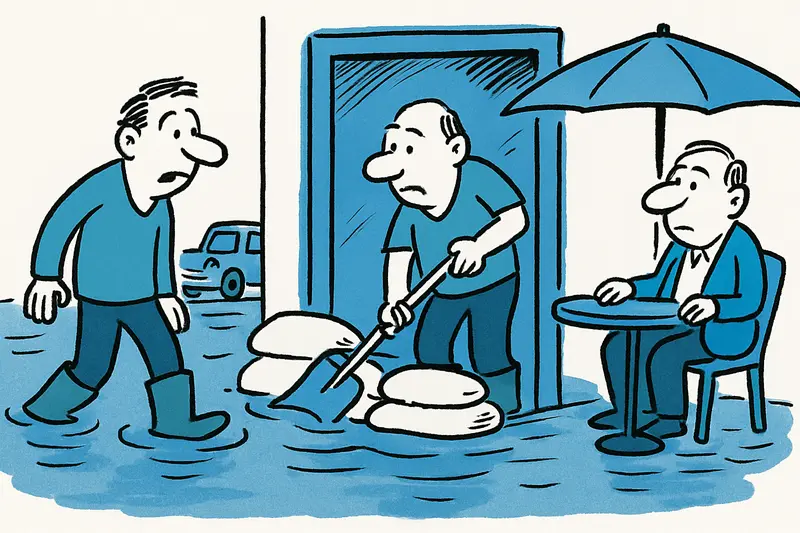
On Wednesday afternoon heavy rainfall turned the area around Balneario 10 into a small inland lagoon: cars pushed slowly through knee-deep water, pedestrians waded at the edges, and from some cafés came the weary sound of brooms and shovels trying to keep water away from door sills. In Calles Marbella and Atenas manhole covers were half under rushing water; access roads to the airport were in places so wet that drivers had to slow down significantly to avoid water entering the engine. In total, around 90 operations were recorded in the Balearics during the storms, most of them due to fallen trees, as described in After the Thunderstorm: Flooded Streets, Mudslides and the Big Question About Mallorca's Preparedness. The situation makes two things very clear: in the short term, warnings and readiness are important; in the long term, however, planning and infrastructure that can cope with more frequent extreme events are missing. The currently applied warning levels — from orange to yellow on the coasts — help to inform people, but recent coverage such as Sudden Storm in Palma: A Weather Shock and the Question of Protecting Mallorca illustrates how quickly conditions can worsen. But warnings alone do not replace functioning drainage systems, retention areas and coordinated traffic diversions.
Critical analysis
Our road network and many sewers in Mallorca are not designed for such volumes of water. Key issues are sealing, outdated storm drains and missing retention areas. If water is pushed directly from the promenade into the sewer system without being buffered, the system quickly reaches its capacity limit. Added to this is the fragmentation of responsibilities: roads, sewers, coastal protection and airport infrastructure fall under different authorities and operators. Without coordinated priorities, this leads to patchwork solutions instead of resilient measures.
Another blind spot is communication with the people who live here or are visiting. Tourists often do not know which streets should be avoided, and many residents receive the details of a warning too late. On Mallorca's promenades you then hear honking, the clattering of awnings in the wind and the dull splashing of water collecting in street corners — everyday symptoms of infrastructure at its limits.
What is missing in the public debate
There is too little discussion about priorities: should the island invest in short-term repairs or in larger conversions like underground stormwater retention basins and permeable surfaces? The question of how the airport and its surroundings will be protected against heavy rain in the long term is also rarely discussed openly. And finally, a concrete timetable is often missing: who does what by when? Without transparent responsibilities, much remains mere talk.
Concrete, immediately implementable measures
- Prioritized drain cleaning: a system with registered heavy-rain hotspots that are checked and cleaned before the rainy season. - Mobile pump depots at strategic points along the coast that can be deployed quickly when needed. - Temporary closures and clear diversion plans for access roads to the airport, clearly signposted and with multilingual information for tourists. - Promotion of infiltration areas: trees, tree islands and permeable paving on promenades and parking lots reduce surface runoff immediately. - Simple home guides: waterproof sandbag stations for small businesses, checklists for homeowners on how to protect doors and basements. - Medium term: construction of retention basins on selected watercourses and improvement of the coordination mechanism between the municipality, island government and airport operator; similar concerns and proposals are set out in Persistent Rain in Mallorca: Are We Really Prepared?.
Everyday scene from Mallorca
In the late afternoon you could see in front of the bar at Playa de Palma an older Mallorcan man in yellow rubber boots who, smiling but with a serious expression, showed a young hotel employee how to form a temporary dam with sandbags. Children jumped through puddles while municipal workers with shovels and mobile equipment exposed manholes. Such scenes are warm and typical — nevertheless they are no substitute for smart planning.
What politics and administration should do now
An immediately convened round table with clear responsibilities would be a start: Palma municipality, the island council, the airport operator and the coastal protection authority must negotiate binding measures and schedules. Funding programs from Madrid or the EU should be applied for specifically to finance stormwater management projects. The least we can demand: transparent maps of flood-prone streets, public and up-to-date, plus a phone number for local warning information.
Conclusion: The floods at Playa de Palma are no longer a one-off nuisance but a reminder. We need both: functioning short-term measures for the next front and structural investments so that the next heavy rain series does not again mean knee-high water on the promenade. Without clear responsibilities and visible investment plans, the sandbags in front of cafés will continue to be a daily sight — not because people are inventive, but because we collectively fail to plan ahead.
Frequently asked questions
Why does Playa de Palma flood so often after heavy rain?
Is it safe to drive near Playa de Palma during a storm?
What should I do if I am staying in Playa de Palma during heavy rain?
What kind of flood protection does Mallorca need in places like Playa de Palma?
Which streets in Playa de Palma are most affected when it floods?
How does flooding in Playa de Palma affect access to Palma airport?
What weather warnings should people in Mallorca pay attention to in storm season?
What practical flood precautions can homes and small businesses in Mallorca take?
Similar News

When the Wallet Becomes a Danger: Attack in Peguera and Lessons for Mallorca
In Peguera, two women are said to have stolen the wallet from a 75-year-old German couple. When the victim intervened, t...
Plata stays Plata: Young people take over, Llonguets remain
A small bar on Carrer de l'Argenteria will continue: Tolo Serra hands the place over to young Mallorcans at the end of t...

Unnoticed in the Luggage Compartment: How a Boy Traveled More Than 100 Kilometers in a Team Bus
A minor traveled in the undercarriage of a team bus for more than 100 kilometers until his cries for help were heard. A ...

Cap Vermell Grand: Second Michelin Key – a Gift for the East
The Cap Vermell Grand in Capdepera has been awarded its second Michelin key. For the region this elevates the luxury off...
Eurowings lets four aircraft carry names – a friendly idea that also reaches Mallorca
Eurowings is launching a campaign: four Airbus A320s are to carry the first names of people who help others in everyday ...
More to explore
Discover more interesting content

Can Cap de Bou

Townhouse Lleo 72
