
When the rain front "Kristin" hit: A reality check for Mallorca
When the rain front "Kristin" hit: A reality check for Mallorca
Midday showers turned streets into brown torrents and triggered an orange alert. A critical look at preparedness, communication and everyday life on the island — and what concrete steps need to be taken now.
When the rain front "Kristin" hit: A reality check for Mallorca
Key question: How well is Mallorca prepared for suddenly onset, torrential rainfall?
On Wednesday around 1:30 p.m. the island's appearance changed within minutes. A rain front, named "Kristin" by weather services, brought heavy precipitation, gusts of wind and, within a very short time, dirty runoff that sent streets flowing like brown streams. Authorities issued an orange alert for Mallorca for the southwest, south, east and southeast; a yellow warning remained in effect for the following day due to high seas. Rain eased again in the evening, but the impression remained: parts of the island are vulnerable.
Critical analysis. It was not only the volume of rain that stood out, but the speed at which torrents formed. On narrow village streets a short period of heavy rain is enough for drains to overflow, underpasses to fill and footpaths to become dangerously slippery. Either the sewer network in many places is not designed for such peaks or regular cleaning is lacking; both are problematic. Added to this is the runoff toward the coast: brown floods visible up to the promenades indicate high sediment transport and thus erosion and pollution of the sea.
What is missing in the public debate. We have been talking about extreme weather for years, but too rarely about the simple details: When were the gutters and clogged drains last cleared? Where does surface water accumulate in particular? How are bus and taxi connections prioritized when roads become impassable? The warning levels inform about risk but say little about which concrete behavioral rules should apply now for commuters, elderly residents or people on the coast.
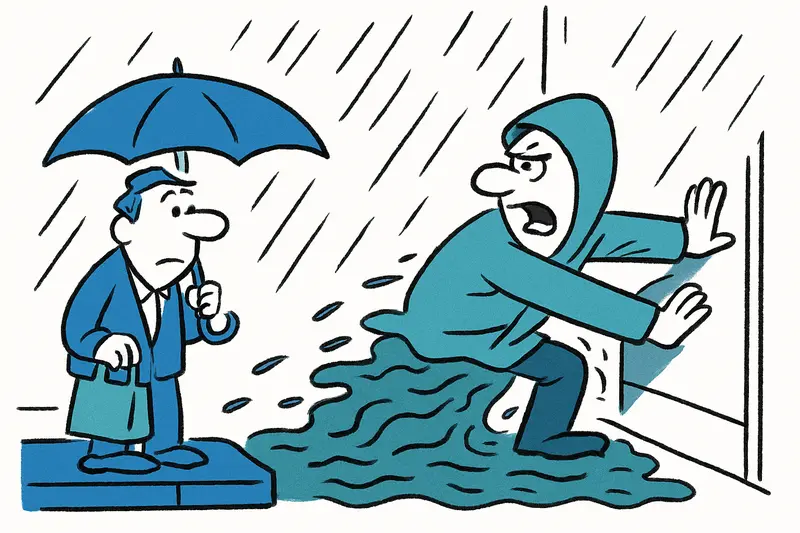
A scene from everyday life in Palma. On the Passeig Mallorca pedestrians run with umbrellas, taxis stop hastily, a café owner braces against gusts with a rain cape while brown rivulets run past the drains toward the port. Trash bins clatter, a bus driver reports over the radio that the route to Playa de Palma is temporarily closed. Such images repeat in smaller towns: an elderly man with a shopping bag stands on the step of a bus stop and waits because the bay in front of him briefly looks like a river. These scenes show that weather warnings directly affect people's lives and daily routines.
Concrete solutions. The problem is manageable if there are practical priorities: First: regular cleaning and inspection of drains and gullies, especially before the rainy season. Second: targeted upgrades of critical sections with backflow preventers and mobile barriers at underpasses. Third: better local warning communication — not just a color map, but short SMS or push notifications with concrete messages ("Avoid Carrer X due to flooding", "Close the seafront promenade at Bay Y"). Fourth: more greenery in urban areas — permeable paving, tree pits, small retention basins in new developments reduce peak runoff. Fifth: coordination between municipalities, port authorities and transport operators so closures and detours are communicated quickly and consistently.
Practical immediate measures for residents. Those who live near standing water should check cellar drains and place electrical appliances higher. Do not park vehicles in watercourses; report damaged road signs and loose roof tiles; keep supplies for one day in case buses or ferries fail. For businesses working on the coast (fishermen, beach kiosks), waterproof tarps and an emergency plan for short-term port closures are advisable.
Why this is not just an administrative issue. Technical measures help a lot, but without behavioral adjustments the effect remains limited. Many people underestimate how quickly shallow water can turn into a dangerous current. Good local education — in schools, on community noticeboards, and on social networks — reduces risky decisions at the moment of the event.
Outlook and priorities. Meteorologically the situation remains unstable; after a brief cooldown temperatures will rise again to around 16–18°C, and further showers are possible. That means the island must expect repeated stress and should promptly address the visible deficiencies. This is not a mammoth program but primarily a question of prioritization and coordination between municipalities, water services and transport operators.
Pithy conclusion. Rain like on Wednesday is not a natural event we simply have to accept. The images of brown streams flowing toward the sea are warning signals: better maintenance, clearer warning communication and simple structural adjustments could prevent many of the immediate problems. Mallorca has the experience, the funds and the experts — often what is missing is the final push for implementation. If you want dry asphalt again tomorrow, clean the gutters today and designate clear emergency routes.
Frequently asked questions
How does Mallorca usually cope with sudden heavy rain and flash flooding?
What does an orange weather alert mean in Mallorca?
Is it safe to drive in Mallorca during heavy rain?
What should residents in Mallorca do when sudden flooding starts?
Why do Mallorca's streets sometimes flood so quickly after rain?
Can you still go to the beach in Mallorca after a storm?
What areas of Mallorca were affected by the heavy rain warning?
What was the impact of the rain front in Palma?
Similar News
When the Wallet Becomes a Danger: Attack in Peguera and Lessons for Mallorca
In Peguera, two women are said to have stolen the wallet from a 75-year-old German couple. When the victim intervened, t...
Plata stays Plata: Young people take over, Llonguets remain
A small bar on Carrer de l'Argenteria will continue: Tolo Serra hands the place over to young Mallorcans at the end of t...

Unnoticed in the Luggage Compartment: How a Boy Traveled More Than 100 Kilometers in a Team Bus
A minor traveled in the undercarriage of a team bus for more than 100 kilometers until his cries for help were heard. A ...

Cap Vermell Grand: Second Michelin Key – a Gift for the East
The Cap Vermell Grand in Capdepera has been awarded its second Michelin key. For the region this elevates the luxury off...
Eurowings lets four aircraft carry names – a friendly idea that also reaches Mallorca
Eurowings is launching a campaign: four Airbus A320s are to carry the first names of people who help others in everyday ...
More to explore
Discover more interesting content

Can Cap de Bou

Townhouse Lleo 72
