
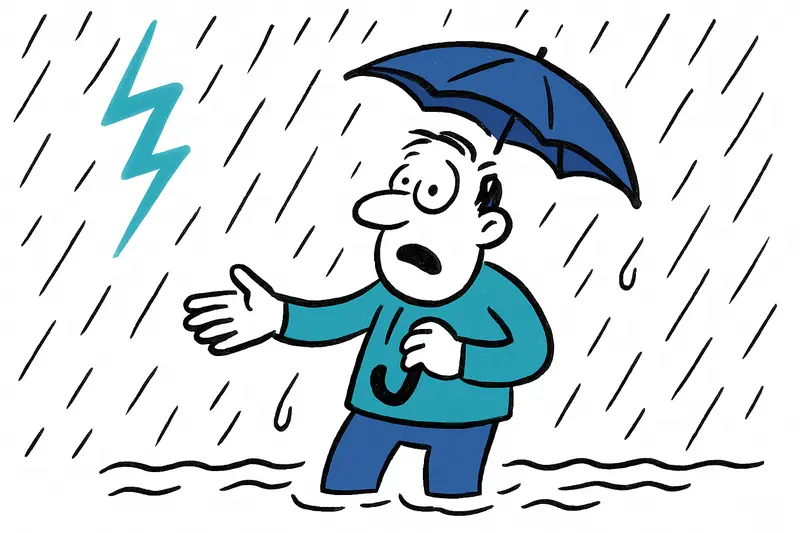
Orange Alert: Torrential Rains — Is Mallorca Prepared?
AEMET has issued an orange alert for all of Mallorca. Heavy rain, flooding and gale gusts are possible. What helps now — and what the island needs in the long term.
Deluge instead of a summer evening: The key question
The question running through my mind as the sky rumbles over Palma and the Serra de Tramuntana is: Is Mallorca really prepared for such heavy rain events? AEMET has issued an Orange Alert: Torrential Rains — Is Mallorca Prepared?, with locally up to 140 liters per square meter and peaks of 50 liters in one hour. This is not a mild summer storm — it is a nationwide warning.
What is coming at you right now
In the next few hours sudden street floods can occur, visibility will drop and ordinary paths can turn into dangerous slides. Low-lying roads, underpasses and parking bays — the Paseo Marítimo in Palma or the narrow access roads to small coves — are particularly vulnerable. I can already hear the patter on the tiled roofs and the dull roll of thunder; the air smells of wet stone. The feeling is like the island’s short, violent heartbeat that shows us where it aches.
What is often missing in public debate
The headlines say “rain”, people grab their wellingtons — but three often overlooked points are crucial: First: the drainage systems in many places are designed for moderate showers, not flash floods. Second: tourist infrastructure is becoming denser along sensitive coastal sections, with more sealed surfaces that channel rainwater away in seconds instead of letting it infiltrate. Third: local warning chains — neighborhoods, bodegas, garbage collectors — are often the most effective early-warning systems, yet they are rarely supported. These are not purely technical problems but questions of planning, responsibility and community, as explored in Orange Alert: How Mallorca Is Preparing for a Wet Late Summer.
Concrete immediate measures (and why they help)
If possible, stay at home. Flooded roads are treacherous: engines can stall in relatively little water, and currents are faster than they look. Do not park in depressions or near rieras (old streambeds). Many floods follow ancient waterways — water collects there like in a large bowl. Charge devices and keep flashlights ready. Short power outages are likely; a charged phone can save lives. Secure items outside. Parasols, pots and furniture can turn into dangerous projectiles in the wind. And: remember the number 112. It is the primary contact when help is needed.
A look ahead: What Mallorca should tackle now
The acute warning is an opportunity to systematically improve. At the local level, regular cleaning of street gullies helps, more maintenance for the rieras and temporary closures at known bottlenecks. In the medium term we need more permeable surfaces in urban areas, renatured streams, smart retention basins on the slopes — and an honest inventory of which tourist zones are particularly vulnerable to heavy rain. Sustainable planning does not mean fewer visitors, but less risk per visitor and resident.
Community as protection
In small towns like Sóller or Andratx people know who checks the piers early in the morning or where the buckets and shovels are kept. Such neighborhood networks are invaluable. Municipalities could strengthen these structures: a local hotline, simple checklists, volunteer teams for quick help after the storm. A little organization creates a lot of safety — and at the same time strengthens the island’s social fabric.
What you should check tomorrow morning
If you live near the Tramuntana or along known rieras, check driveways, garages and access points for blockages. In many villages the choke points have been known for years: where the map shows water in “red”, it’s worth a look on the ground, as noted in Orange Alert in Mallorca: What the AEMET Warning Means for the Island, Roads and Tourism. Exchange information with neighbors — the best warning often comes from two doors down.
A sober outlook
Panic does not help, but taking it seriously does. Short term: avoid driving, secure your surroundings and keep an eye on local reports. Long term: Mallorca’s infrastructure, planning and neighborhood networks must become more resilient — not only for today’s storms, but for the inevitable challenges of the coming years. When the next storm comes, we want to be not surprised but prepared and able to act.
Stay safe, avoid flooded areas and follow the instructions of the emergency services. I will report with updates as soon as new information on the duration of the warning or on closures becomes available.
Frequently asked questions
How serious is the torrential rain warning in Mallorca?
Is it safe to drive in Mallorca during heavy rain?
What should I do in Mallorca if my area starts flooding?
Which areas in Mallorca are most at risk during torrential rain?
Why are rieras in Mallorca so important during heavy rain?
What should I pack or prepare for a torrential rain alert in Mallorca?
Is Palma especially affected by heavy rain in Mallorca?
How can local communities in Mallorca help during a storm?
Similar News

Near-miss on Lanzarote: Landing Ryanair Jet and Iberia Takeoff — what really went wrong
On Lanzarote there was a dangerous incident: A Ryanair flight (FR5910) from Dublin landed on runway 03 while an Iberia E...

Eurowings introduces new Premium Business seats on Mallorca routes
From December 1, selected Eurowings flights to Palma and other destinations will feature eight particularly generous sea...
Car on MA-13 near Inca in flames – a safety check for the island
A vehicle caught fire on the MA-13 towards Alcúdia on Tuesday afternoon. The driver was uninjured, the car was destroyed...

Real Estate in Mallorca: Fewer Buyers, Higher Prices — What's Behind It?
Sales on Mallorca are falling, yet prices continue to climb. Why fewer transactions do not equal relief — and what shoul...
Just Bought — Already Trouble: Water Damage in the Heiters' Villa and What Owners in Mallorca Should Know Now
A newly purchased sea-view property — and within days a water damage. What risks lurk in new properties in Mallorca, and...
More to explore
Discover more interesting content

Can Cap de Bou

Townhouse Lleo 72
