
More than €450,000 watch seized: What remains from the raid against gangs?
More than €450,000 watch seized: What remains from the raid against gangs?
The National Police report 34 arrests and the seizure of a watch worth more than €450,000. A reality check: what do the numbers say — and what is missing from the public debate in Mallorca?
More than €450,000 watch seized: What remains from the raid against gangs?
Key question: Is prosecution alone enough to make everyday life safer on Palma's promenades?
The facts are sparse but clear: the National Police carried out a Europe-wide coordinated operation in the summer that led to 34 arrests, echoing other large-scale actions such as Operation 'Chanquete' in Palma: A Clampdown on Trafficking — and What's Still Missing. Investigations were conducted jointly with Italy; operation sites included Ibiza, the Costa del Sol, Palma as well as Barcelona, Madrid and Dénia. According to the authorities, they solved 28 thefts linked to eight gangs. One of the seized watches is valued at more than €450,000; investigators confiscated six such timepieces in total. In addition, a car, four motorcycles, 14 forged license plates, four fake IDs and driving licenses, a signal jammer and several mobile phones were seized.
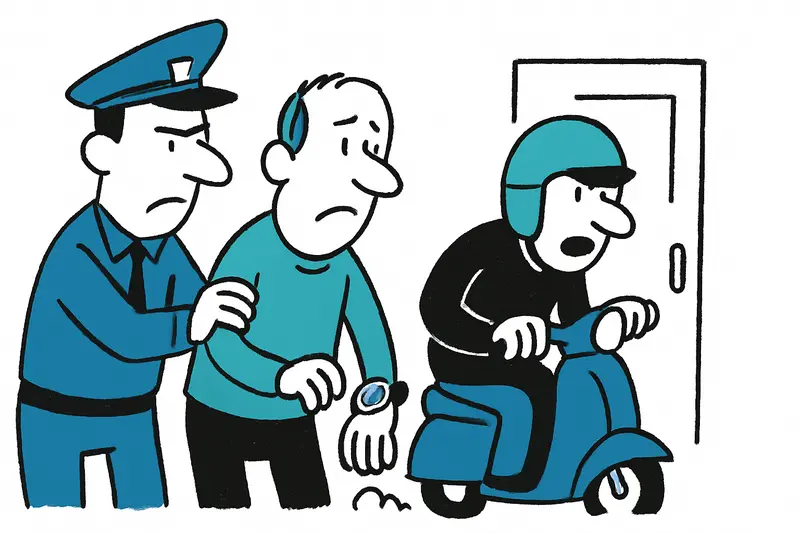
The pattern described by the police is methodical: spotters locate wearers of expensive watches on harbour promenades and in restaurants; thieves strike within seconds, motorcyclists provide quick escape routes, and rental cars are used for further transport. Anyone walking the Passeig Marítim in the evening may already have this scenario in mind: lights glitter in shop windows, voices blend with the gentle rush of the waves, and somewhere a scooter speeds by — a scene that offers ideal conditions for the perpetrators. Incidents such as Robbery in Palma's Old Town: Luxury Watch Stolen — How Safe Are Evening Walks? illustrate the risk.
Critical analysis: The arrests are a success; they disrupt criminal structures and produce evidence. But they primarily address the consequence — not all causes. The numbers show: eight gangs, 28 solved crimes. What we lack are reliable figures on how many crimes remain undetected, how mobile the groups are throughout the year, and to what extent organised networks operate Europe-wide logistics, money laundering and resale channels for stolen goods, as highlighted in Major Raid in Palma: What the Searches of Law Firms Mean for the Island. It also remains unclear what role local service providers may unknowingly play, for example in the short-term rental of vehicles.
What hardly appears in the public debate: prevention by the tourism sector and businesses. Police operations are necessary, but a permanently visible presence in sensitive areas, better lighting, clearly visible notices in multiple languages and joint prevention training for harbour operators, taxi drivers and the hospitality sector could create simple barriers. Equally little discussed is cross-border registration of valuable serial numbers and faster checks by officers on site — this pays off in practice when a stolen object can be identified immediately.
Concrete everyday scene from Palma: On a rainy morning an older man sits on a bench near Passeig Mallorca, his wristwatch gleaming cautiously. A waitress from the Caimari market wipes tables, a motorcyclist drives past. People are vigilant but not paranoid. As long as the impression remains that valuables are inviting and easily accessible, the risk persists. Such scenes show: police work and everyday precautions must go hand in hand.
Concrete solutions, without rhetoric: First, a coordinated information campaign for tourists, visible at ports, boulevards and hotels, with clear behavioural guidelines. Second, better checks at rental car companies — not as harassment, but as a preventive measure, for example through mandatory identity checks and storage rules for vehicle keys — measures also relevant to cases like Money-laundering raid in Palma: three more arrests — total rises to 52. Third, an agreed EU tool for rapid checking of luxury watch serial numbers for police authorities, linked to a reporting obligation for jewellers and pawnbrokers. Fourth, strategic police presence in shifts, not only reactions after crimes, but visible prevention to deter offenders.
What is still missing in the debate? Social issues. The root causes of gang crime often go unmentioned: poverty, organised recruitment of young people from marginalised backgrounds, and the possibility that the logistics behind the gangs are based in other, less visible sectors. As long as these aspects are not addressed, police work remains a corridor between press releases about successes and repeated offences.
Pointed conclusion: The seizure of a watch worth more than €450,000 is a clear signal — but it also indicates that profitable business models for theft exist. Mallorca needs more than raids: smart prevention, better cross-border cooperation and measures that protect tourists and residents in everyday life. Otherwise the next wave of arrests will only remove the tip of a deeper problem.
Frequently asked questions
What’s the typical weather in Mallorca, and when is the best time to visit for comfortable temperatures?
What should I pack for a beach and city visit to Mallorca?
How can visitors protect valuables while enjoying Mallorca’s promenades and markets?
How are authorities coordinating across Europe to combat theft of luxury watches in Mallorca?
Why is Palma’s Passeig Marítim often mentioned in discussions about theft?
How does the Caimari market scene relate to Mallorca’s crime prevention discussion?
What changes are suggested for rental car companies to help fight theft in Mallorca?
What role can the tourism sector play in reducing theft on Mallorca’s streets?
Similar News
When a Piece of the Sea Disappears: Portixol Pool in Limbo
Portixol in Palma faces a decision: the license for the terrace and pool on public waterfront land expires at the end of...
Magaluf: Fire on Punta Ballena — about 50 evacuated and many unanswered questions
On Monday afternoon a fire in a shop on Punta Ballena street in Magaluf prompted the evacuation of about 50 people. The ...
When the Village Street Became a Flood: What Storm Adam Reveals About Mallorca's Vulnerability
Roaring water turned Carrer de Palma in Consell into a torrent on 19 October; on the coast beachgoers helped prevent a s...
Krümel in a celebratory mood: How Peguera danced at the season closing
With accordion, glitter and an international audience: Marion "Krümel" Pfaff combined her birthday with the season-closi...
After the bathing accident off Formentera: Should the rescue network have acted faster?
The widow of the 64-year-old swimmer levels serious accusations: delayed rescue, no flag on the tower and a 112 that was...
More to explore
Discover more interesting content

Can Cap de Bou

Townhouse Lleo 72
